

Canada Burntcoat Head
The Bay of Fundy, between New Brunswick and Nova Scotia, has the highest tidal differences in the world. The difference between low and high tide is normally around 13 metres, and around 16 metres at spring tide. In one storm, over 21 metres have been measured. This means that within around 6¼ hours, the unimaginable amount of 160 billion tonnes of water (normally) flows out of the bay into the North Atlantic and back again in the following 6¼ hours, filling the 220 km long, up to 60 km wide bay.
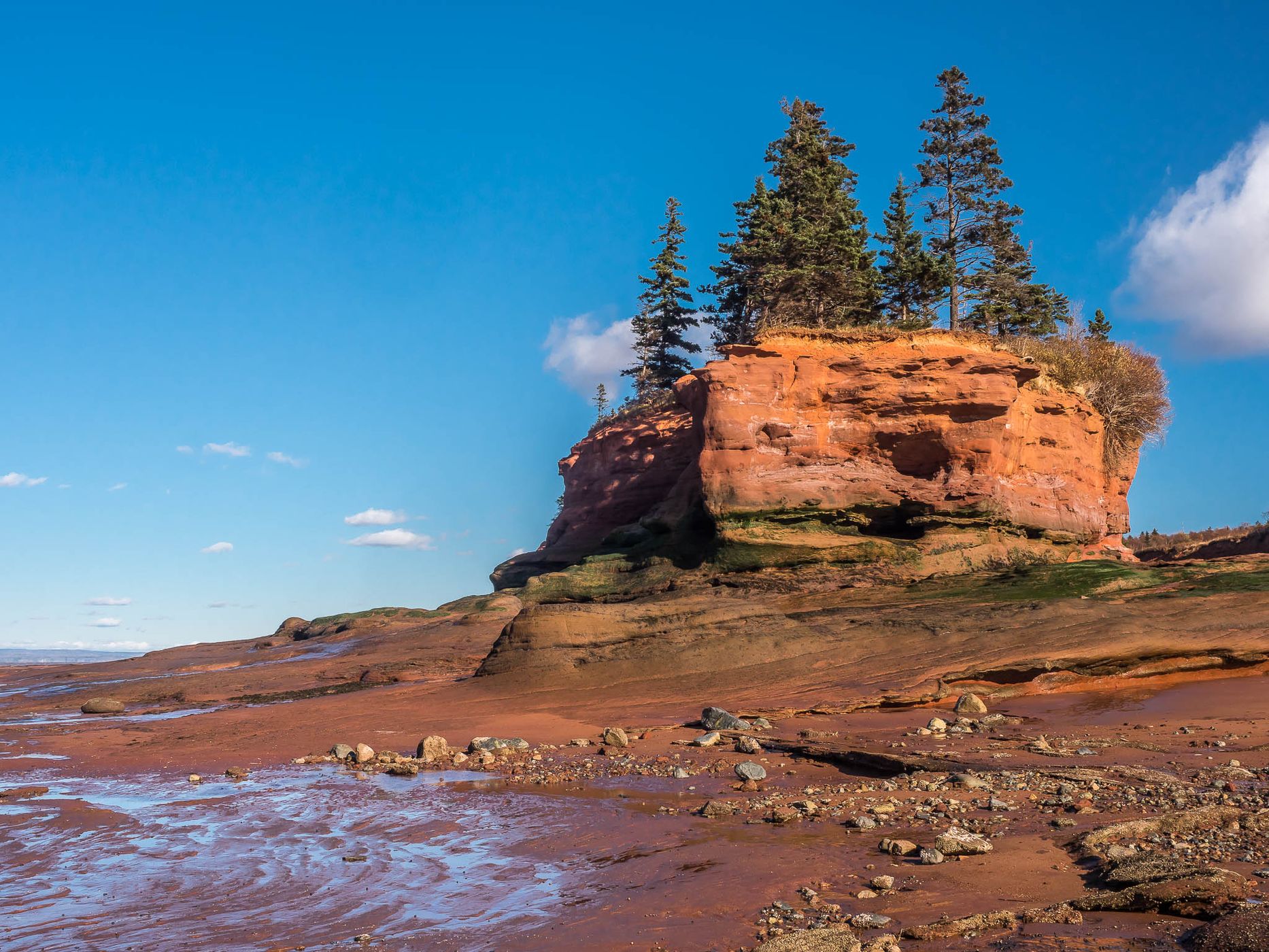
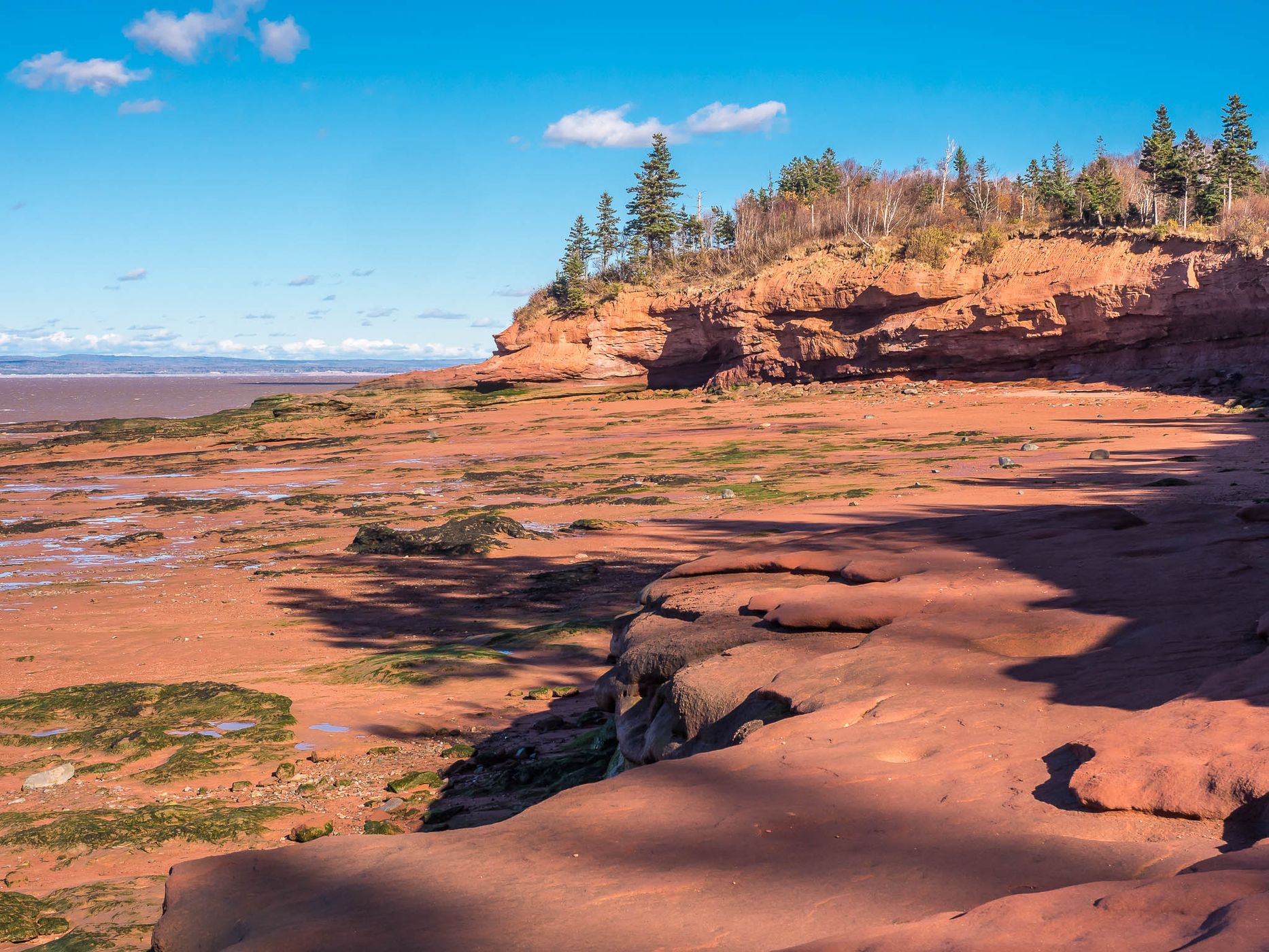
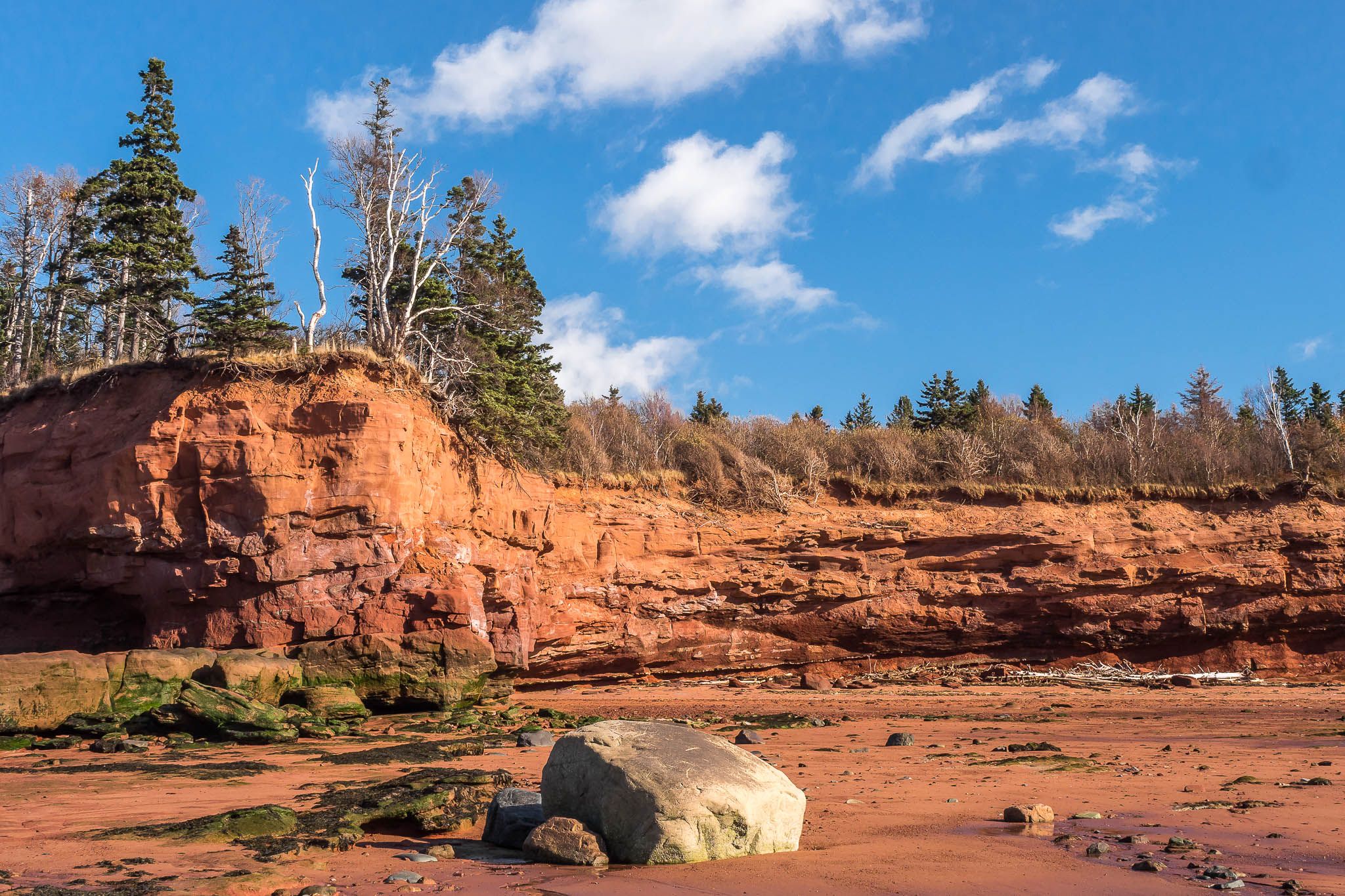
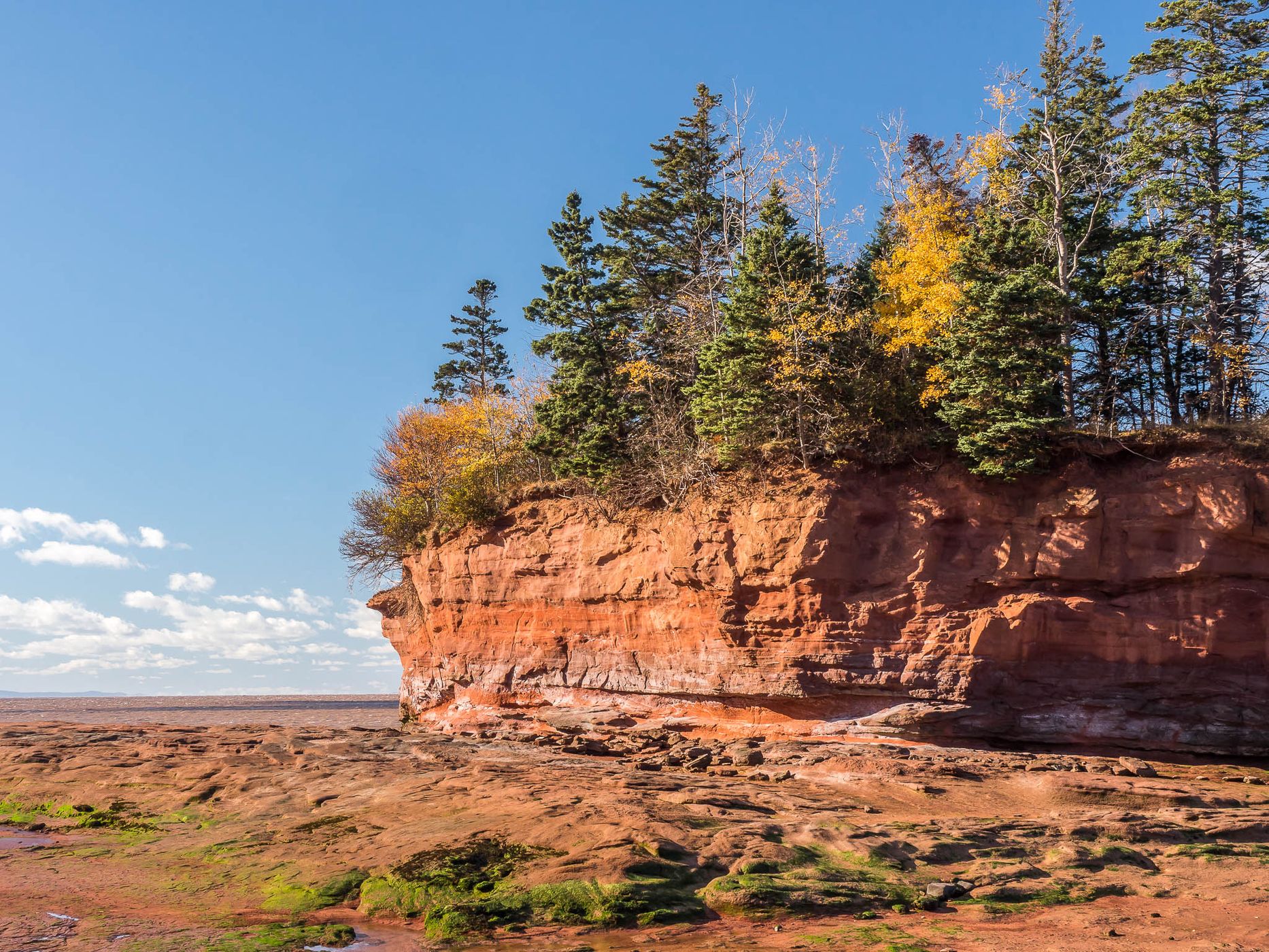
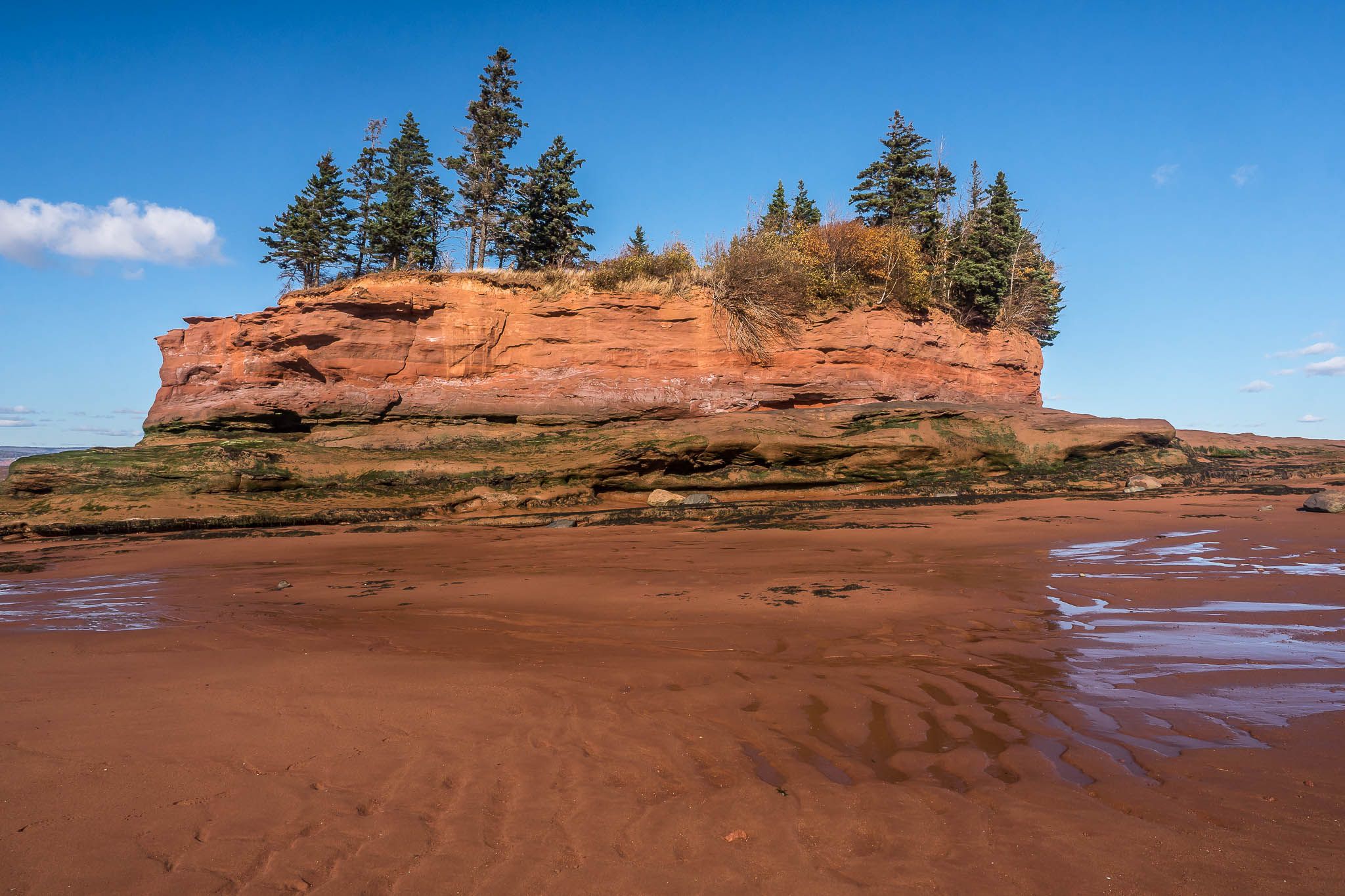
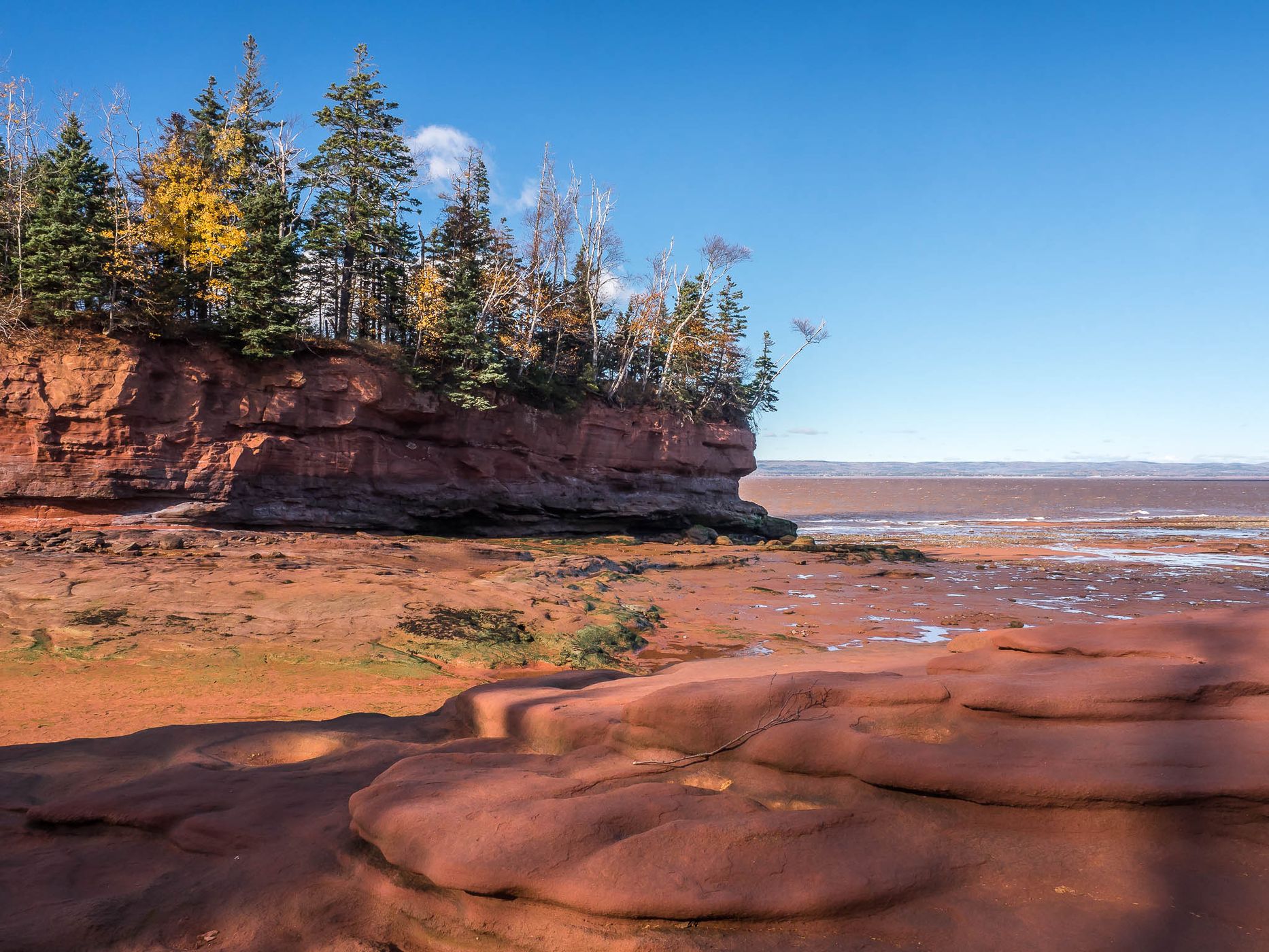
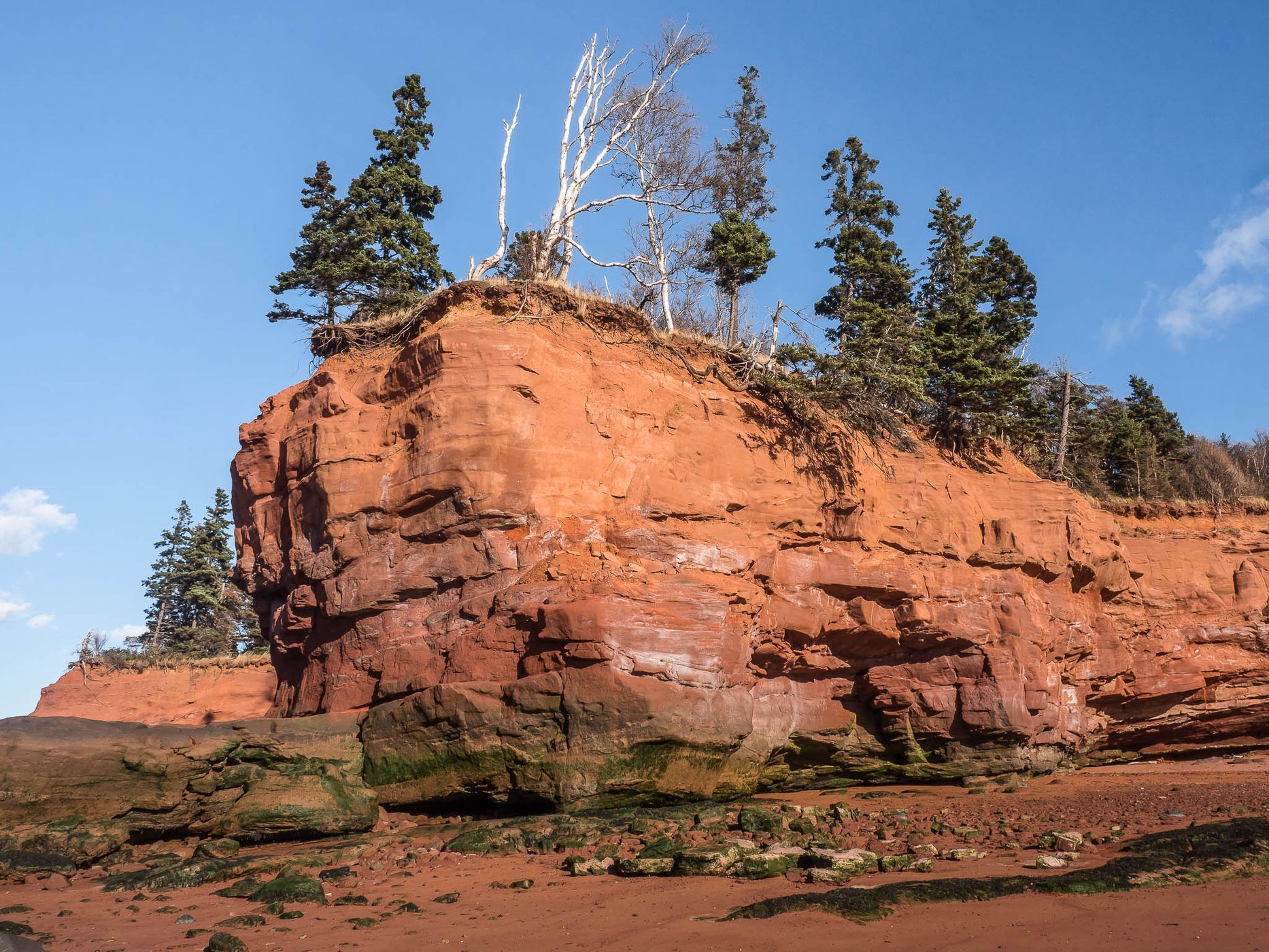
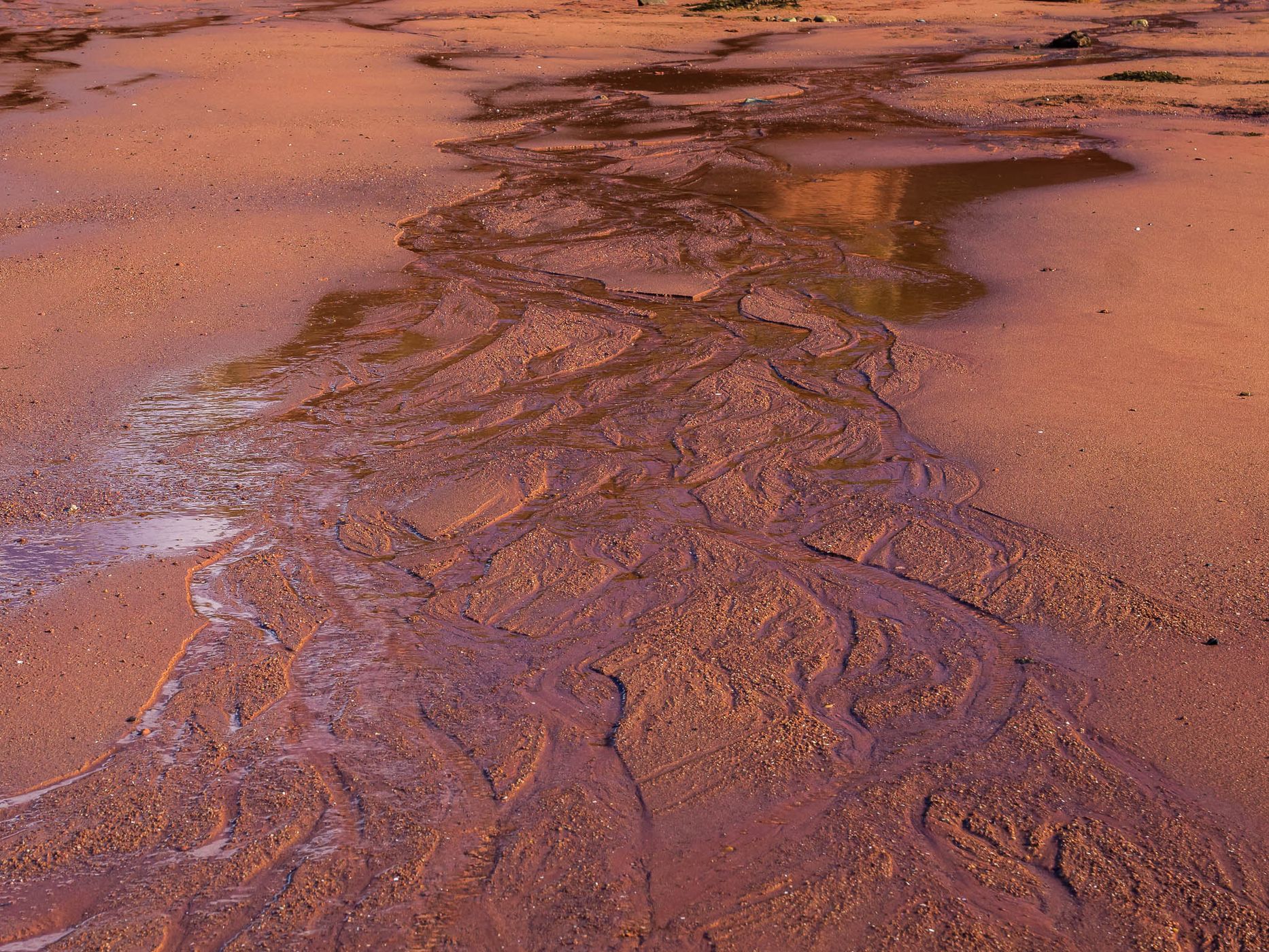
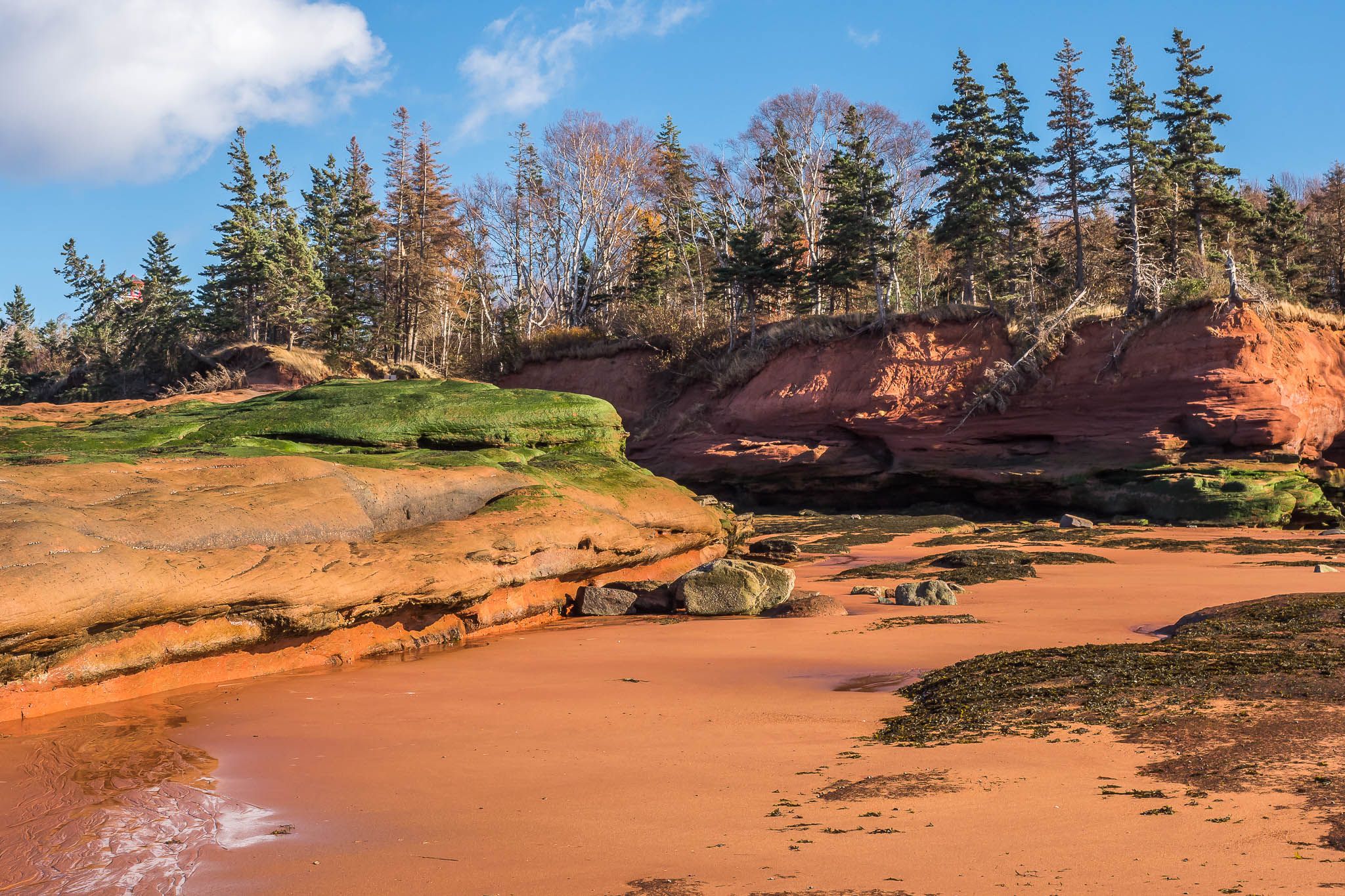
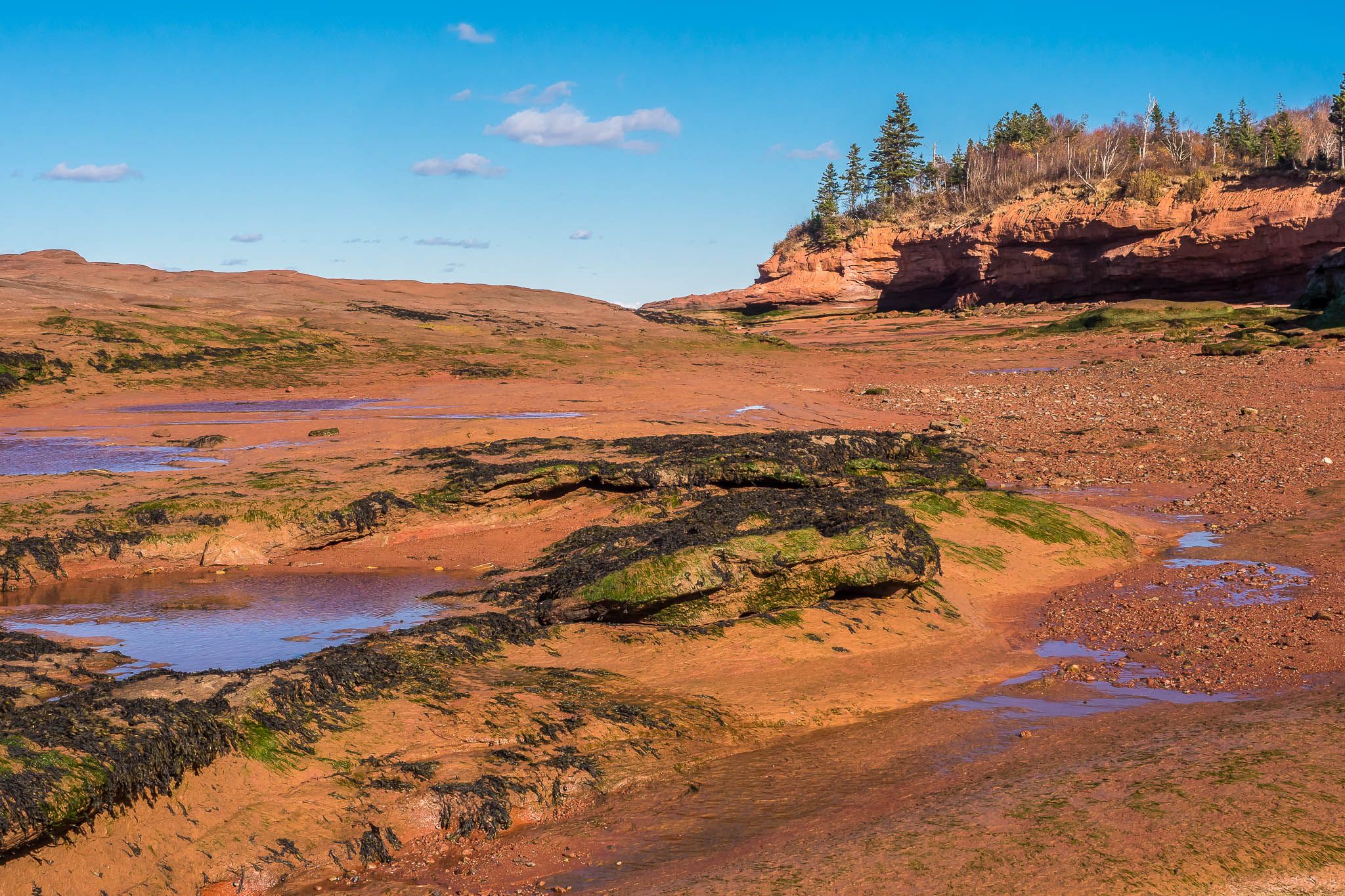
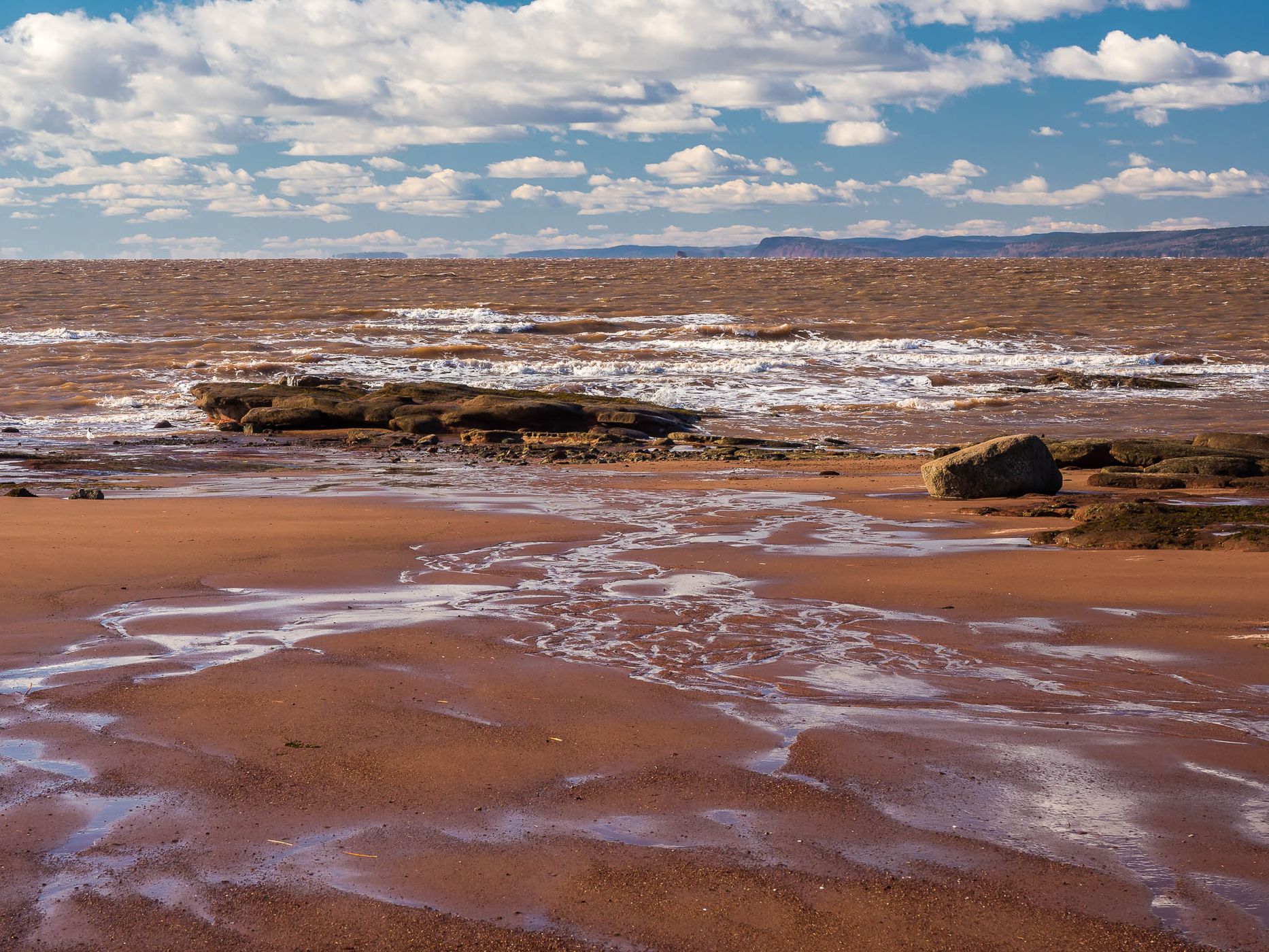
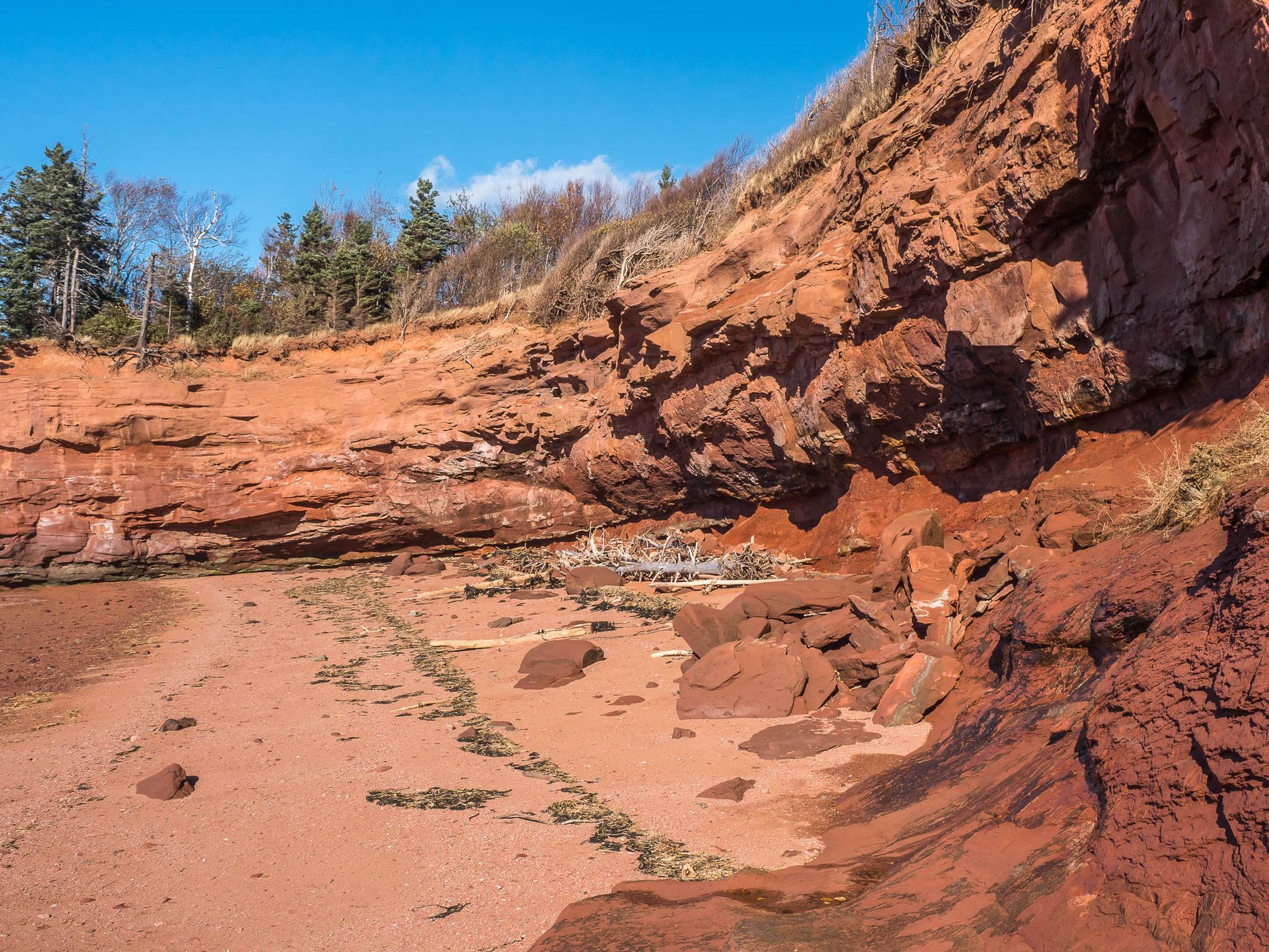
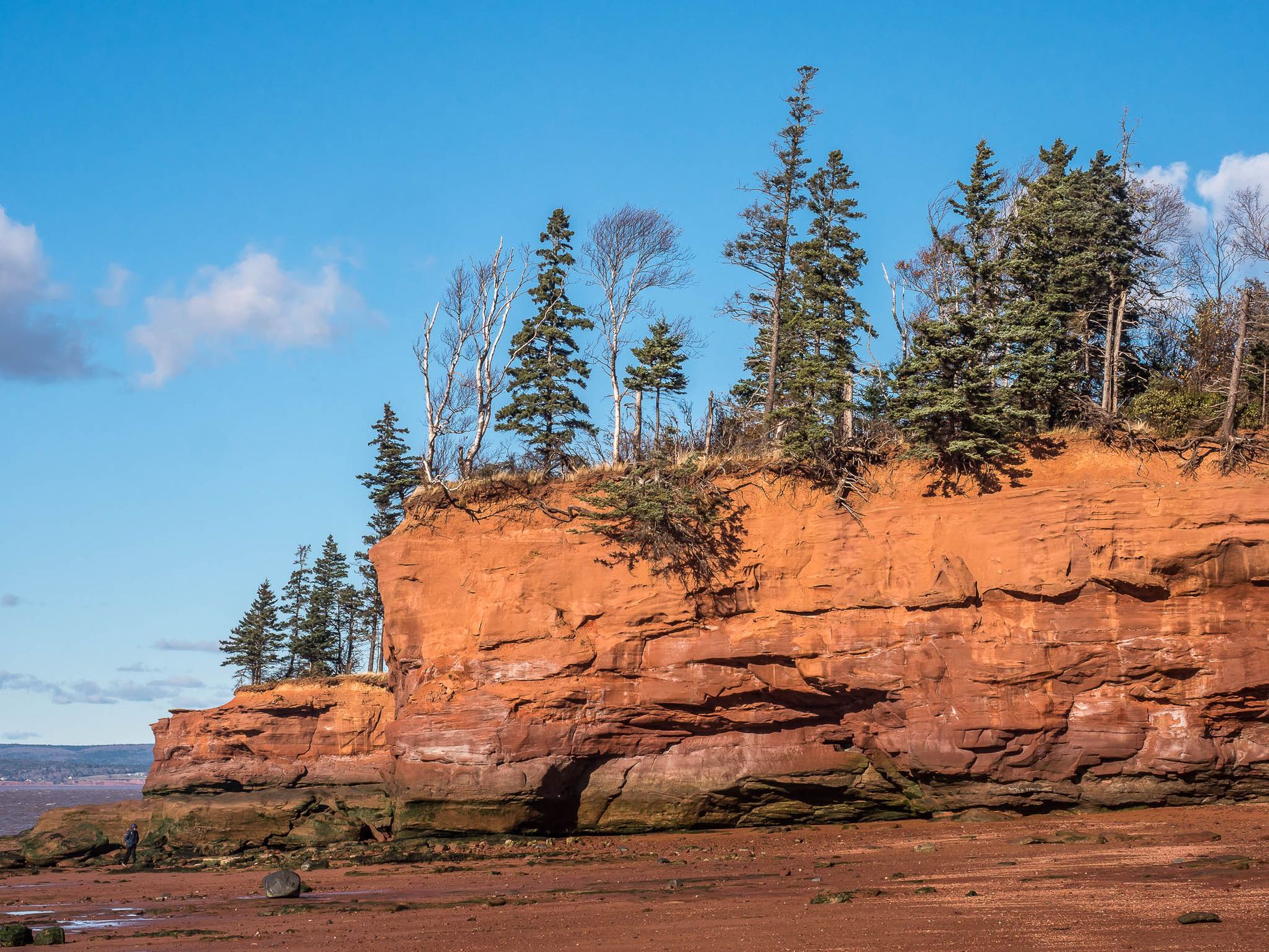
At Burntcoat Head in Nova Scotia, you have the opportunity to walk around on the seabed. About 200 metres from the lighthouse museum, an entrance to the bay has been created with steps carved into the rocks. A ‘flower pot island’ rises up opposite. At low tide, an extensive rocky plateau is accessible here, which shortly before was still several metres under the sea in places. It is not only the rocks that are rust-red here, the seawater is also coloured this way by sediments.
At Burntcoat Head in Nova Scotia, you have the opportunity to walk around on the seabed. About 200 metres from the lighthouse museum, an entrance to the bay has been created with steps carved into the rocks. A ‘flower pot island’ rises up opposite. At low tide, an extensive rocky plateau is accessible here, which shortly before was still several metres under the sea in places. It is not only the rocks that are rust-red here, the seawater is also coloured this way by sediments.
Spot Type
Outdoor
Crowd Factor
Just a few people
Best Timing
Daytime
Sunrise & Sunset
07:36 - 18:23
| current local time: 00:47
Photo Themes
Colored Sandstone Rock Formations
coloured rocks
Rock Formation
Rock Formations
Rocky Beach
Rocky Cliffs
Rocky Coast
rocky shore
Sea Cliff
seashore
Tidal





Spot comments (0)