
Ethiopia Lalibela, vista panorámica exterior de la Iglesia de San Jorge
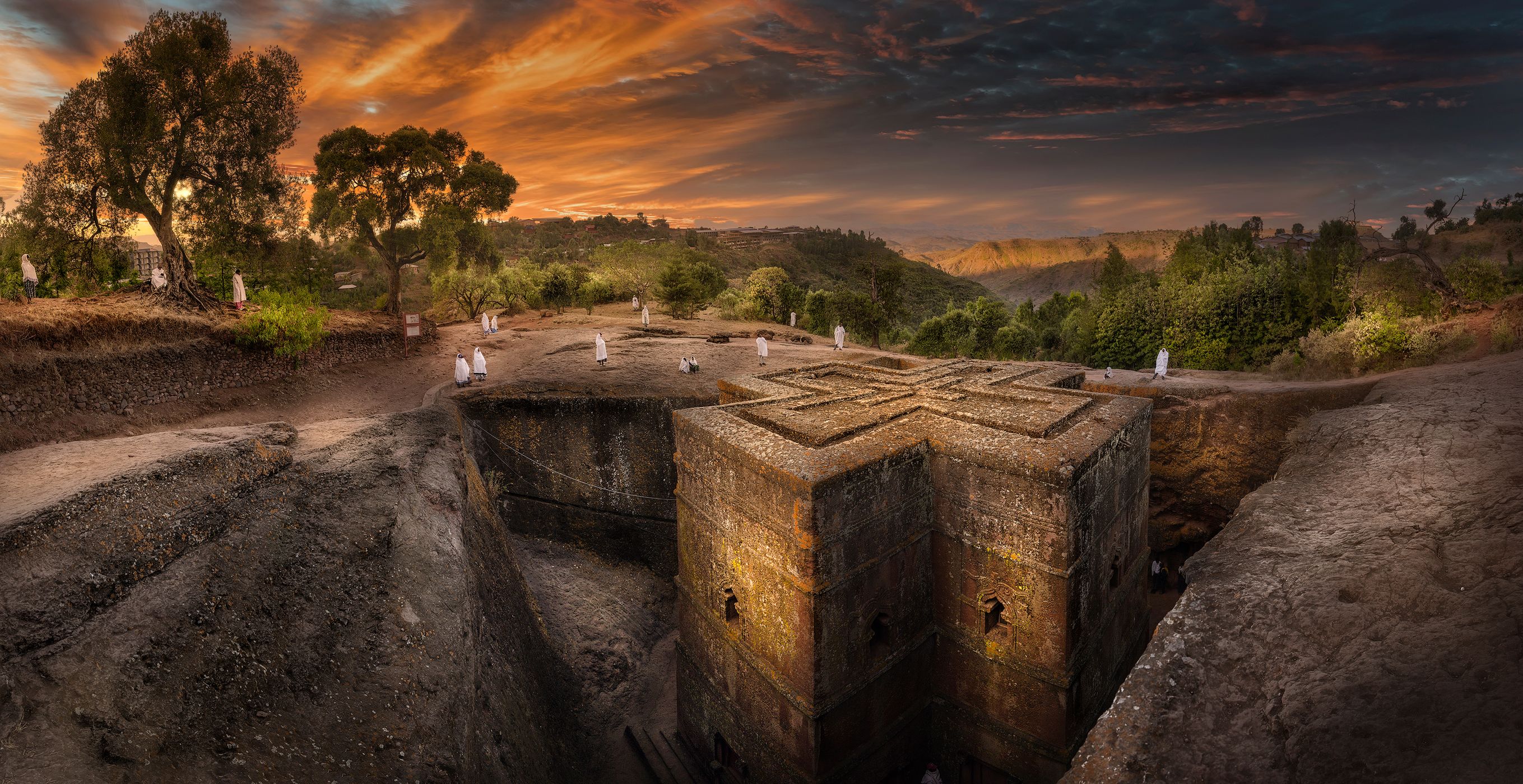
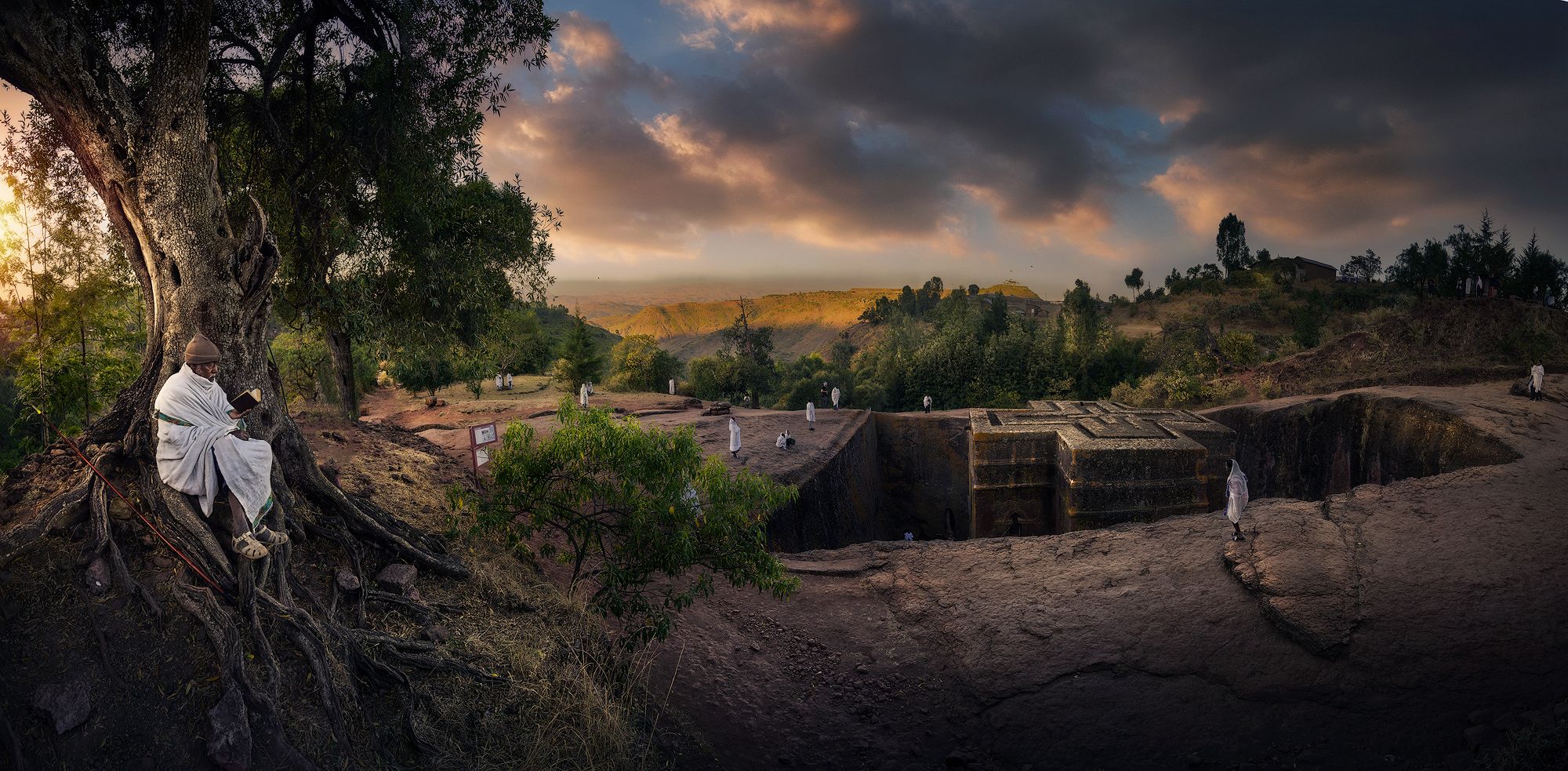
The Church of St. George (Bete Giyorgis) is the most famous and visually striking of Lalibela's eleven monolithic churches, carved directly into the basaltic rock in the 12th century. With its perfect Greek cross shape and 15 meters of depth, it appears to be sunk into the earth, cut off from the world. It is a masterpiece of Ethiopian architecture and a deeply sacred pilgrimage site for the Ethiopian Orthodox Church.
This image captures its purest essence: sunrise during the festival of Timkat (Epiphany), the most important religious celebration of the year. At this time, the moat surrounding the church is filled with hundreds of white-clad pilgrims, immersed in prayer and song, creating an atmosphere of intense devotion and mysticism that transcends time. Incense smoke rises in the cold early morning air, mingling with the prayers.
This image captures its purest essence: sunrise during the festival of Timkat (Epiphany), the most important religious celebration of the year. At this time, the moat surrounding the church is filled with hundreds of white-clad pilgrims, immersed in prayer and song, creating an atmosphere of intense devotion and mysticism that transcends time. Incense smoke rises in the cold early morning air, mingling with the prayers.
Photography Tips
Key Moment: The early morning of Timkat is undoubtedly the most dramatic and photogenic moment. Arrive well before dawn to secure your position, as the place will be crowded.
Equipment: A tripod is essential for the low-light conditions of dawn. A wide-angle lens (such as a 16-35mm) is perfect for capturing the immensity of the scene and the crowd. A medium telephoto lens (70-200mm) will allow you to isolate details and capture portraits of the pilgrims without intruding on their devotion.
Composition: Play with different levels. Shoot from the top edge of the pit to include the perfect cross of the church and the sea of people below. Look for angles that include the pilgrims in the foreground with the church in the background to provide scale and context.
Settings: Manual or aperture-priority mode. Shoot in RAW. Use a medium aperture (f/8 - f/11) for good depth of field. As people are moving, balance the lowest possible ISO with a shutter speed fast enough to freeze motion (starting at 1/125s or faster), or use slower shutter speeds on a tripod for a different effect with the movement of people.
Respect: Flash photography is almost always inappropriate and intrusive. Use natural light. Be discreet and maintain a respectful distance during moments of intense prayer.
Equipment: A tripod is essential for the low-light conditions of dawn. A wide-angle lens (such as a 16-35mm) is perfect for capturing the immensity of the scene and the crowd. A medium telephoto lens (70-200mm) will allow you to isolate details and capture portraits of the pilgrims without intruding on their devotion.
Composition: Play with different levels. Shoot from the top edge of the pit to include the perfect cross of the church and the sea of people below. Look for angles that include the pilgrims in the foreground with the church in the background to provide scale and context.
Settings: Manual or aperture-priority mode. Shoot in RAW. Use a medium aperture (f/8 - f/11) for good depth of field. As people are moving, balance the lowest possible ISO with a shutter speed fast enough to freeze motion (starting at 1/125s or faster), or use slower shutter speeds on a tripod for a different effect with the movement of people.
Respect: Flash photography is almost always inappropriate and intrusive. Use natural light. Be discreet and maintain a respectful distance during moments of intense prayer.
Travel Information
When to Go: To experience this exact scene, you should plan your trip to coincide with Timkat, which falls on January 19th (or the 20th in leap years). It's the quintessential Ethiopian experience, but also the busiest time of year. Outside of this time, visit the church at dawn to avoid the daytime tourist crowds and enjoy the spectacular light.
Preparation: Lalibela is at over 2,500 meters (8,200 feet) above sea level. Give yourself time to acclimatize and avoid strenuous exertion the first few days. Early mornings are very cold, especially in January. Dress in multiple layers, with gloves and a hat.
Guide: Hire an official local guide. They will not only help you understand the history and symbolism, but will also guide you through the chaotic Timkat, pointing out the best spots and appropriate behaviors.
Cultural Respect: This is a sacred site. Men and women must cover their shoulders and legs. It is mandatory to remove shoes before descending into the pit and entering any church. Always ask permission before taking close-up photos of a person.
Getting there: Fly from Addis Ababa to Lalibela (Axum Airport is usually the connecting airport). The tour of Lalibela's churches is done on foot.
Preparation: Lalibela is at over 2,500 meters (8,200 feet) above sea level. Give yourself time to acclimatize and avoid strenuous exertion the first few days. Early mornings are very cold, especially in January. Dress in multiple layers, with gloves and a hat.
Guide: Hire an official local guide. They will not only help you understand the history and symbolism, but will also guide you through the chaotic Timkat, pointing out the best spots and appropriate behaviors.
Cultural Respect: This is a sacred site. Men and women must cover their shoulders and legs. It is mandatory to remove shoes before descending into the pit and entering any church. Always ask permission before taking close-up photos of a person.
Getting there: Fly from Addis Ababa to Lalibela (Axum Airport is usually the connecting airport). The tour of Lalibela's churches is done on foot.
Spot Type
Outdoor
Crowd Factor
A decent amount of people
Best Timing
Sunrise in winter
Sunrise & Sunset
06:13 - 18:04
| current local time: 18:20
Photo Themes
Landscape
Panorama
Panoramic View
Locations
Lalibela
Amhara Region





Spot comments (0)