


France Abbatiale Sainte Foy de Conques
The Abbatiale Sainte-Foy in Conques stands on an older monastic site founded by monks in the early medieval period; its fame explodes after the relics of the young martyr Sainte Foy arrive—by a notorious “holy theft”—around 866, making Conques a major stop on the Camino to Santiago. The church has been a protected historic monument since 1840 and forms part of the UNESCO-listed Routes of Santiago in France (1998). In the treasury, the jewel-encrusted reliquary statue of Sainte Foy became the medieval crowd-puller and still anchors the site’s identity today.
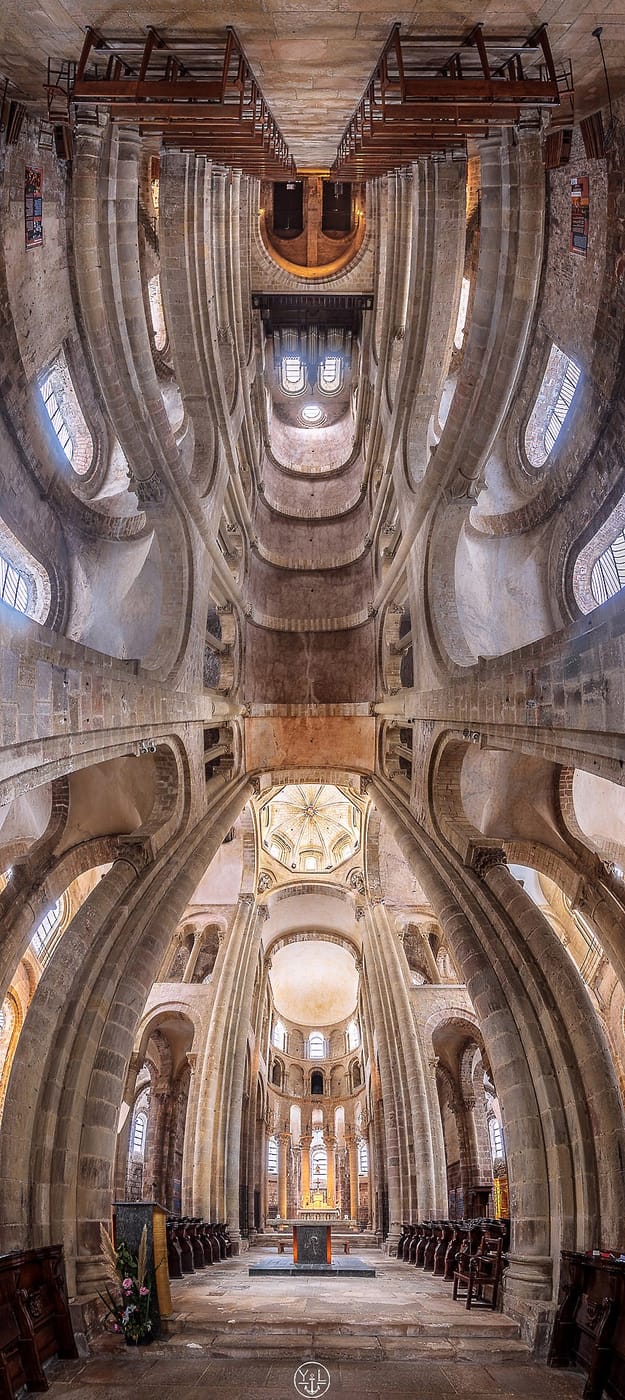
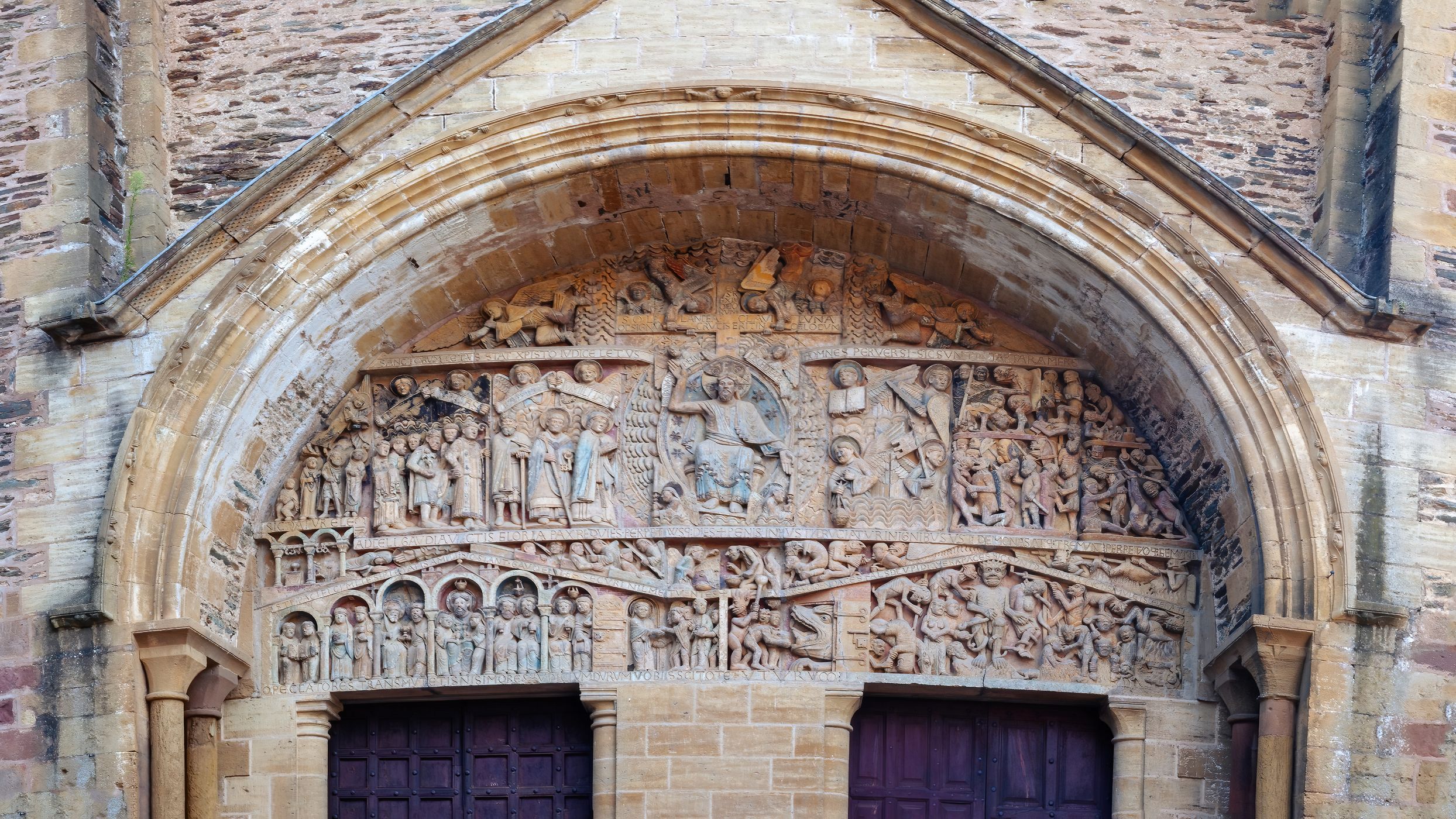
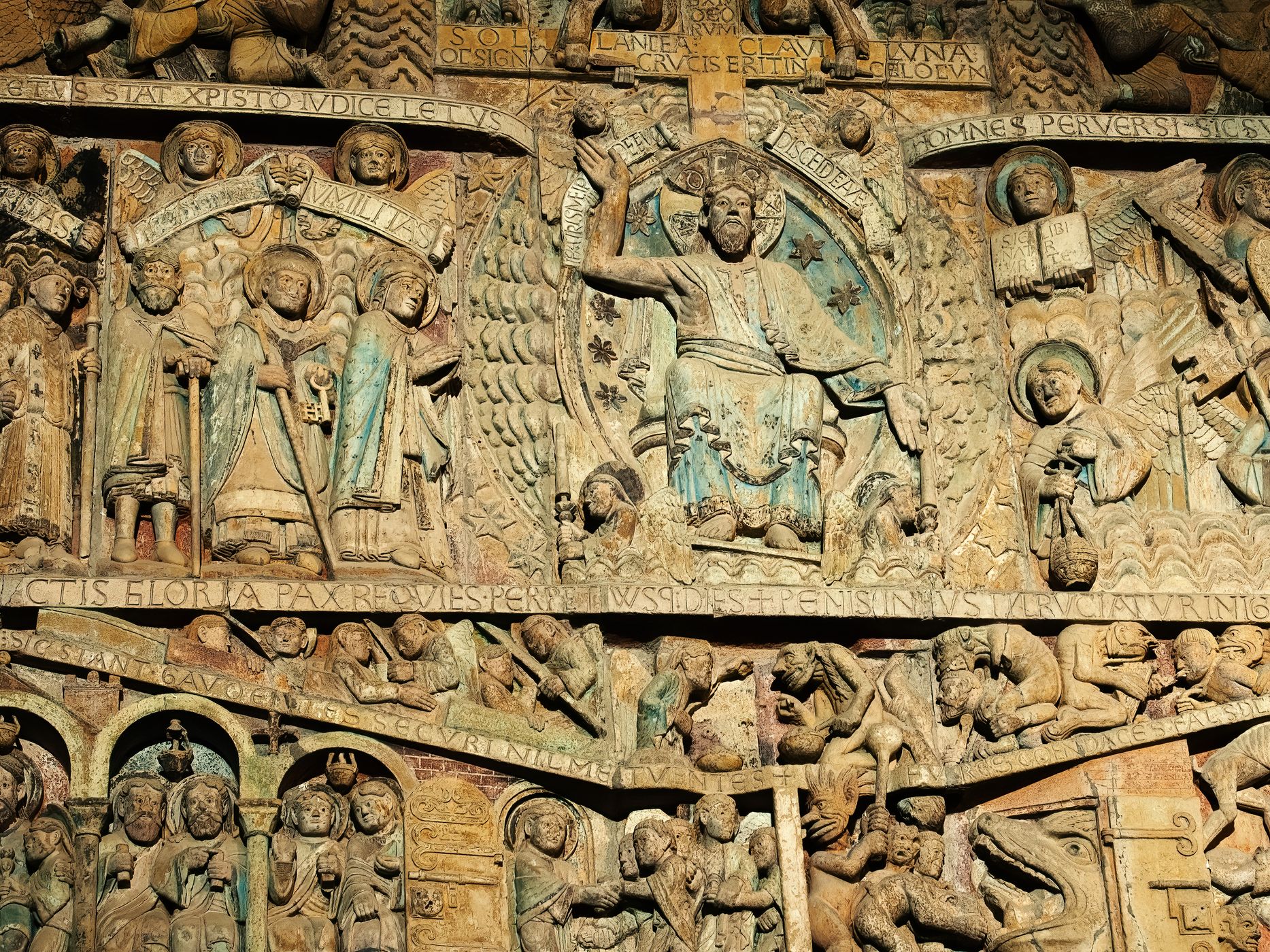
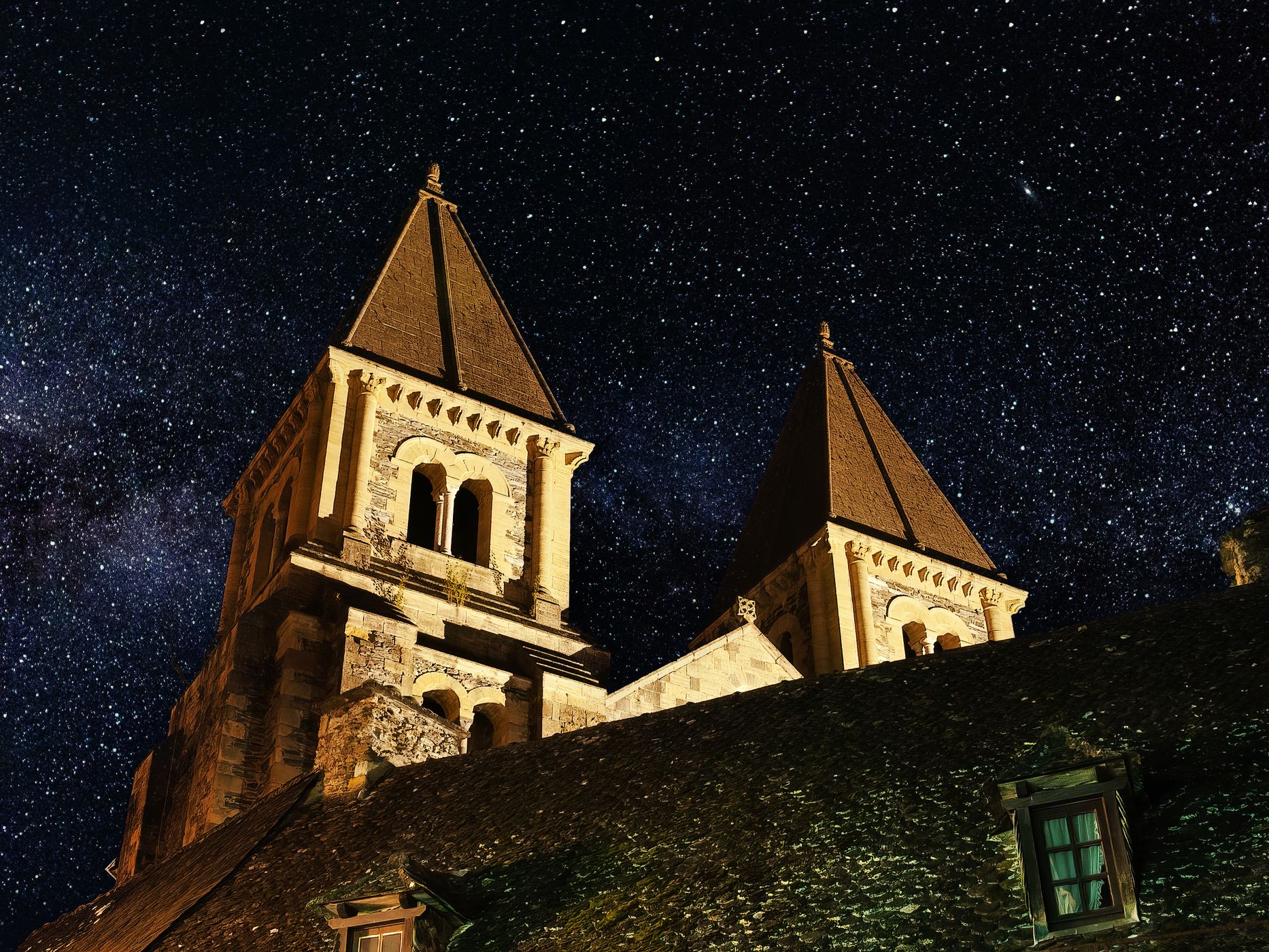
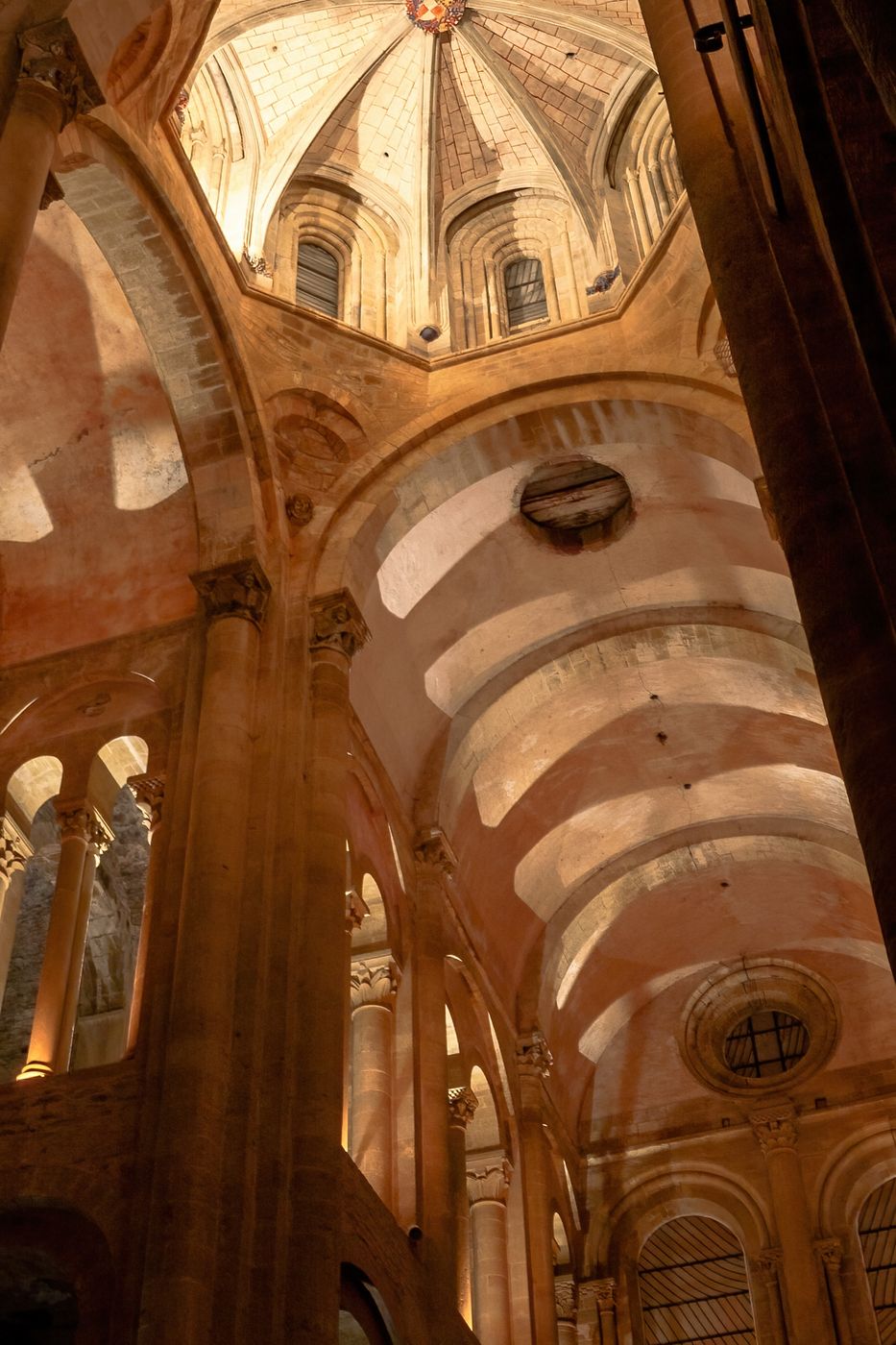
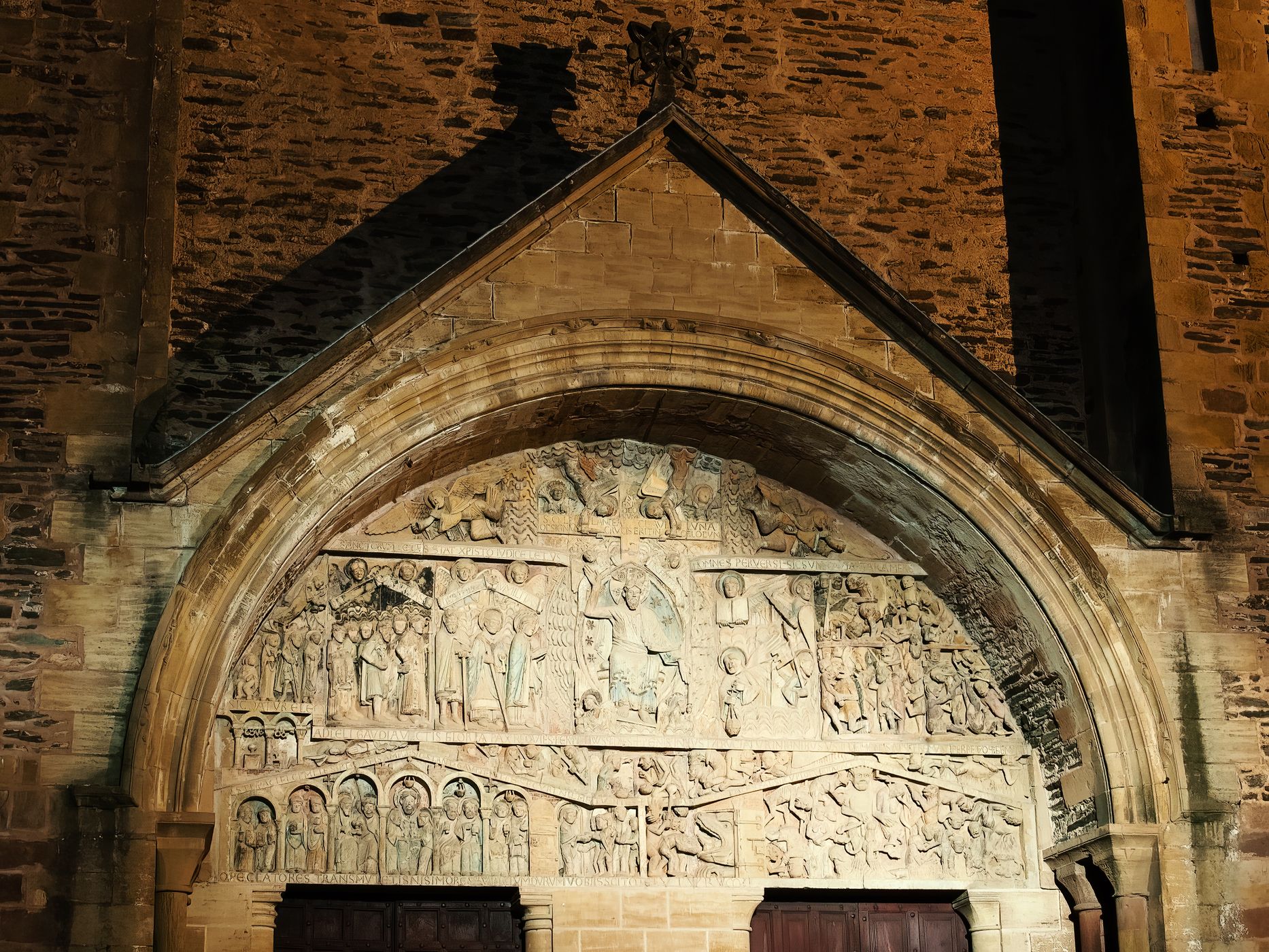
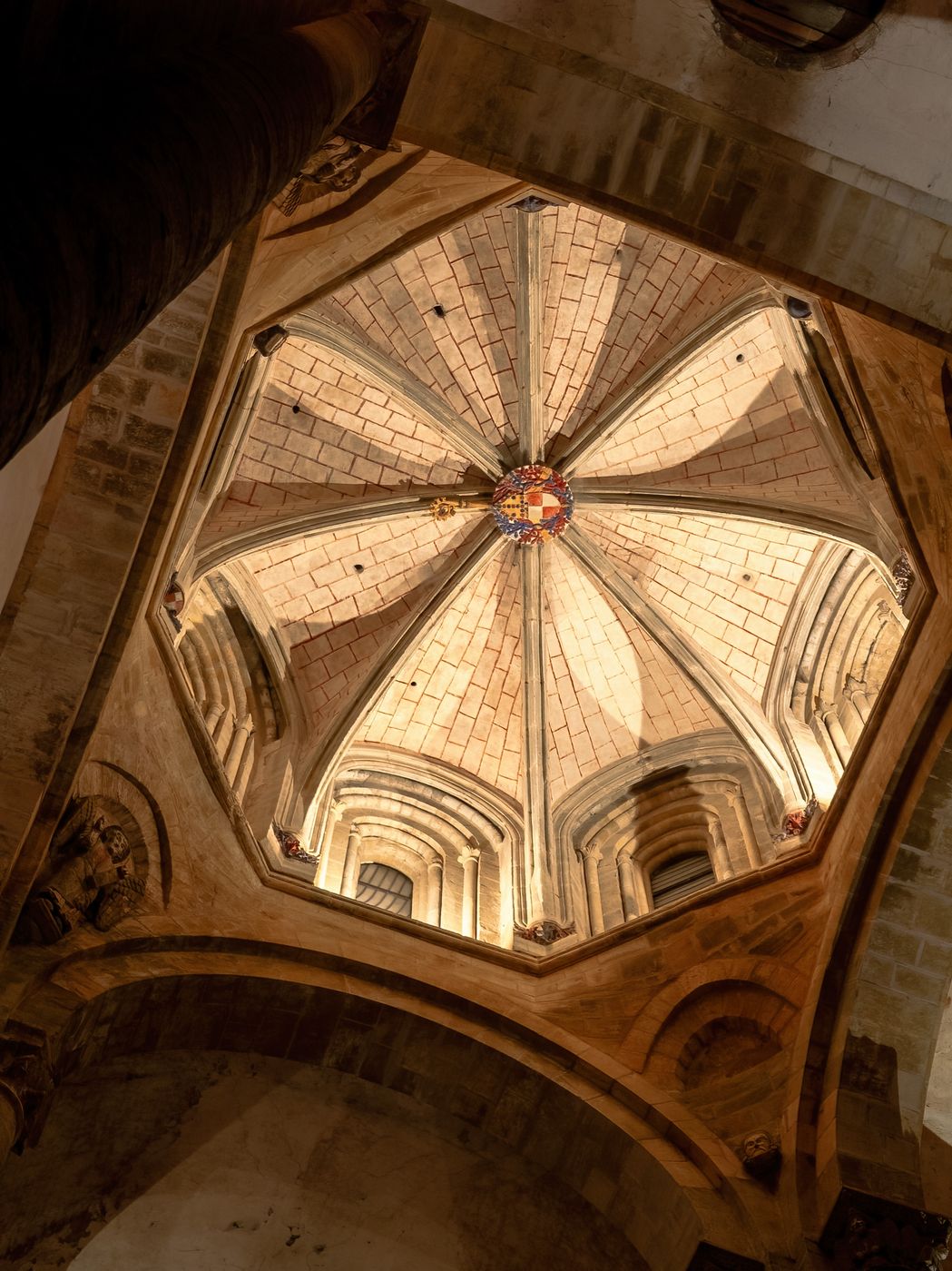
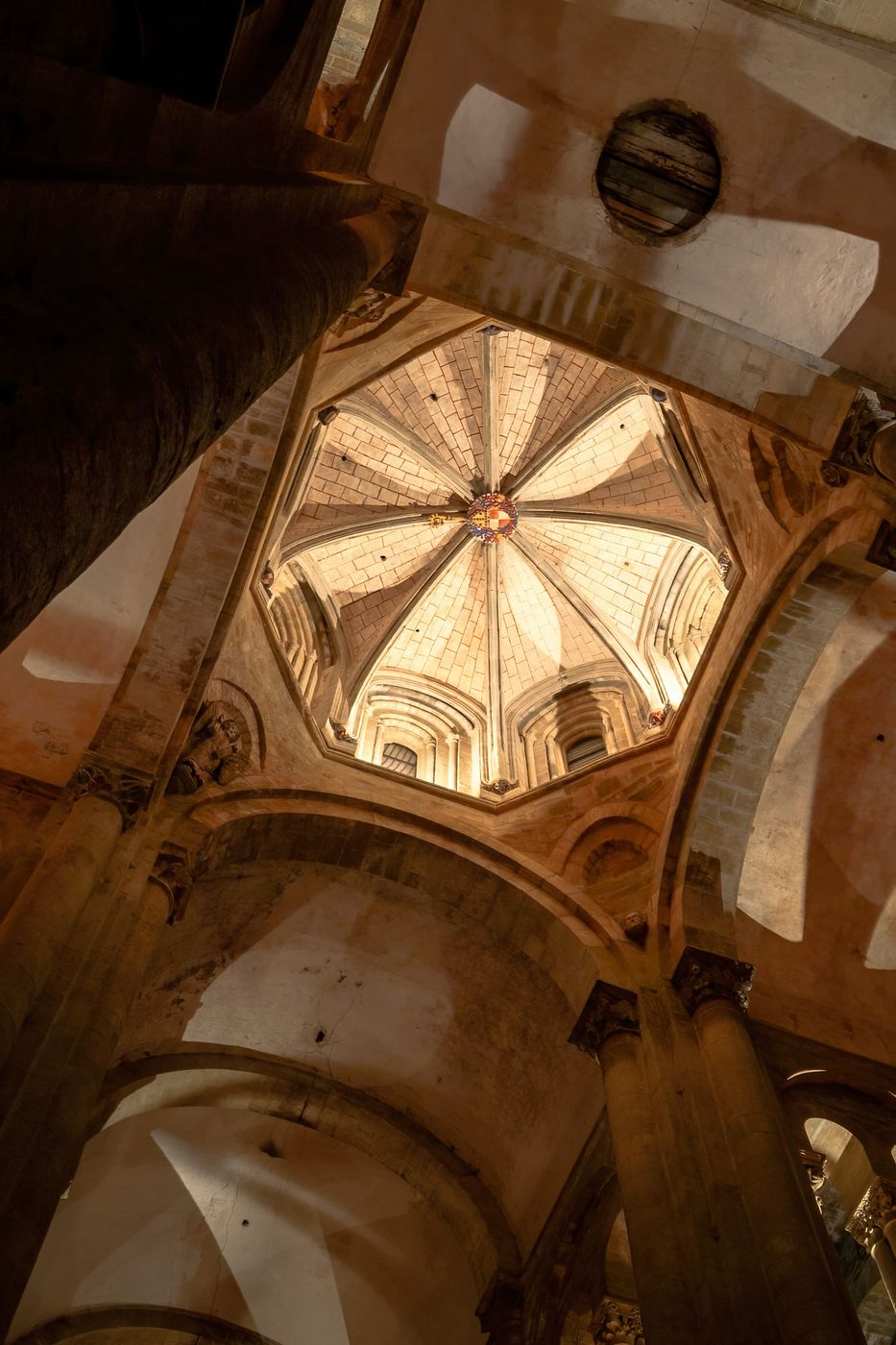
Architecturally, the abbey is a Southern French Romanesque masterpiece built mainly in the 11th–12th centuries: a Latin-cross plan adapted for pilgrims, with a barrel-vaulted nave, side aisles with galleries, an ambulatory and radiating chapels to keep visitor flow moving, and a crossing tower rising about 26 m. The west front carries a spectacular early-12th-century Last Judgment tympanum. Inside, contemporary note meets Romanesque stone: Pierre Soulages designed 104 subtly luminous stained-glass windows, commissioned in 1986 and installed by 1994, which bathe the interior in a restrained, silvery light that changes through the day.
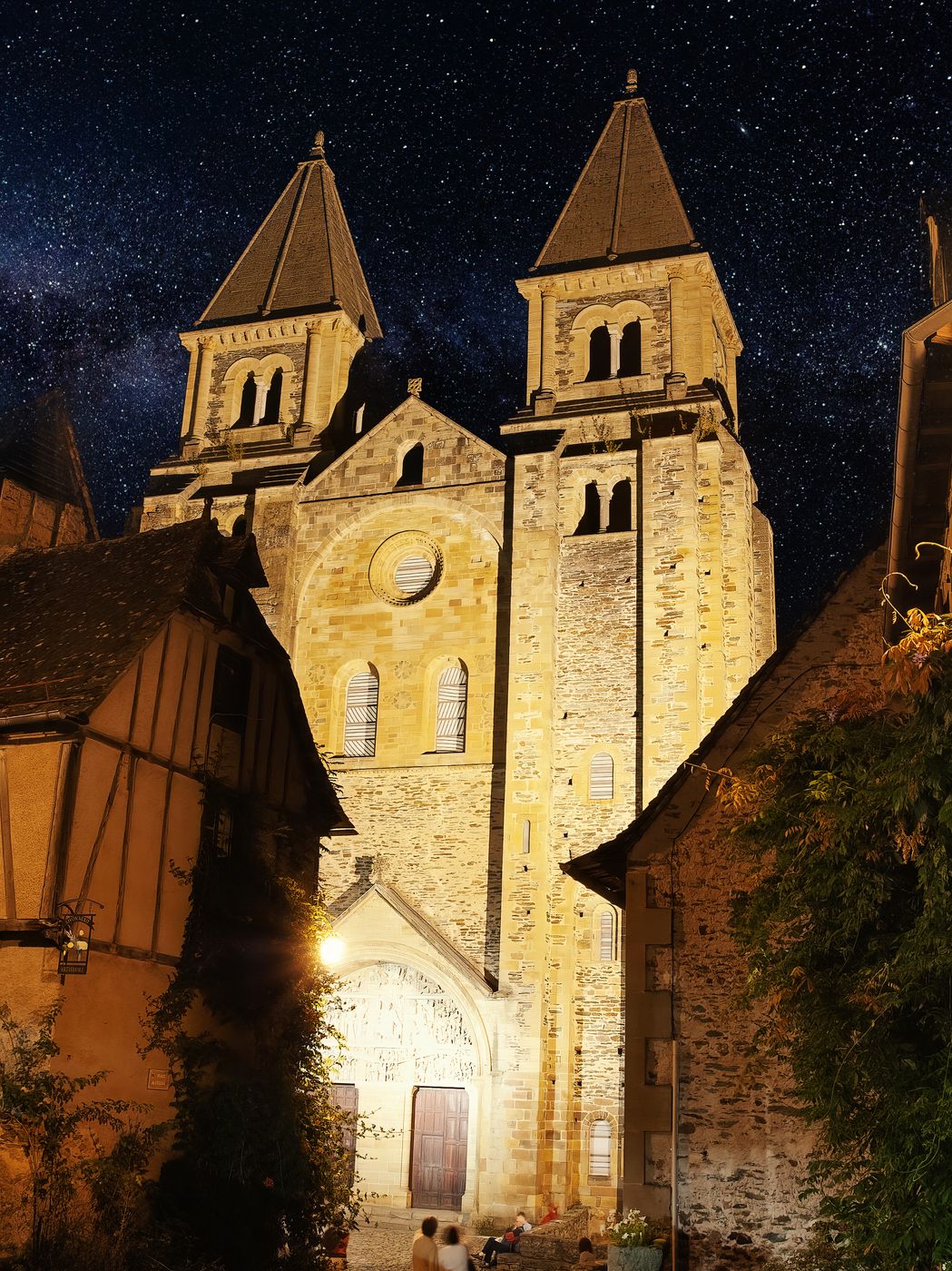
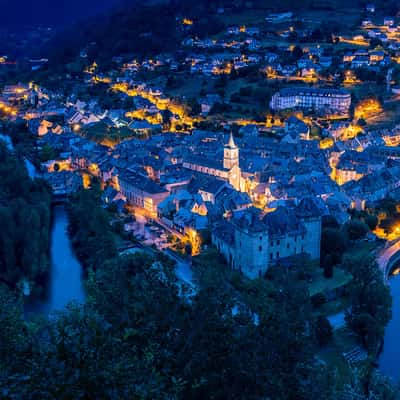
For photography, Conques is generous. The Bancarel belvedere gives a classic panoramic of the village roofscape wrapped around the abbey; down below, the “Roman” bridge on the GR65 frames reflective shots along the Dourdou. The tympanum’s carving rewards tight details in raking afternoon light, while the Soulages windows make moody, minimalist studies inside. On many evenings from spring to mid-autumn, a sound-and-light programme reveals the tympanum’s original polychromy—prime time for dramatic night images.
Architecturally, the abbey is a Southern French Romanesque masterpiece built mainly in the 11th–12th centuries: a Latin-cross plan adapted for pilgrims, with a barrel-vaulted nave, side aisles with galleries, an ambulatory and radiating chapels to keep visitor flow moving, and a crossing tower rising about 26 m. The west front carries a spectacular early-12th-century Last Judgment tympanum. Inside, contemporary note meets Romanesque stone: Pierre Soulages designed 104 subtly luminous stained-glass windows, commissioned in 1986 and installed by 1994, which bathe the interior in a restrained, silvery light that changes through the day.
For photography, Conques is generous. The Bancarel belvedere gives a classic panoramic of the village roofscape wrapped around the abbey; down below, the “Roman” bridge on the GR65 frames reflective shots along the Dourdou. The tympanum’s carving rewards tight details in raking afternoon light, while the Soulages windows make moody, minimalist studies inside. On many evenings from spring to mid-autumn, a sound-and-light programme reveals the tympanum’s original polychromy—prime time for dramatic night images.
Photography Tips
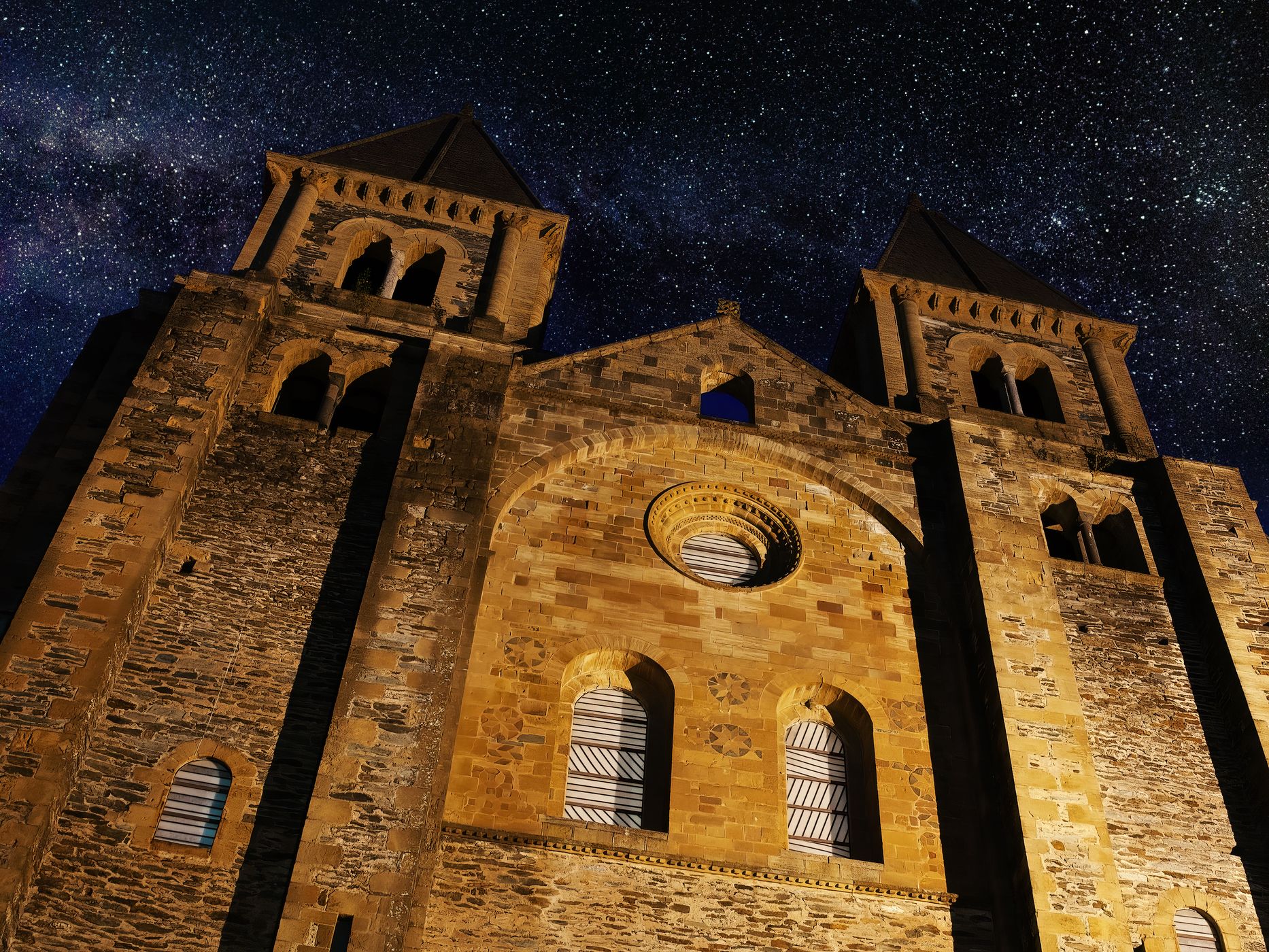
Photography tips for this location: go early and late for warm, low sun on the honey-coloured stone; carry a fast prime (e.g., 35/50 mm) for the dim interior; expose for highlights when shooting the Soulages glass and lift shadows later; use a polariser sparingly outdoors to deepen foliage without killing roof-tile sheen; compose from the Bancarel viewpoint with foreground trees for scale; on the square, step back to keep the west front vertical, or intentionally embrace a low-angle perspective for drama; inside, keep silent, avoid flash, and follow any posted rules—especially during services.
Travel Information
There is a mandatory parking slot (to be paid) at the entry of the village. Easier to get a slot at early morning or late afternoon.
Getting there: Conques sits in Aveyron (Occitanie). By public transport, take a train to Rodez, then liO bus 223 from “Rodez – Gare SNCF/Routière” to “Conques-en-Rouergue – Conques” (about 50 min; services vary by day/season). Local shuttles and taxis operate from Rodez or Saint-Christophe-Vallon when the bus is not running. Walkers on the Via Podiensis (GR65) reach Conques on the classic stage from Golinhac; it’s one of the pilgrimage route’s most celebrated arrivals. If you’re driving, plan for narrow valley roads and limited village parking.
Getting there: Conques sits in Aveyron (Occitanie). By public transport, take a train to Rodez, then liO bus 223 from “Rodez – Gare SNCF/Routière” to “Conques-en-Rouergue – Conques” (about 50 min; services vary by day/season). Local shuttles and taxis operate from Rodez or Saint-Christophe-Vallon when the bus is not running. Walkers on the Via Podiensis (GR65) reach Conques on the classic stage from Golinhac; it’s one of the pilgrimage route’s most celebrated arrivals. If you’re driving, plan for narrow valley roads and limited village parking.





Spot comments (0)