
France Lods, French Jura
Lods has roots that reach back to early medieval times: the site was already occupied by the 5th–7th centuries, and the village appeared in written records in 1189. Over the centuries it grew as a hillside community that lived from two main trades – winegrowing on the sunny slopes and ironworking along the river, where forges tapped the power of the water. These activities boomed until the 19th century, when phylloxera devastated the vineyards and the arrival of the railway brought tough competition to local industry. The village slowly turned in on itself, which, ironically, helped preserve its old fabric and eventually earned it the coveted “Plus Beaux Villages de France” and regional “Cité de caractère” labels.
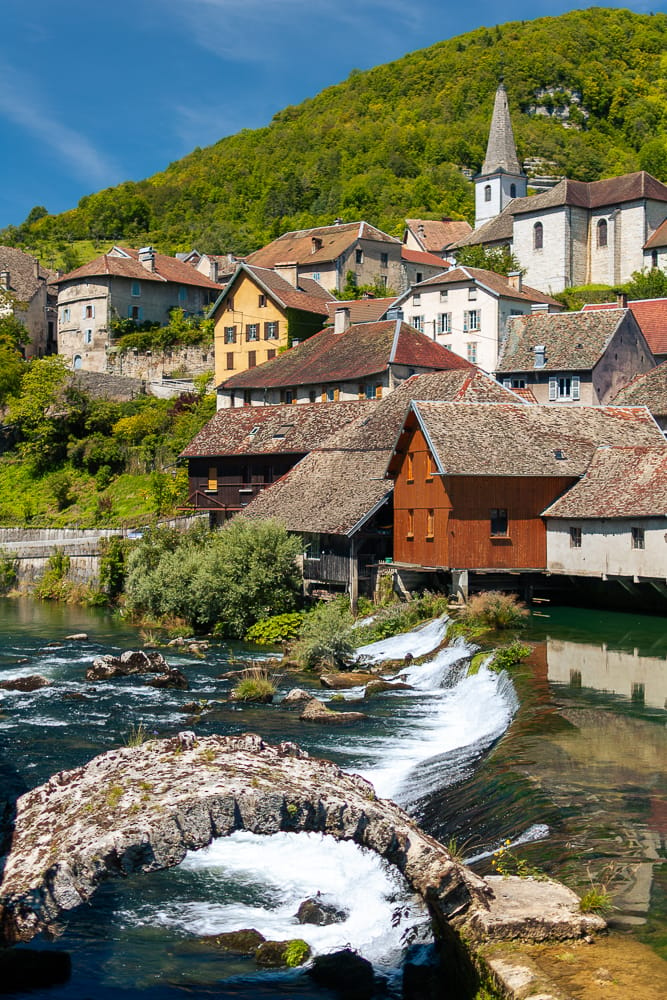
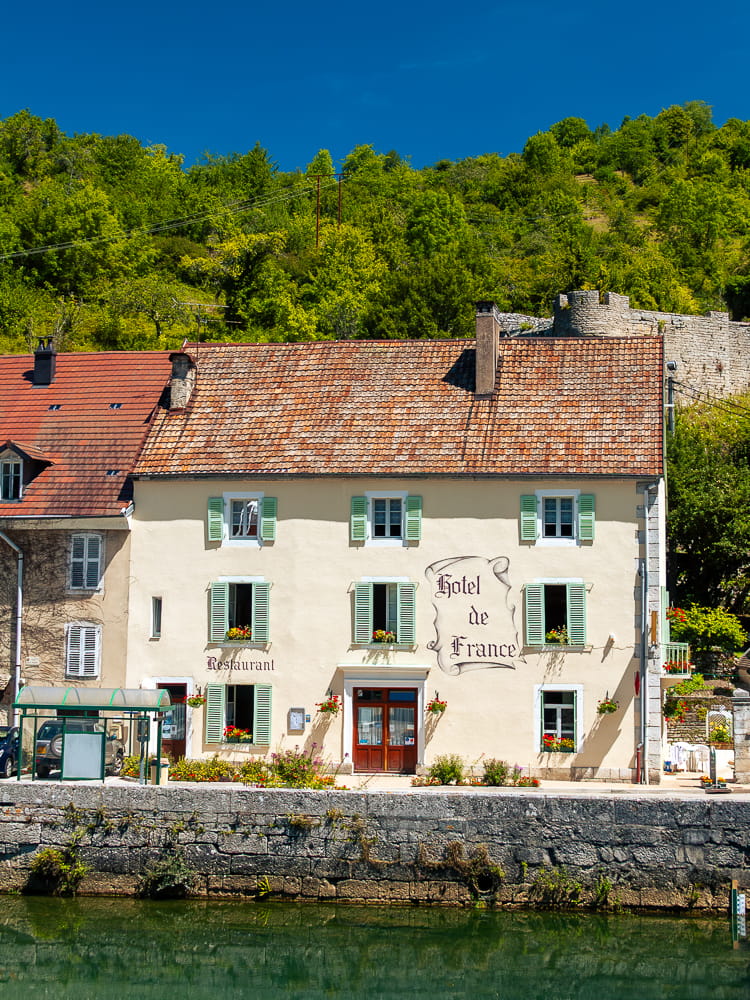
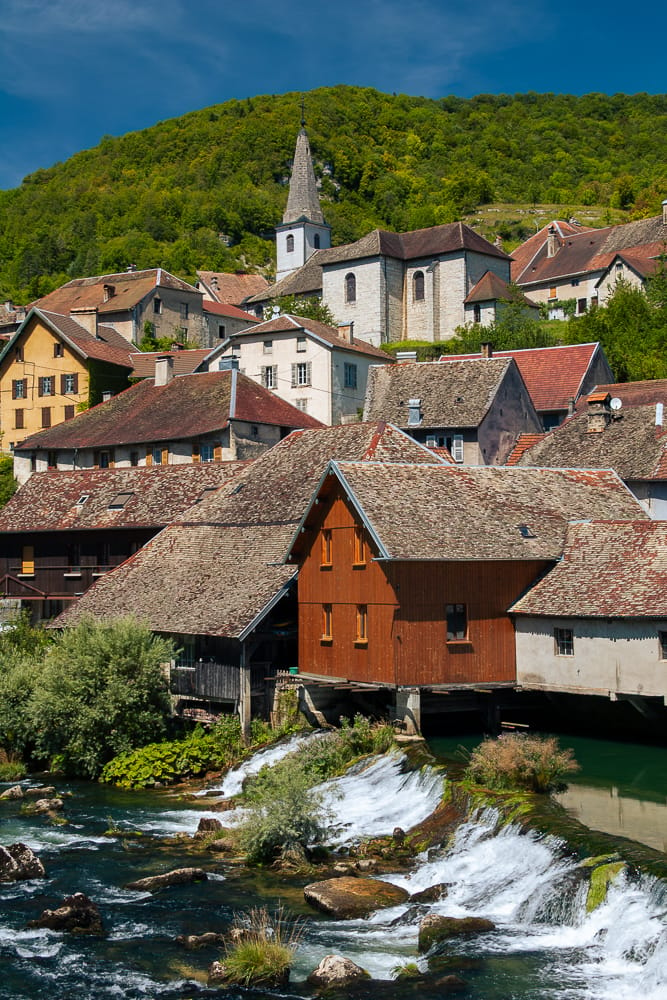
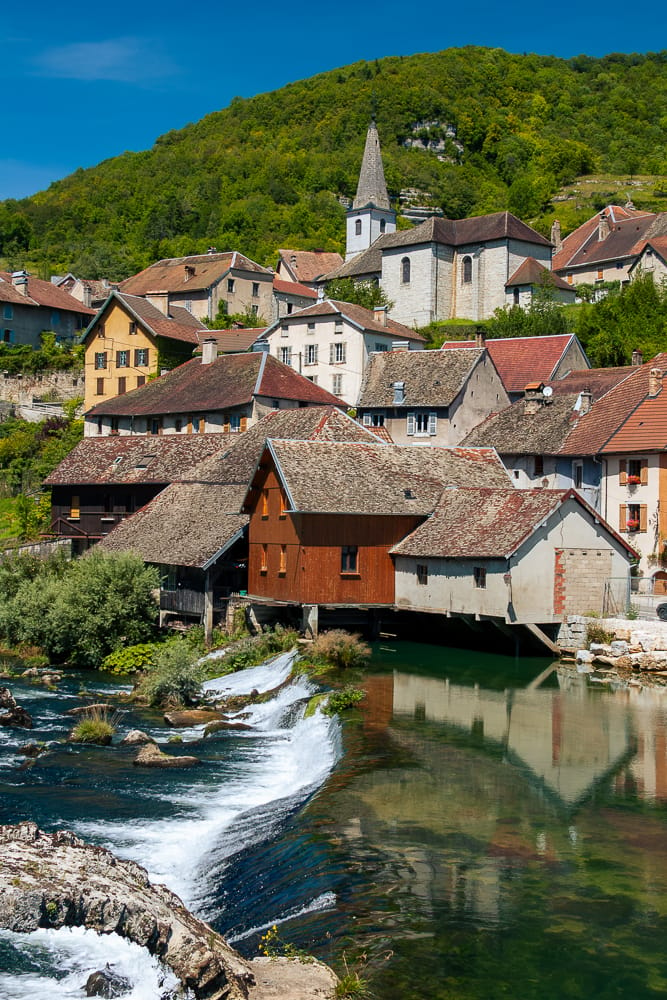
Today Lods clings to the steep side of the Loue valley in the Jura mountains, in the Doubs department of eastern France, between the villages of Vuillafans and Mouthier-Haute-Pierre. Stone winegrowers’ houses step up the slope around the church, while below, by the clear turquoise Loue, old mills and former forges line the river beside a series of small weirs and footbridges. Narrow, often cobbled lanes wind through vaulted passages, past terraced gardens, vaulted cellars and balconies draped with flowers in summer. Forested hills rise sharply on both sides of the valley, so wherever you look you get layers of stone, water and woodland that make the village feel both tucked away and dramatically open to the landscape.
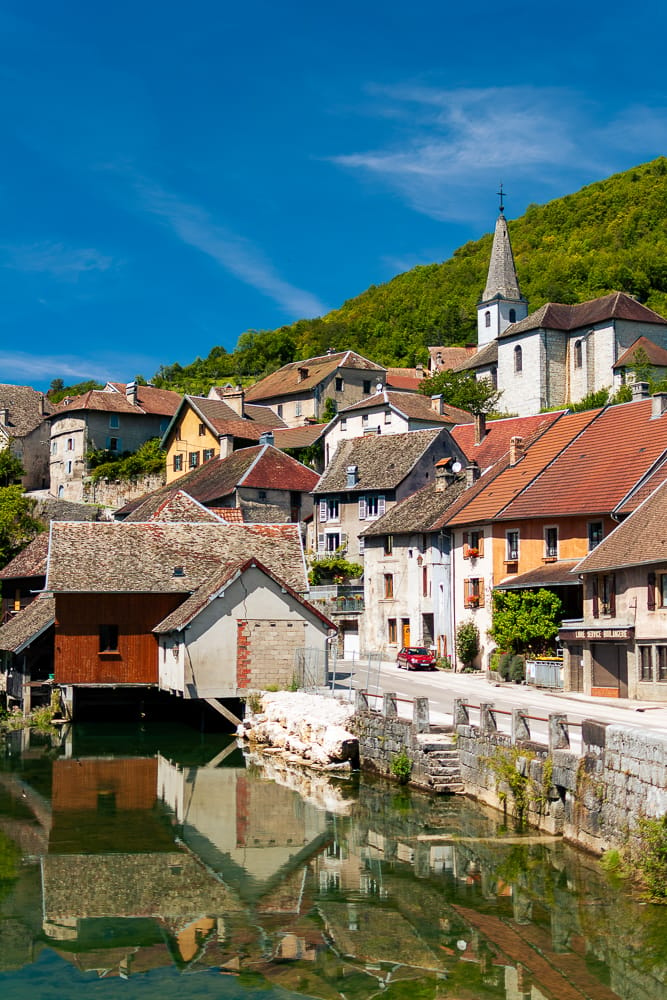
For photographers, Lods is a bit of a playground. The Loue acts like a mirror for the pastel façades and tiled roofs, especially on calm mornings and evenings. The contrast between dark cliffs, bright river and ochre stone houses creates strong compositions almost by default, and mist often lingers in the valley in spring and autumn, adding atmosphere to sunrise shots. Higher up on the valley sides and at nearby viewpoints, you can frame the entire village in a tight bend of the river, with the church spire and stepped streets tumbling down the slope – classic postcard material with plenty of scope to make it your own.
Today Lods clings to the steep side of the Loue valley in the Jura mountains, in the Doubs department of eastern France, between the villages of Vuillafans and Mouthier-Haute-Pierre. Stone winegrowers’ houses step up the slope around the church, while below, by the clear turquoise Loue, old mills and former forges line the river beside a series of small weirs and footbridges. Narrow, often cobbled lanes wind through vaulted passages, past terraced gardens, vaulted cellars and balconies draped with flowers in summer. Forested hills rise sharply on both sides of the valley, so wherever you look you get layers of stone, water and woodland that make the village feel both tucked away and dramatically open to the landscape.
For photographers, Lods is a bit of a playground. The Loue acts like a mirror for the pastel façades and tiled roofs, especially on calm mornings and evenings. The contrast between dark cliffs, bright river and ochre stone houses creates strong compositions almost by default, and mist often lingers in the valley in spring and autumn, adding atmosphere to sunrise shots. Higher up on the valley sides and at nearby viewpoints, you can frame the entire village in a tight bend of the river, with the church spire and stepped streets tumbling down the slope – classic postcard material with plenty of scope to make it your own.
Photography Tips
A few practical photography tips help make the most of it:
Start early: morning light slides down the valley sides and often gives you soft backlight and mist over the river before the sun hits the façades directly.
Use reflections: work close to the water with a wide-angle lens to catch the houses and sky reflected in the Loue; a polarising filter lets you choose between mirror-like surfaces or clear views of the riverbed.
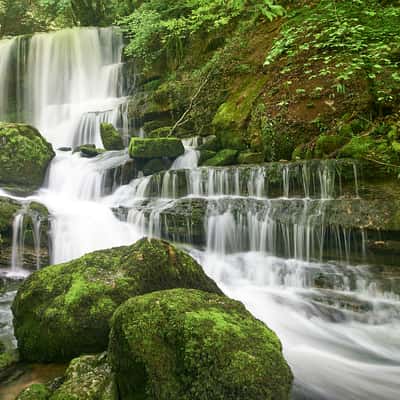
Slow the water: bring a tripod and, if you have one, an ND filter to blur the waterfalls and weirs into smooth bands of white that contrast with the rigid stonework.
Explore the verticality: step up through the upper streets and terraces with a short telephoto lens to compress the layers of roofs, chimneys and cliffs into graphic patterns.
Stay for blue hour: the village feels very quiet after day-trippers leave; shooting from the riverbank or a nearby viewpoint as the sky turns deep blue and a few lights come on gives a very different mood from daytime images.
Start early: morning light slides down the valley sides and often gives you soft backlight and mist over the river before the sun hits the façades directly.
Use reflections: work close to the water with a wide-angle lens to catch the houses and sky reflected in the Loue; a polarising filter lets you choose between mirror-like surfaces or clear views of the riverbed.
Slow the water: bring a tripod and, if you have one, an ND filter to blur the waterfalls and weirs into smooth bands of white that contrast with the rigid stonework.
Explore the verticality: step up through the upper streets and terraces with a short telephoto lens to compress the layers of roofs, chimneys and cliffs into graphic patterns.
Stay for blue hour: the village feels very quiet after day-trippers leave; shooting from the riverbank or a nearby viewpoint as the sky turns deep blue and a few lights come on gives a very different mood from daytime images.
Travel Information
Getting to Lods is straightforward but pleasantly scenic. By car, it sits on the tourist road D67 that follows the Loue valley between Besançon and Pontarlier; from Besançon it is roughly 30 km and about half an hour’s drive via Ornans, continuing along the river towards its source.
The nearest major rail hub is Besançon-Viotte station, with TGV and mainline connections from cities such as Paris and Lyon; from there you can hire a car or take the regional Mobigo LR204 bus towards Pontarlier, which runs along the Loue valley and serves stops including Ornans, Vuillafans and Lods itself (services are not constant through the day, so it is worth checking current timetables).
Whether you drive or use the bus, the approach through the winding valley is part of the charm – the village reveals itself in stages, clinging to the slope above the glittering river you are about to photograph.
The nearest major rail hub is Besançon-Viotte station, with TGV and mainline connections from cities such as Paris and Lyon; from there you can hire a car or take the regional Mobigo LR204 bus towards Pontarlier, which runs along the Loue valley and serves stops including Ornans, Vuillafans and Lods itself (services are not constant through the day, so it is worth checking current timetables).
Whether you drive or use the bus, the approach through the winding valley is part of the charm – the village reveals itself in stages, clinging to the slope above the glittering river you are about to photograph.
Spot Type
Outdoor
Crowd Factor
Just a few people
Best Timing
Daytime
Sunrise & Sunset
07:58 - 18:41
| current local time: 12:01
Photo Themes
Creek
Mountainscape
River
Village





Spot comments (0)