
France Place Duroc, Pont-à-Mousson
History and description
Pont-à-Mousson grew at the foot of the Mousson hill, where a medieval castle once controlled the river crossing. Over the centuries, the town developed as part of the Duchy of Lorraine and later as a university town, with strong links to both trade and learning. In the nineteenth and twentieth centuries it also became an important industrial centre, especially for iron and cast-iron products, but the historic core has kept its older character.
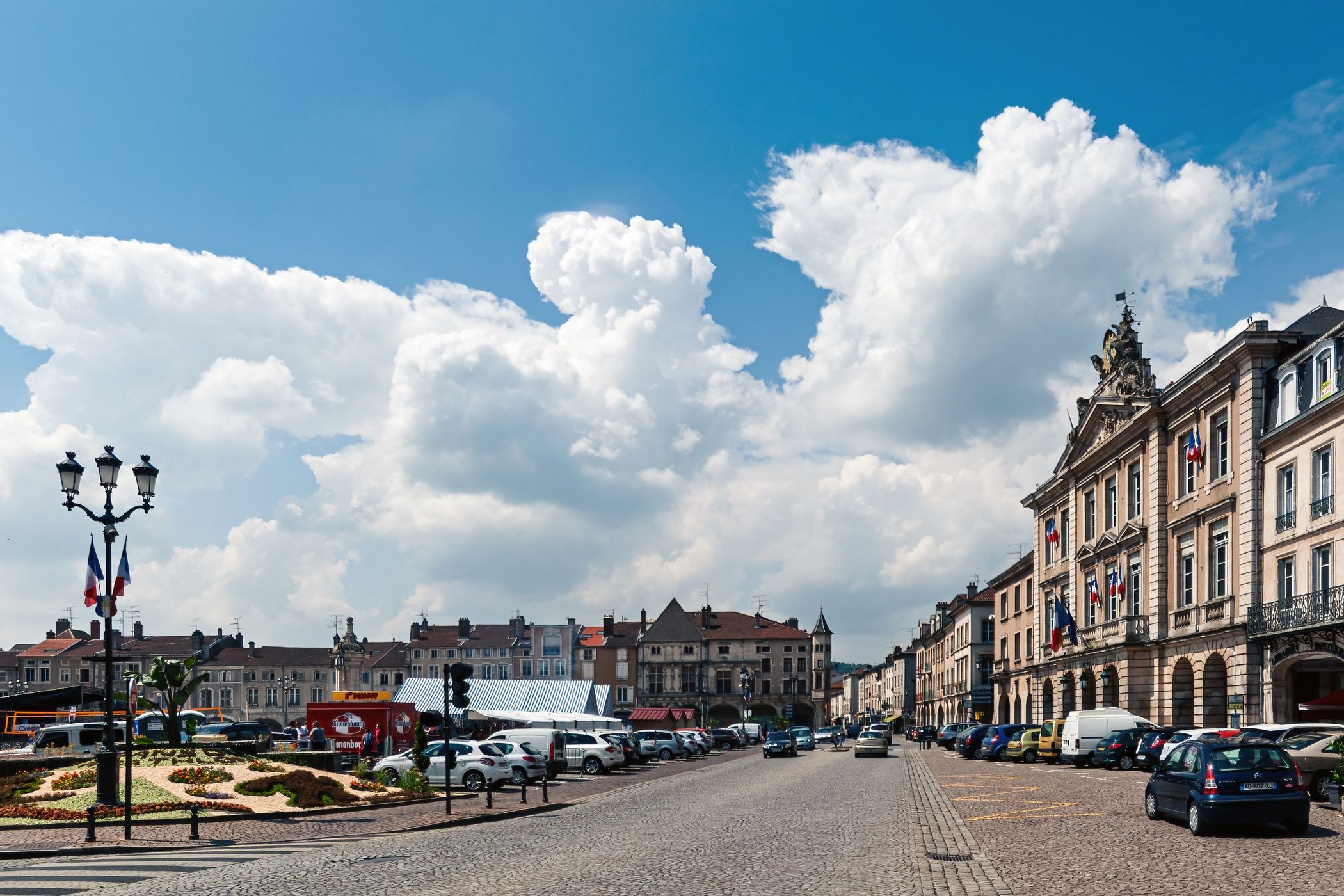
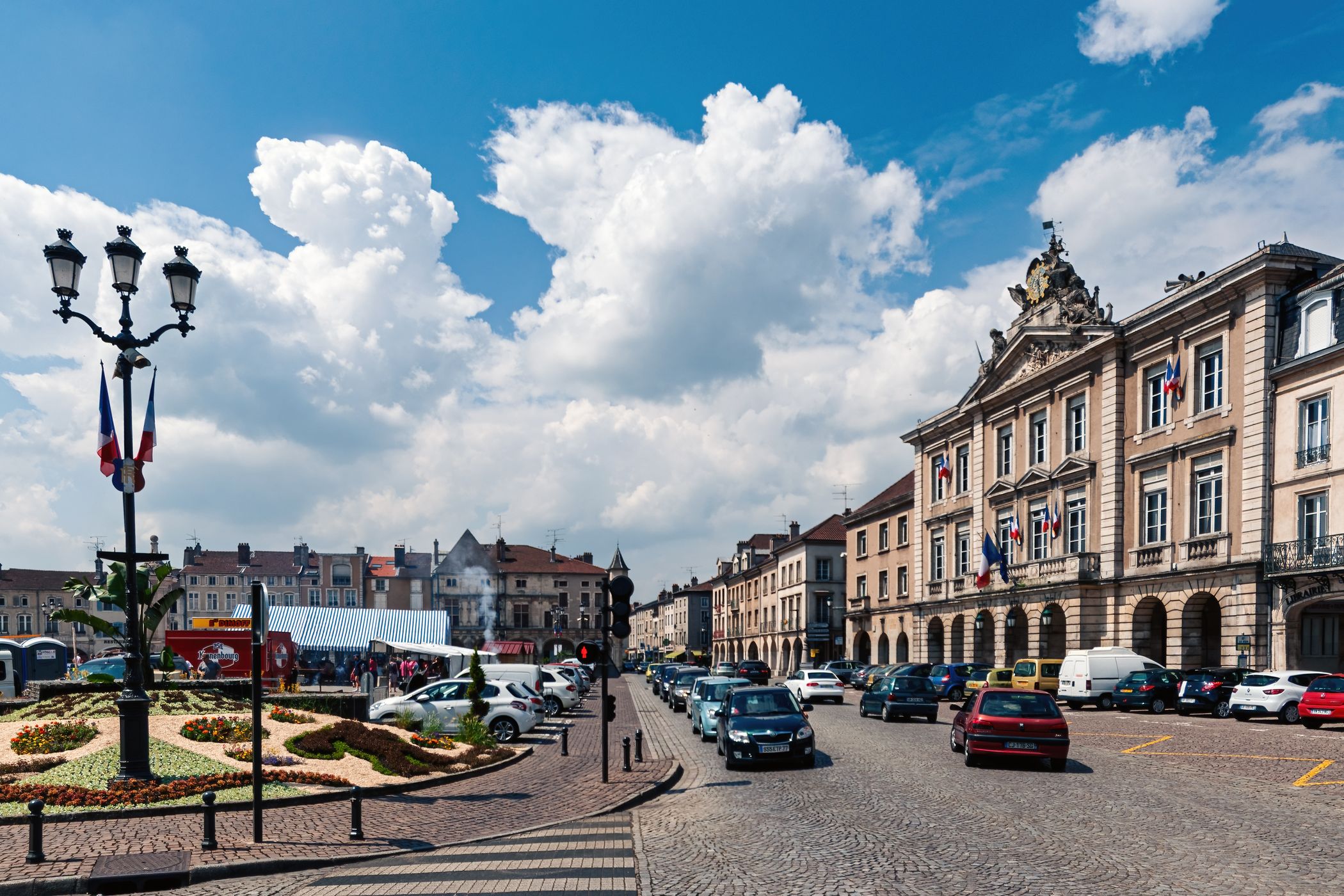
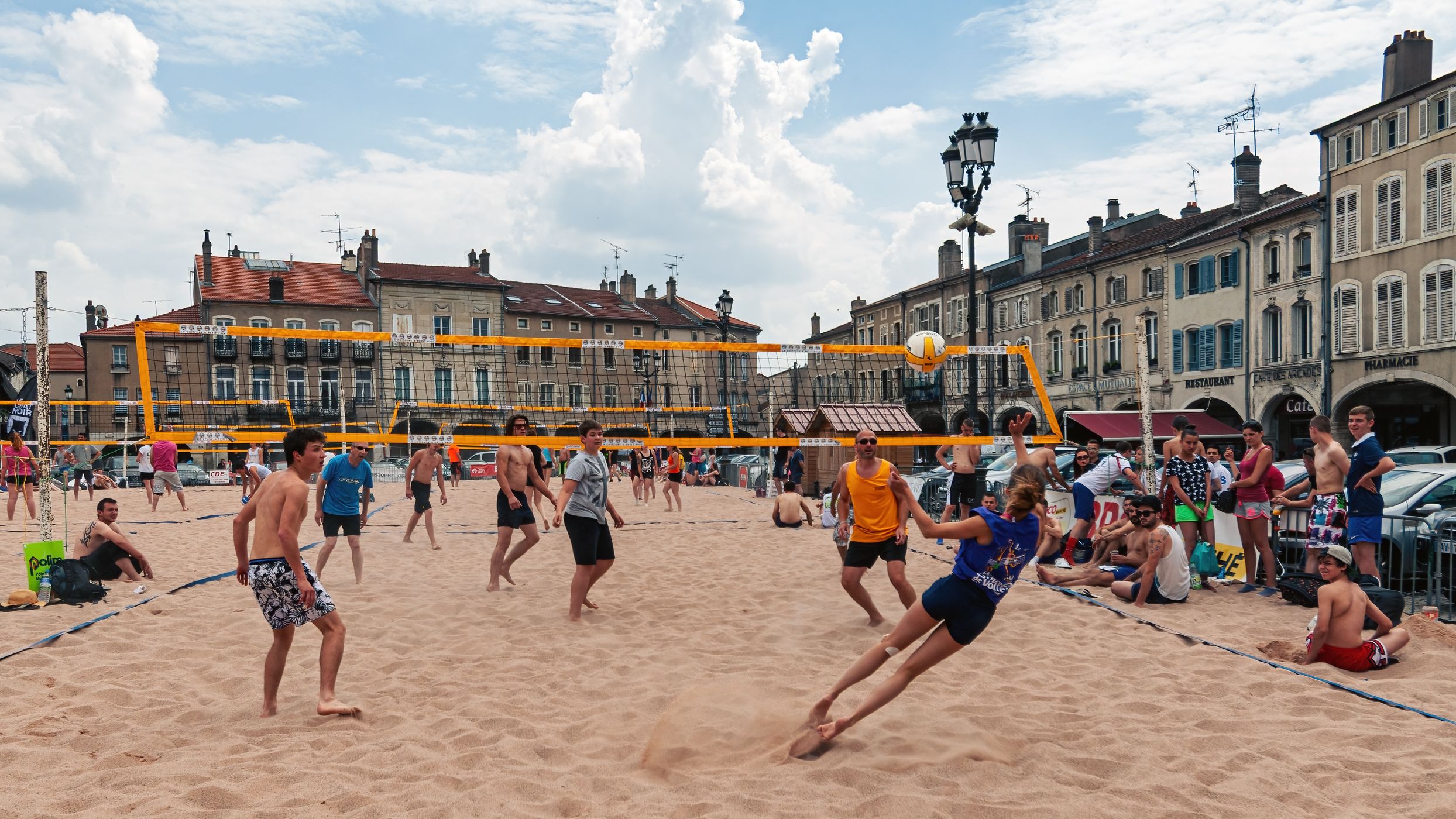
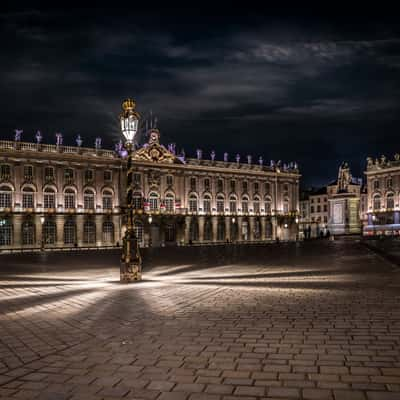
Right in the centre lies Place Duroc. The square has a distinctive triangular shape, framed on all sides by buildings with Renaissance-style arcades at ground level. Under these arches, cafés, shops and restaurants spill out with terraces and tables. Many façades show traditional stone and pastel tones, with details like carved heads, caryatids and old window frames. In the middle of the square stands a fountain that commemorates the service of American volunteer medics during the First World War, adding a quiet historical note to the lively setting.
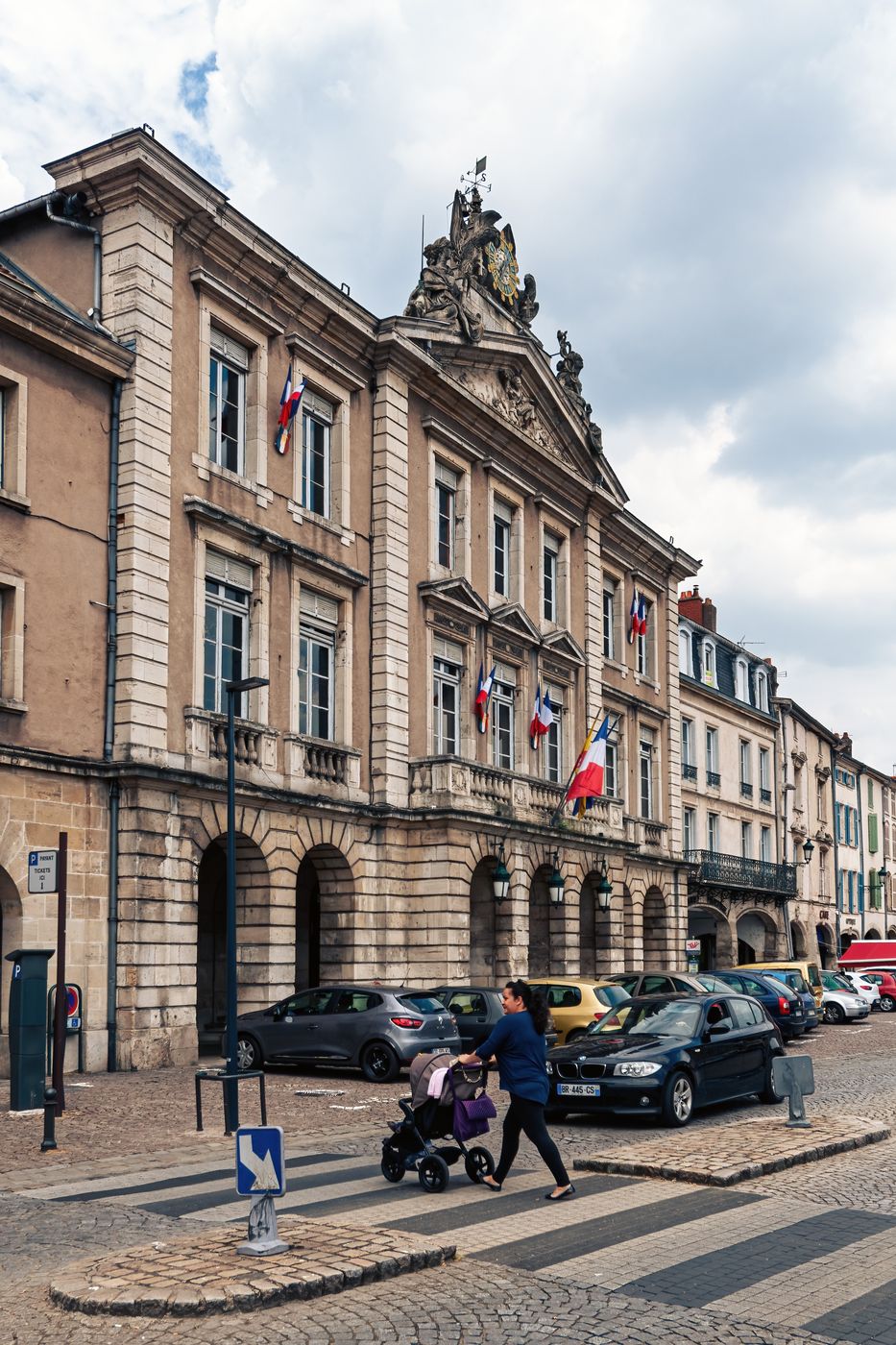
On one side, the town hall and other public buildings look out over the space; on the other, arcaded houses line up in a regular rhythm. A short walk away, the Moselle river and the Premonstratensian abbey offer more monumental views, but Place Duroc remains the everyday stage where people cross, meet, shop and linger.
Value for photographers
For photographers, Place Duroc is a compact but very rich subject:
The triangular geometry of the square creates strong diagonals and a sense of depth from almost any corner.
The arcades generate natural frames and repeating patterns, perfect for rhythm and perspective shots.
The fountain and the open centre provide a focal point you can place against any side of the square.
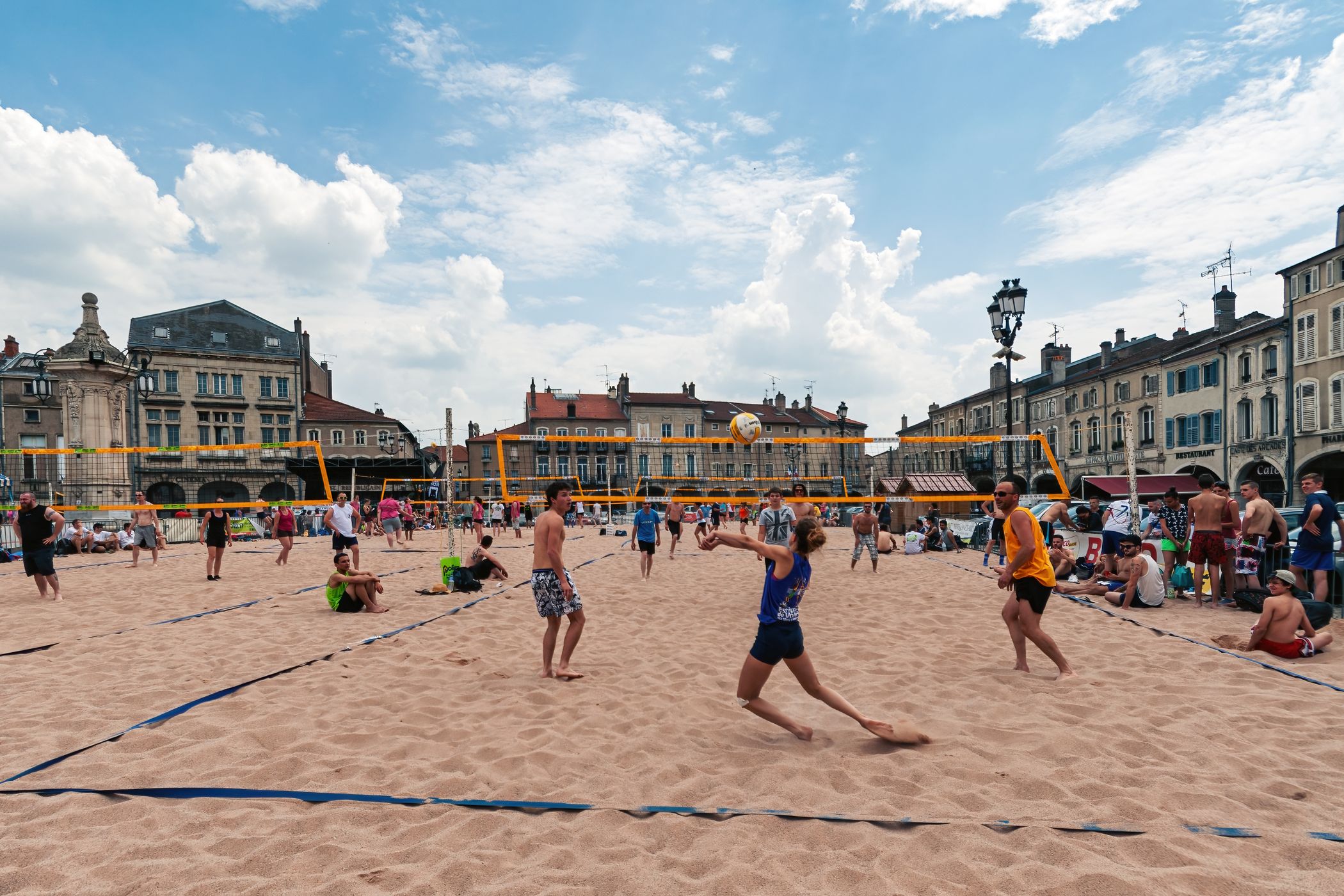
The life of the square – markets, café terraces, kids playing, locals crossing – gives plenty of opportunities for candid street photography.
Because the space is open and edged with arcades, light behaves in interesting ways throughout the day. Sunlight cuts across the square, leaving long shadows from the arches and columns, while the underside of the arcades stays in softer, reflected light. On grey days, the stone and pastel façades still hold up well, giving a muted but elegant palette.
At night, the square becomes a cosy bowl of warm light from restaurants and street lamps, with the fountain and façades softly illuminated. It is small enough that you can circle it in a few minutes, but with enough variation that you keep finding new angles.
Pont-à-Mousson grew at the foot of the Mousson hill, where a medieval castle once controlled the river crossing. Over the centuries, the town developed as part of the Duchy of Lorraine and later as a university town, with strong links to both trade and learning. In the nineteenth and twentieth centuries it also became an important industrial centre, especially for iron and cast-iron products, but the historic core has kept its older character.
Right in the centre lies Place Duroc. The square has a distinctive triangular shape, framed on all sides by buildings with Renaissance-style arcades at ground level. Under these arches, cafés, shops and restaurants spill out with terraces and tables. Many façades show traditional stone and pastel tones, with details like carved heads, caryatids and old window frames. In the middle of the square stands a fountain that commemorates the service of American volunteer medics during the First World War, adding a quiet historical note to the lively setting.
On one side, the town hall and other public buildings look out over the space; on the other, arcaded houses line up in a regular rhythm. A short walk away, the Moselle river and the Premonstratensian abbey offer more monumental views, but Place Duroc remains the everyday stage where people cross, meet, shop and linger.
Value for photographers
For photographers, Place Duroc is a compact but very rich subject:
The triangular geometry of the square creates strong diagonals and a sense of depth from almost any corner.
The arcades generate natural frames and repeating patterns, perfect for rhythm and perspective shots.
The fountain and the open centre provide a focal point you can place against any side of the square.
The life of the square – markets, café terraces, kids playing, locals crossing – gives plenty of opportunities for candid street photography.
Because the space is open and edged with arcades, light behaves in interesting ways throughout the day. Sunlight cuts across the square, leaving long shadows from the arches and columns, while the underside of the arcades stays in softer, reflected light. On grey days, the stone and pastel façades still hold up well, giving a muted but elegant palette.
At night, the square becomes a cosy bowl of warm light from restaurants and street lamps, with the fountain and façades softly illuminated. It is small enough that you can circle it in a few minutes, but with enough variation that you keep finding new angles.
Photography Tips
1. Use the triangle
Walk to each corner of Place Duroc and look back across the square. From one corner, you can place the fountain in the foreground and let the two sides of the triangle run away from you, forming a strong V-shape. From another corner, you can shoot along a single façade under the arcades, using columns and arches as a repeating pattern.
2. Play with the arcades
Under the arcades, think in layers. Columns in the foreground, café tables in the middle ground, façades or people in the background. A slightly longer focal length helps compress the perspective and emphasise the rhythm of arches. Try shooting from low down for more dramatic lines, and look for patches of light where sun falls through gaps, isolating a table, a bicycle or a passer-by.
3. Mix wide scenes and details
Take a few wide shots that show the full square, including the fountain and at least two sides of the triangle. Then switch to details: carved faces on façades, old shop signs, textures of stone and plaster, reflections in café windows, or hands and cups at terrace tables. This mix reads very well if you later put together a sequence or a small photo essay.
4. Choose your time of day
Morning: softer light, quieter atmosphere, good for architectural shots without many people.
Midday: stronger contrast; useful if you want sharp shadows of arches on the paving stones.
Evening / blue hour: warm lights in the arcades and cooler blue sky give a classic colour contrast; ideal for hand-held street scenes or longer exposures with light trails if cars pass nearby.
On market days or during local events, the square fills with stalls and people. This can be fantastic for lively street photography, but less ideal if you want clean architectural lines, so plan accordingly.
5. Use people as scale and story
Place a single person walking under the arcades to show the height and depth of the architecture. Capture small groups at café terraces to convey the social life of the town. Silhouettes against the brighter centre of the square work very well if you expose for the light outside the arcades.
Walk to each corner of Place Duroc and look back across the square. From one corner, you can place the fountain in the foreground and let the two sides of the triangle run away from you, forming a strong V-shape. From another corner, you can shoot along a single façade under the arcades, using columns and arches as a repeating pattern.
2. Play with the arcades
Under the arcades, think in layers. Columns in the foreground, café tables in the middle ground, façades or people in the background. A slightly longer focal length helps compress the perspective and emphasise the rhythm of arches. Try shooting from low down for more dramatic lines, and look for patches of light where sun falls through gaps, isolating a table, a bicycle or a passer-by.
3. Mix wide scenes and details
Take a few wide shots that show the full square, including the fountain and at least two sides of the triangle. Then switch to details: carved faces on façades, old shop signs, textures of stone and plaster, reflections in café windows, or hands and cups at terrace tables. This mix reads very well if you later put together a sequence or a small photo essay.
4. Choose your time of day
Morning: softer light, quieter atmosphere, good for architectural shots without many people.
Midday: stronger contrast; useful if you want sharp shadows of arches on the paving stones.
Evening / blue hour: warm lights in the arcades and cooler blue sky give a classic colour contrast; ideal for hand-held street scenes or longer exposures with light trails if cars pass nearby.
On market days or during local events, the square fills with stalls and people. This can be fantastic for lively street photography, but less ideal if you want clean architectural lines, so plan accordingly.
5. Use people as scale and story
Place a single person walking under the arcades to show the height and depth of the architecture. Capture small groups at café terraces to convey the social life of the town. Silhouettes against the brighter centre of the square work very well if you expose for the light outside the arcades.
Travel Information
Pont-à-Mousson sits in the Grand Est region of France, roughly halfway between Metz and Nancy, on the Moselle river.
By train
There is a railway station in Pont-à-Mousson on the line between Metz and Nancy. Regular regional trains connect from both cities, and the journey is short – typically under half an hour from either side. From the station, the walk to Place Duroc takes around ten minutes, following streets that lead gently down towards the river and the historic centre.
By car
By road, Pont-à-Mousson lies close to the A31 motorway that links Metz and Nancy. Exits signposted for the town lead you down to the river and into the centre in just a few minutes. Several car parks lie within walking distance of the square. Once you are parked, the historic core is best explored on foot.
On foot once you are there
Place Duroc is the natural hub of Pont-à-Mousson. Many streets converge on it, and the tourist office is even located on the square. From here, you can easily reach the riverside, the abbey, nearby churches and small side streets. For photography, it is simple: you stand in Place Duroc and you already have most of your subjects – architecture, people, light and everyday scenes – within a few metres in every direction.
By train
There is a railway station in Pont-à-Mousson on the line between Metz and Nancy. Regular regional trains connect from both cities, and the journey is short – typically under half an hour from either side. From the station, the walk to Place Duroc takes around ten minutes, following streets that lead gently down towards the river and the historic centre.
By car
By road, Pont-à-Mousson lies close to the A31 motorway that links Metz and Nancy. Exits signposted for the town lead you down to the river and into the centre in just a few minutes. Several car parks lie within walking distance of the square. Once you are parked, the historic core is best explored on foot.
On foot once you are there
Place Duroc is the natural hub of Pont-à-Mousson. Many streets converge on it, and the tourist office is even located on the square. From here, you can easily reach the riverside, the abbey, nearby churches and small side streets. For photography, it is simple: you stand in Place Duroc and you already have most of your subjects – architecture, people, light and everyday scenes – within a few metres in every direction.
Spot Type
Outdoor
Crowd Factor
A decent amount of people
Best Timing
Summer
Sunrise & Sunset
07:13 - 19:47
| current local time: 18:01
Photo Themes
City
Square
Town Square
Locations
Northern France
Grand Est
Pont-à-Mousson





Spot comments (0)