
France The port of Saint-Victor-sur-Loire
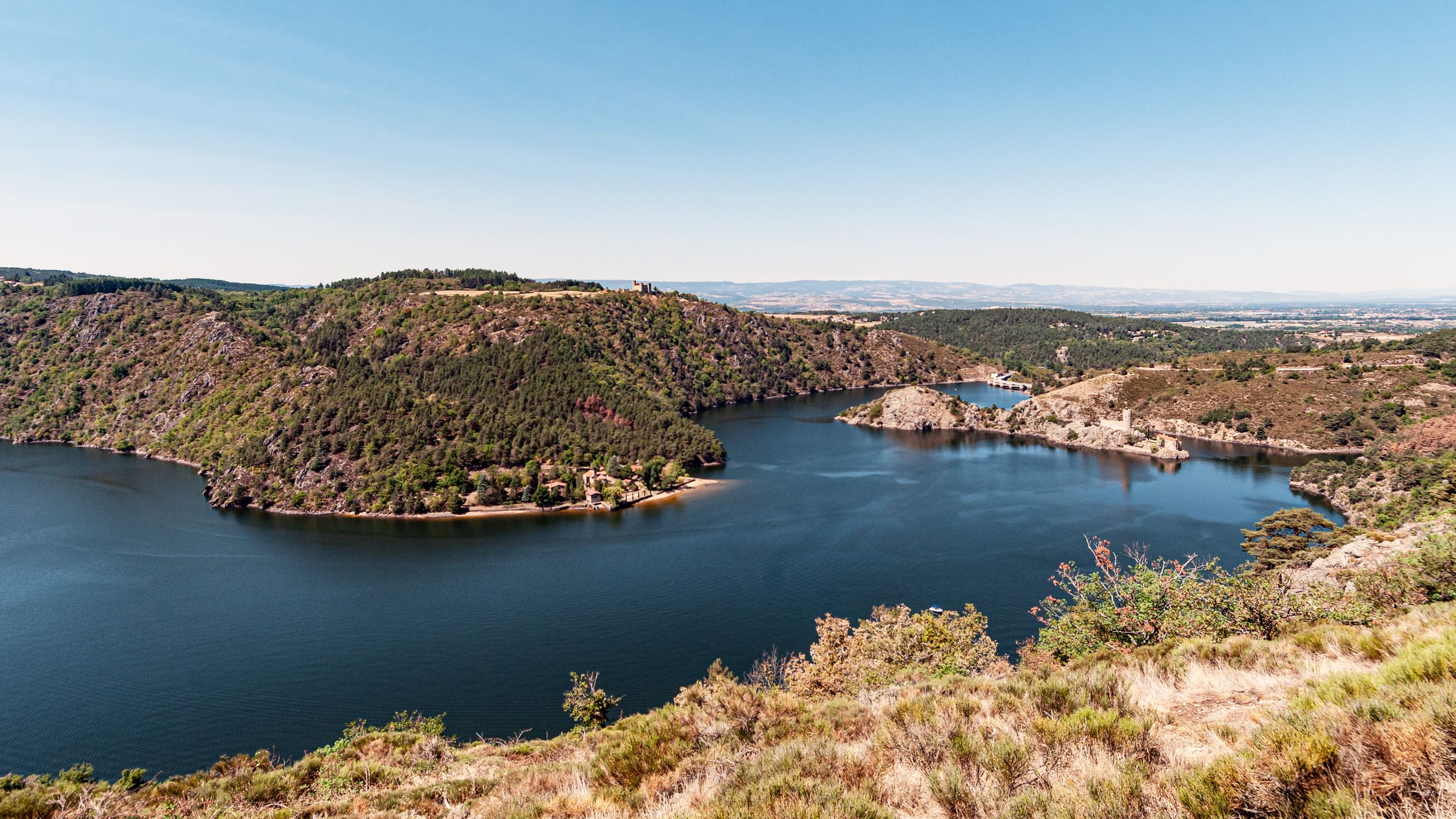
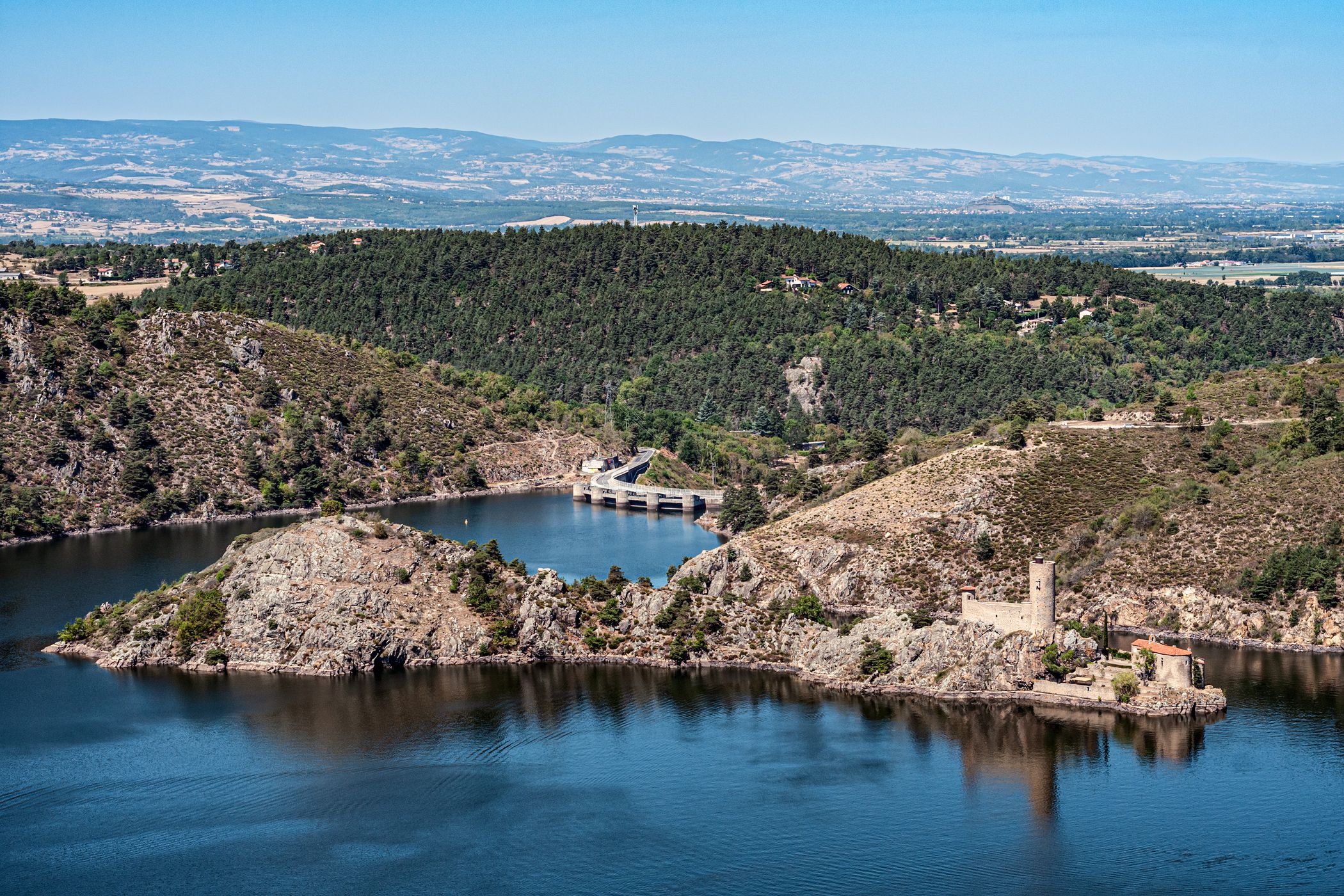
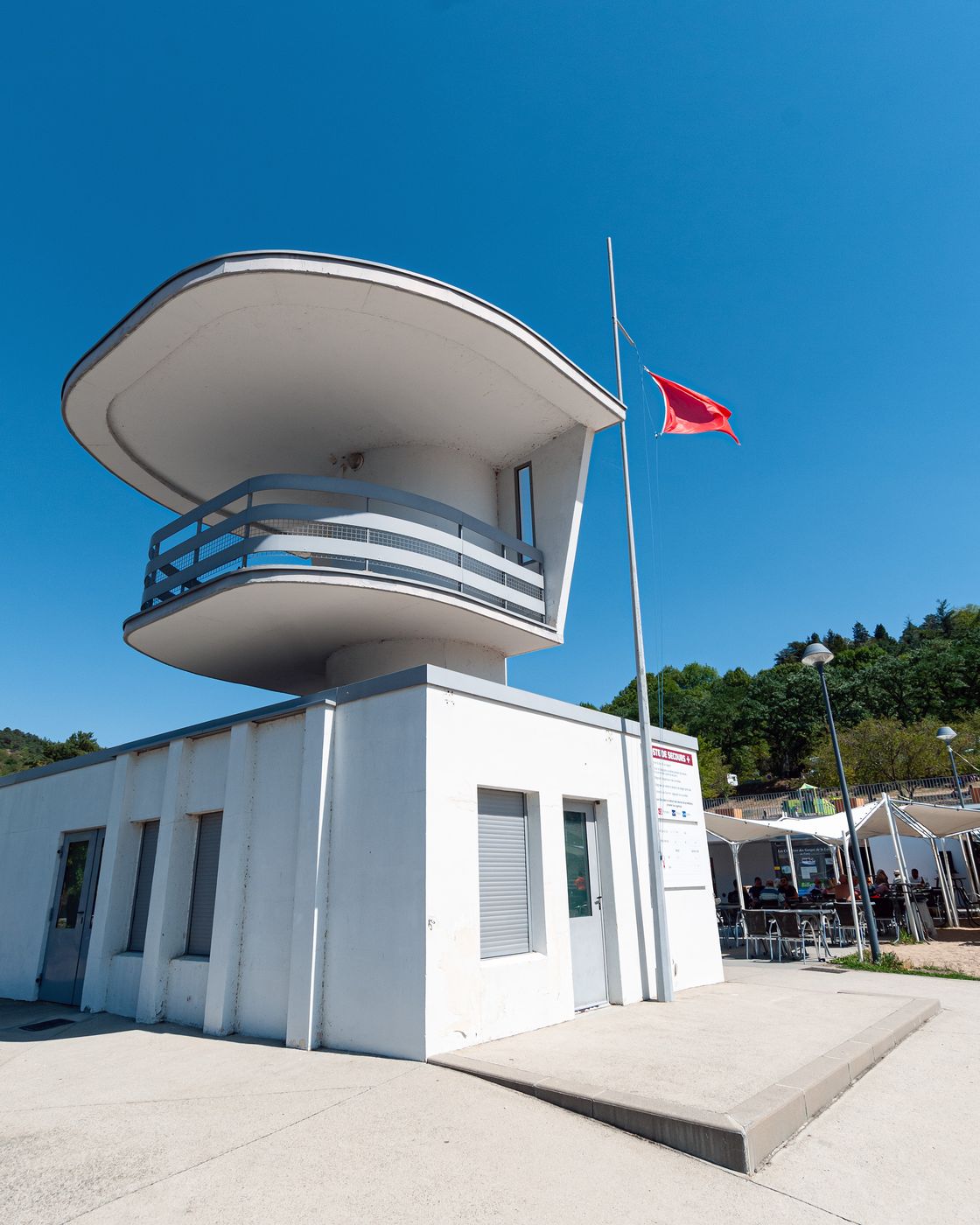
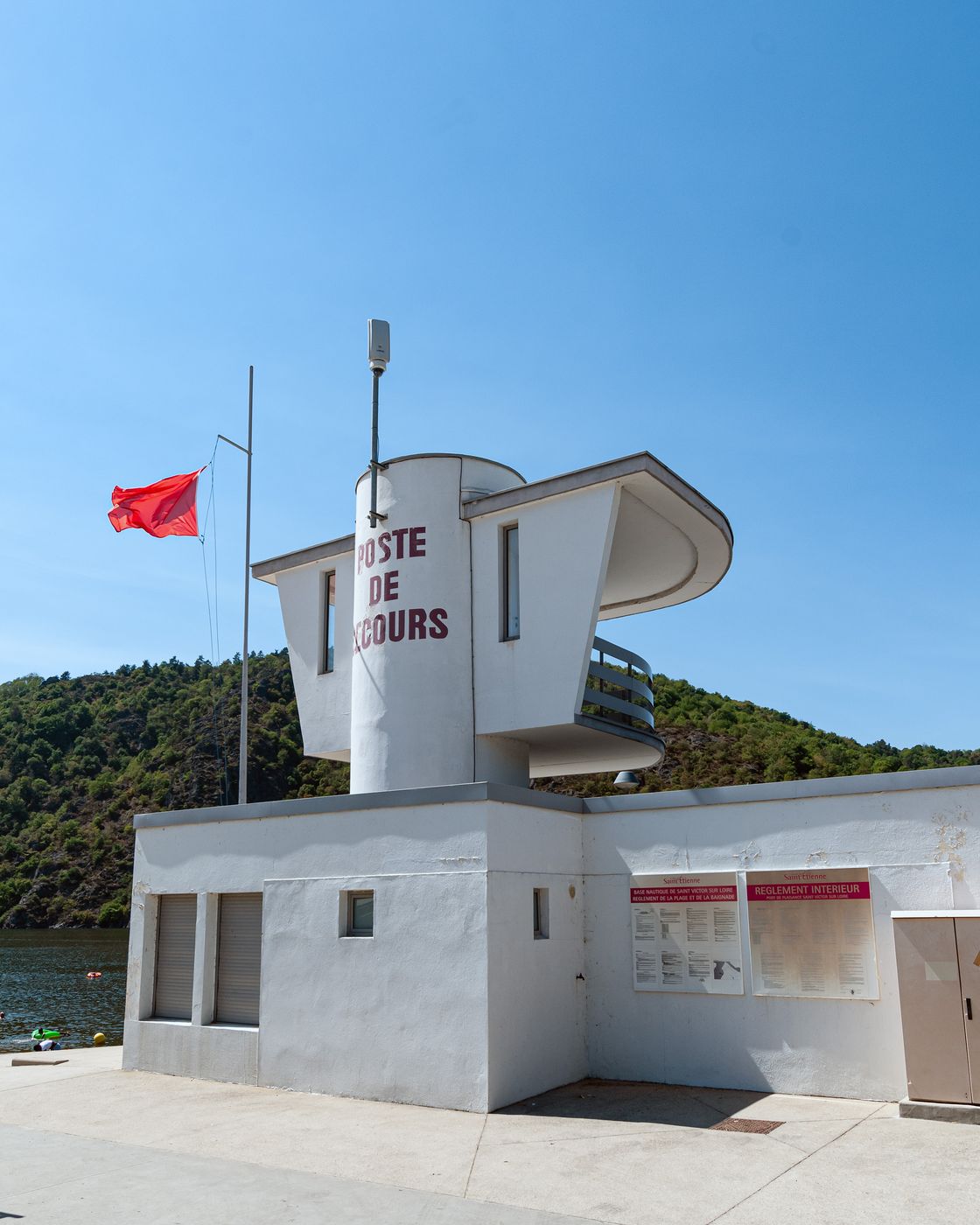
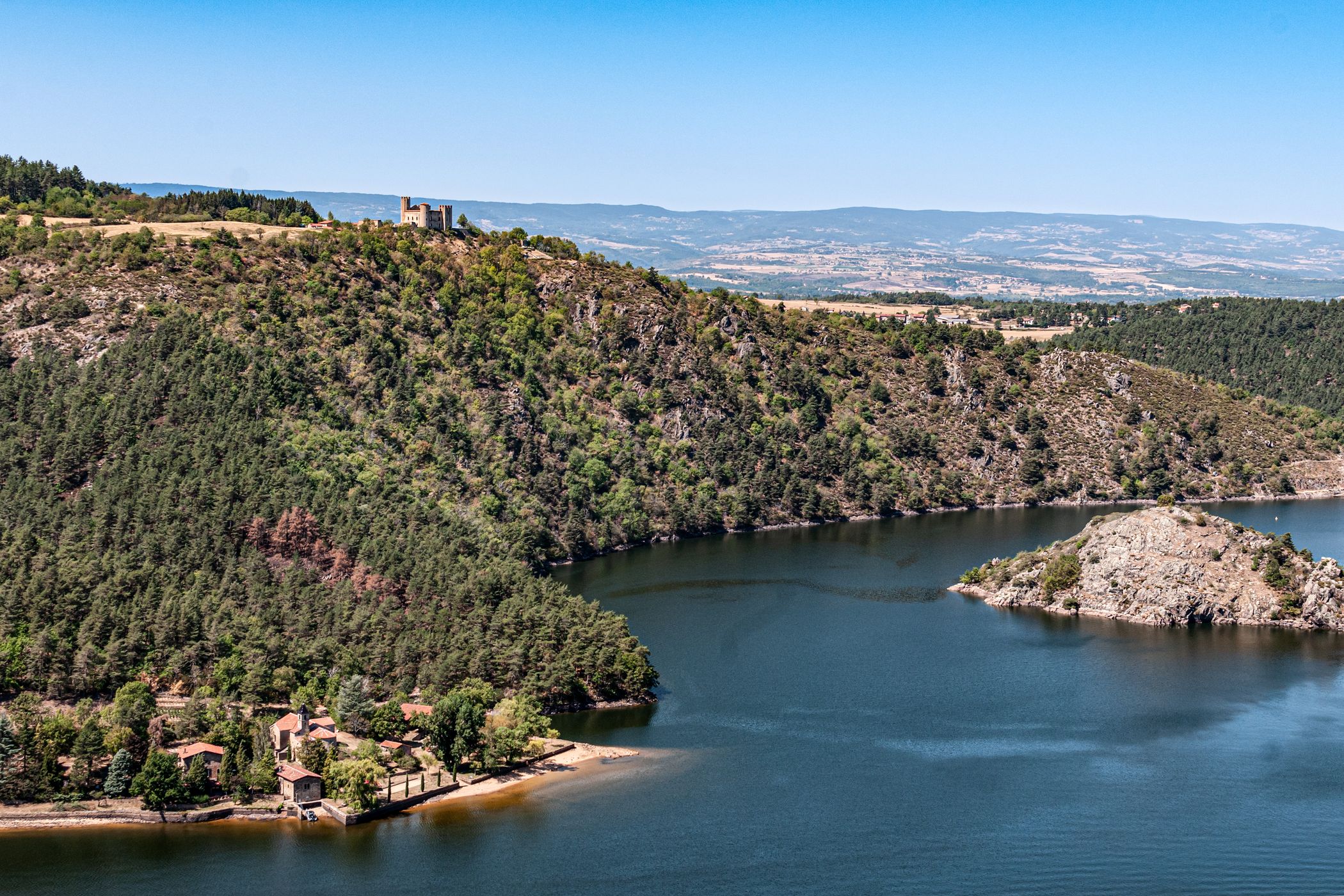
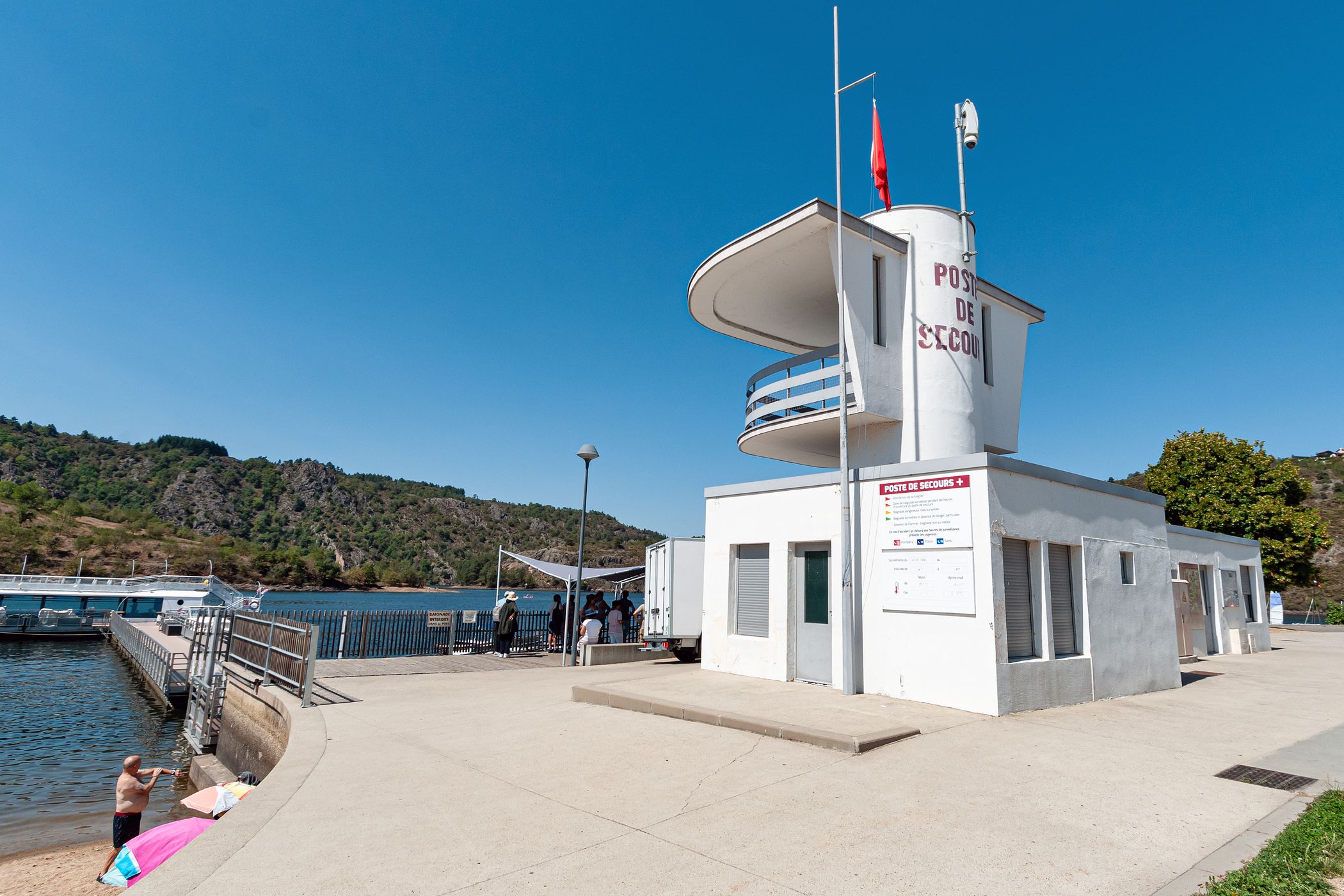
The port of Saint-Victor-sur-Loire lies on the shores of the lake-like stretch of the Loire, where the river widens into a calm basin between steep, wooded hillsides. When the valley was transformed into a reservoir, the village gained a small marina, a supervised beach and the white harbour and rescue buildings that mark the waterfront today. The “Poste de secours” and the adjoining structures stand right at the water’s edge, serving as lifeguard station, information point and practical heart of the beach. Their architecture is strikingly modern and functional: a cylindrical core topped by a cantilevered terrace and flanked by sharp, horizontal lines. The pure white walls contrast with the dark rock and green slopes opposite, while the red rescue flag and signage add strong colour accents. Around the buildings, wide concrete promenades lead down to the pontoons, the small bathing area and the boat landing, creating a clean, open foreground that emphasises the vertical tower.
For photographers, this small port offers more than its size suggests. The rescue tower is an eye-catching subject from almost any angle, its curves and straight edges cutting clearly into the sky. Its bright white surfaces reflect sunlight and create deep shadows that emphasise form, especially in strong midday light. The red flag and lettering provide ready-made focal points in an otherwise minimalist palette. Set against the rugged hills and dark water, the building looks almost like a piece of seaside modernism dropped into a mountain lake. The surrounding elements – pontoons, railings, lamp posts, people heading to the beach – add scale and context and turn a single building into a series of small, graphic scenes.
For photographers, this small port offers more than its size suggests. The rescue tower is an eye-catching subject from almost any angle, its curves and straight edges cutting clearly into the sky. Its bright white surfaces reflect sunlight and create deep shadows that emphasise form, especially in strong midday light. The red flag and lettering provide ready-made focal points in an otherwise minimalist palette. Set against the rugged hills and dark water, the building looks almost like a piece of seaside modernism dropped into a mountain lake. The surrounding elements – pontoons, railings, lamp posts, people heading to the beach – add scale and context and turn a single building into a series of small, graphic scenes.
Photography Tips
A few photographic strategies work especially well here. Working with a wide-angle lens close to the building exaggerates its sculptural shapes and makes the tower loom dramatically against the sky. Stepping back and using a slightly longer focal length allows the building to be framed by the hills and the water, balancing architecture and landscape. Shooting low, from the level of the concrete promenade, emphasises leading lines in the ground and railings that guide the eye towards the tower. Strong sun can cast harsh shadows, but it also creates bold, graphic images; under softer light, the white walls take on subtler tones and the environment feels calmer. Including people – swimmers, children with inflatable rings, visitors queuing for boats – brings life to the scene and highlights the function of the place as a family beach and harbour, not just an abstract object.
For more deliberate shooting, it helps to plan around the sun and the activity on the beach. Late morning and mid-afternoon light carve out strong shadows under the overhangs of the tower, while early evening softens the light and warms the colours of the hills. A polarising filter can deepen the blue of the sky and control reflections on the water and on the building’s white surfaces. A small tripod is useful if you want long exposures of the pontoons and water once the light starts to fade, smoothing ripples and turning moving people into ghostly traces while the architecture stays sharp. Careful attention to vertical lines is important when shooting close with a wide-angle lens; either keep the camera level or correct perspective later to avoid buildings that appear to fall backwards. As always near water, it is sensible to watch your footing on wet surfaces and to keep a respectful distance from the edge when concentrating on compositions.
For more deliberate shooting, it helps to plan around the sun and the activity on the beach. Late morning and mid-afternoon light carve out strong shadows under the overhangs of the tower, while early evening softens the light and warms the colours of the hills. A polarising filter can deepen the blue of the sky and control reflections on the water and on the building’s white surfaces. A small tripod is useful if you want long exposures of the pontoons and water once the light starts to fade, smoothing ripples and turning moving people into ghostly traces while the architecture stays sharp. Careful attention to vertical lines is important when shooting close with a wide-angle lens; either keep the camera level or correct perspective later to avoid buildings that appear to fall backwards. As always near water, it is sensible to watch your footing on wet surfaces and to keep a respectful distance from the edge when concentrating on compositions.
Travel Information
Getting to the port and capitainerie of Saint-Victor-sur-Loire is straightforward, particularly from Saint-Étienne. By car, the route follows local roads towards the Loire gorges and the village of Saint-Victor-sur-Loire, then descends to the lakeside where signs point to the beach and marina. Parking is available close to the water, so the rescue post and harbour lie only a short walk away. Regional buses connect Saint-Étienne with the village; from the bus stop, footpaths lead down to the waterfront in a few minutes. The approach also works well by bicycle, with gently undulating roads and rewarding views over the gorge as you come closer. Once at the port, everything is within a compact area, making it easy to explore different angles and compositions on foot.
Spot Type
Outdoor
Crowd Factor
Just a few people
Best Timing
Summer
Sunrise & Sunset
08:08 - 18:46
| current local time: 18:31
Photo Themes
Lake
Port
River





Spot comments (0)