
France Abbaye Saint-Jean-des-Vignes in Soissons
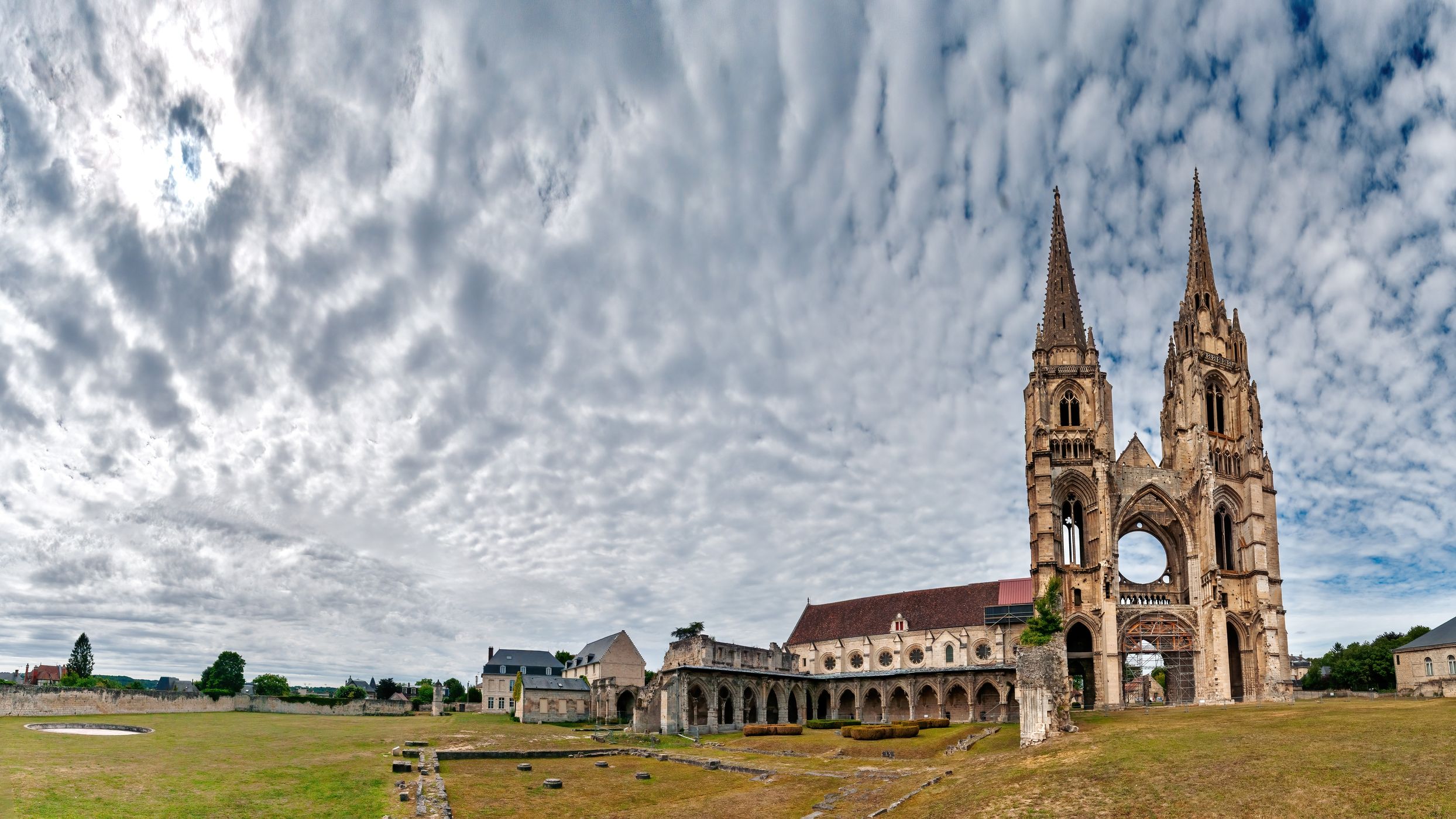
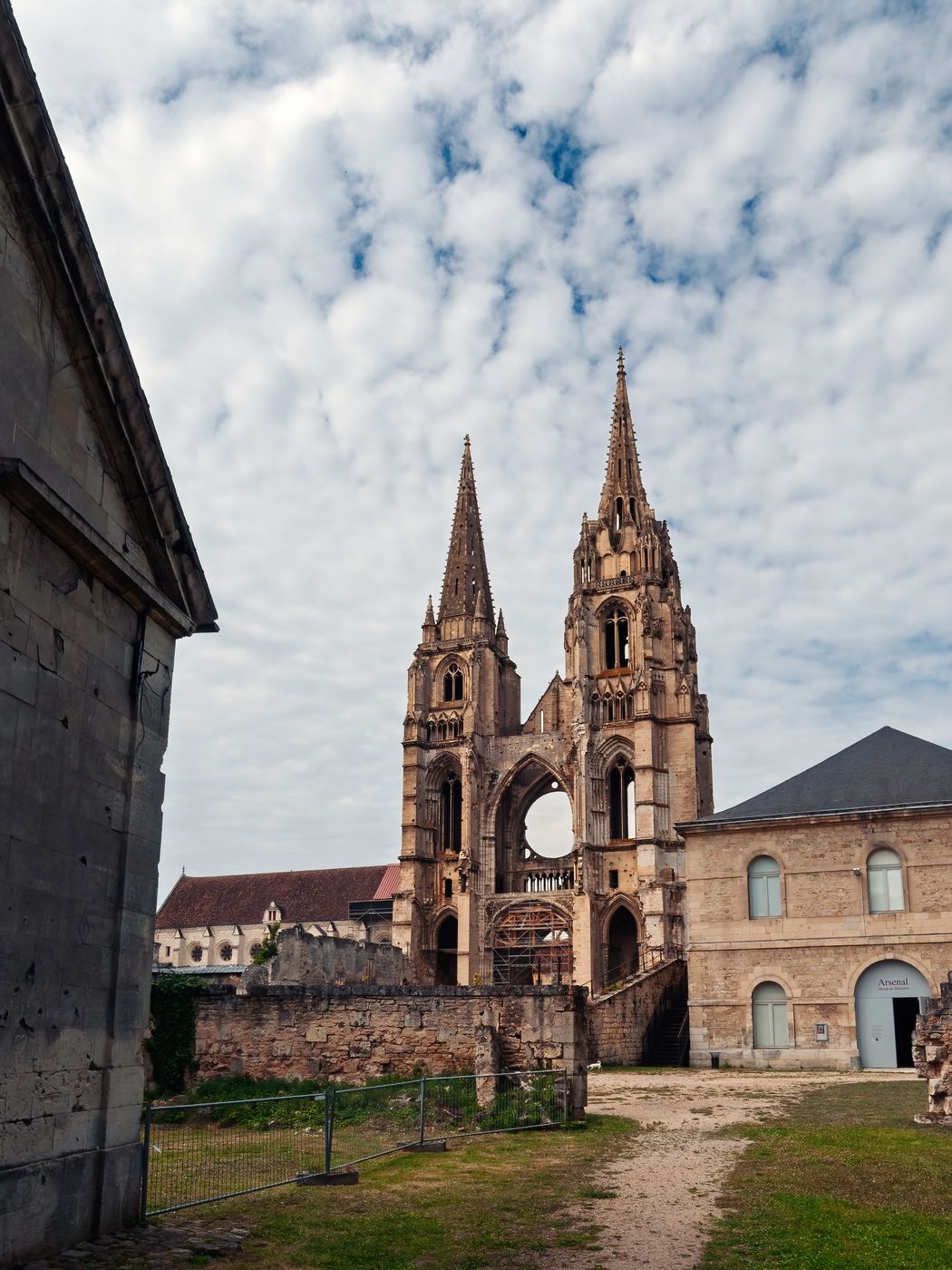
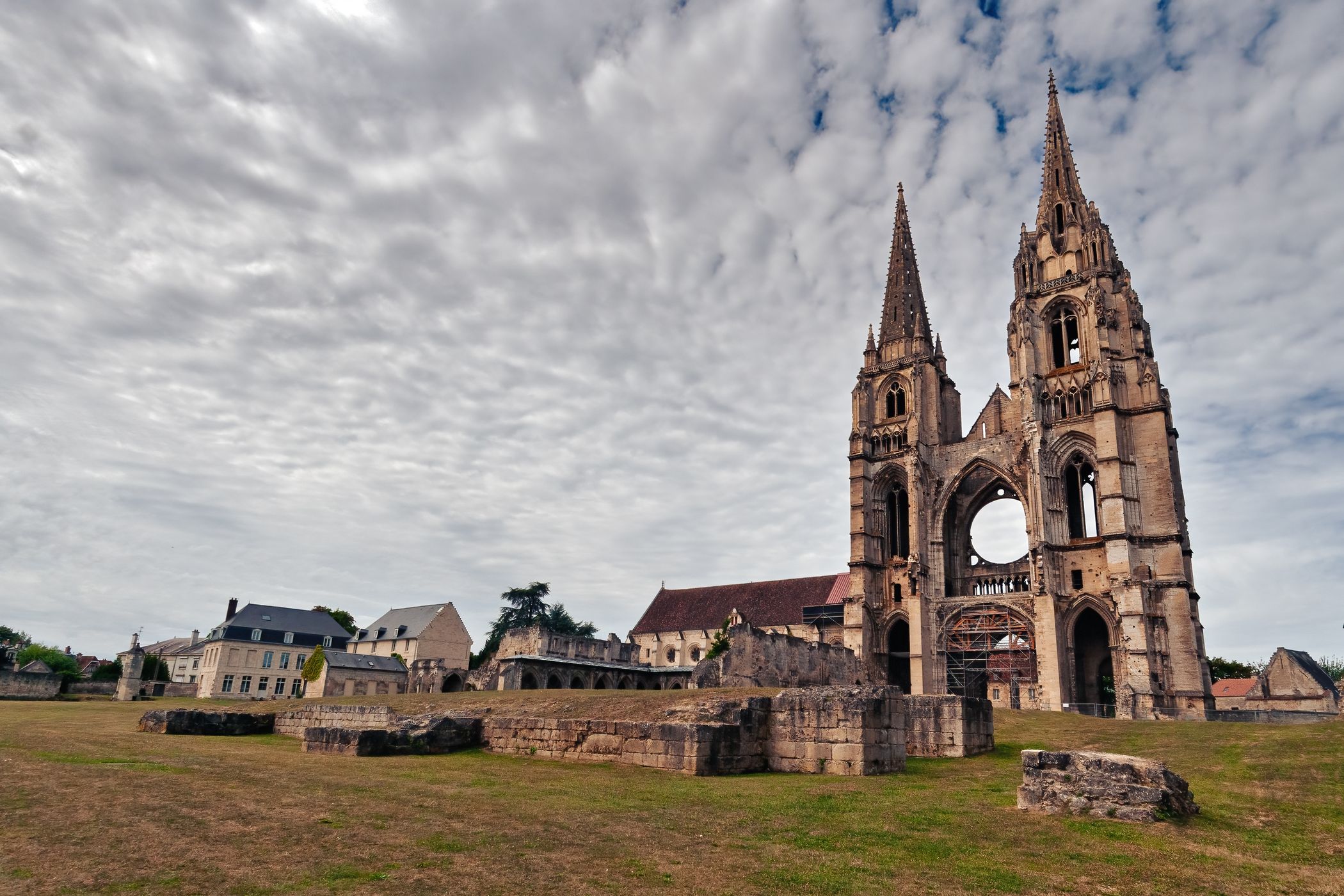
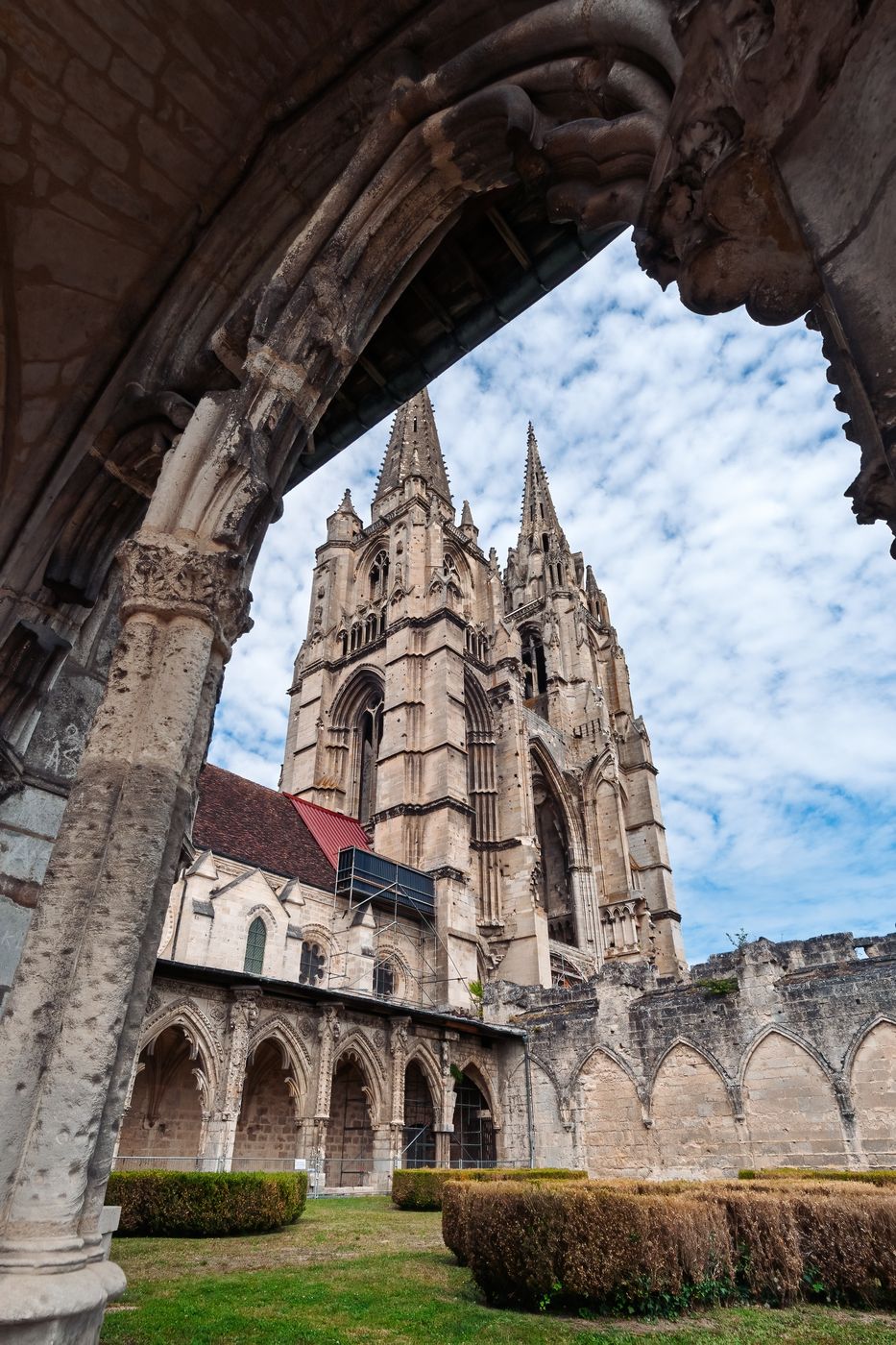
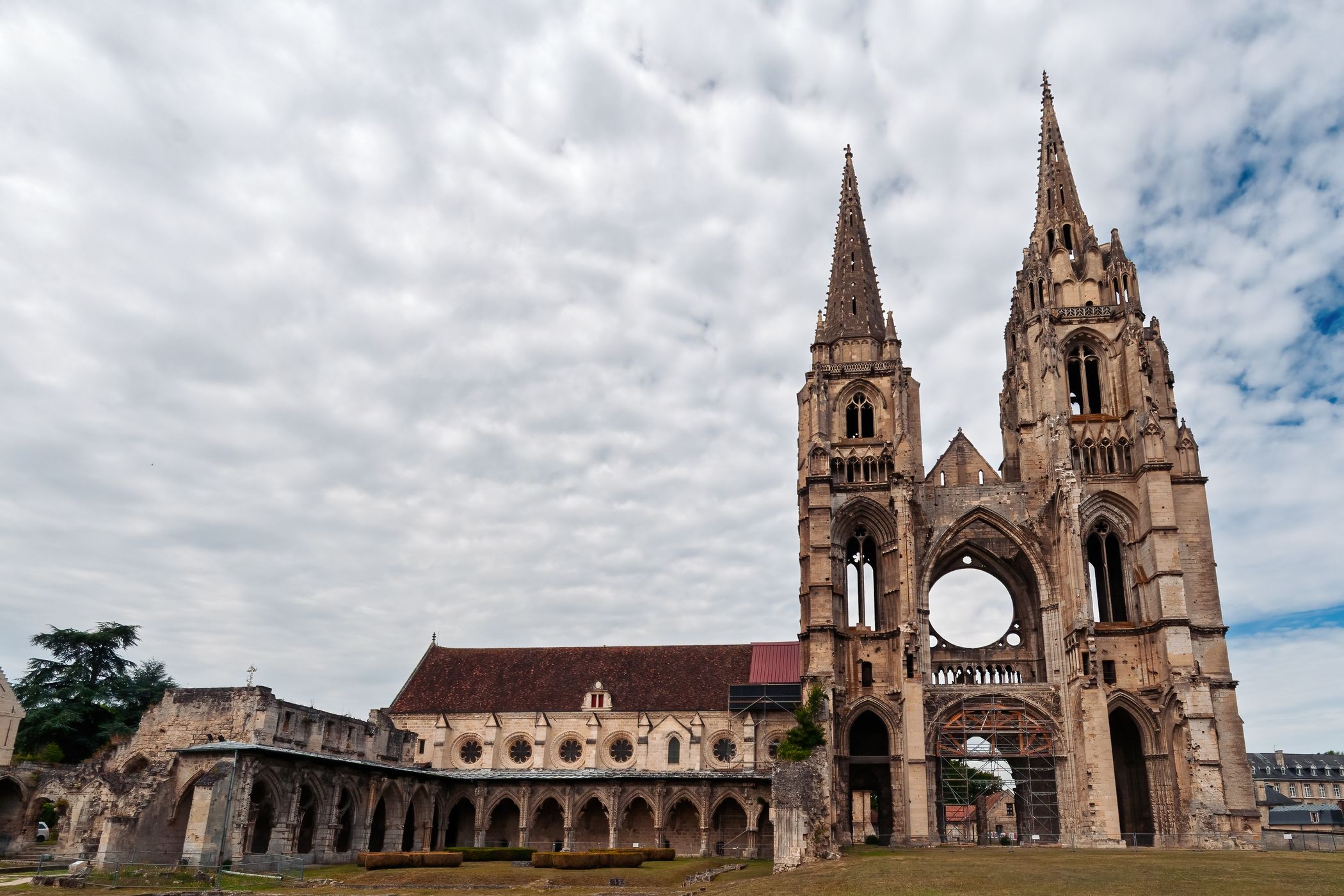
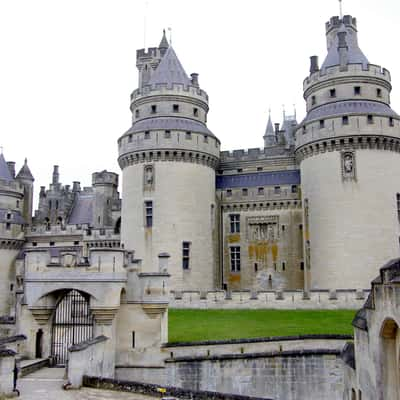
Saint-Jean-des-Vignes was founded in the Middle Ages as an important Augustinian abbey on a hill above the town. Over the centuries its church grew into a grand Gothic building, crowned by a monumental west front with twin spires. In later centuries the abbey declined, and during the Revolution the community was dissolved. The church was largely dismantled in the nineteenth century, leaving the façade standing like a gigantic stone screen. Around it, cloisters, cellars and convent buildings survived in various states and were used for a time as military barracks. Today, visitors arrive onto a broad lawn facing the west front: two slender towers, pierced with tracery and empty windows, and a vast round opening where the rose window once sat. To the side and behind stretch the remains of cloisters and monastic buildings, giving a clear sense of the abbey’s former size.
For photographers, Saint-Jean-des-Vignes is a dream of organised ruin. The west façade works as a powerful subject from many angles: straight on, it reads almost like a stone theatre backdrop; from the side, the extreme thinness of the remaining wall becomes visible, emphasising how much of the church has vanished. The huge circular opening frames the sky or passing clouds and can be used like a built-in picture frame. The long, low cloister wings contrast with the soaring towers and help to anchor compositions. On moody days, heavy skies enhance the drama of the ruin; on bright days, the warm stone and deep shadows carve out every moulding and statue niche. Because the site is open and relatively uncluttered, it is easy to work with clean lines, big shapes and a strong sense of space.
For photographers, Saint-Jean-des-Vignes is a dream of organised ruin. The west façade works as a powerful subject from many angles: straight on, it reads almost like a stone theatre backdrop; from the side, the extreme thinness of the remaining wall becomes visible, emphasising how much of the church has vanished. The huge circular opening frames the sky or passing clouds and can be used like a built-in picture frame. The long, low cloister wings contrast with the soaring towers and help to anchor compositions. On moody days, heavy skies enhance the drama of the ruin; on bright days, the warm stone and deep shadows carve out every moulding and statue niche. Because the site is open and relatively uncluttered, it is easy to work with clean lines, big shapes and a strong sense of space.
Photography Tips
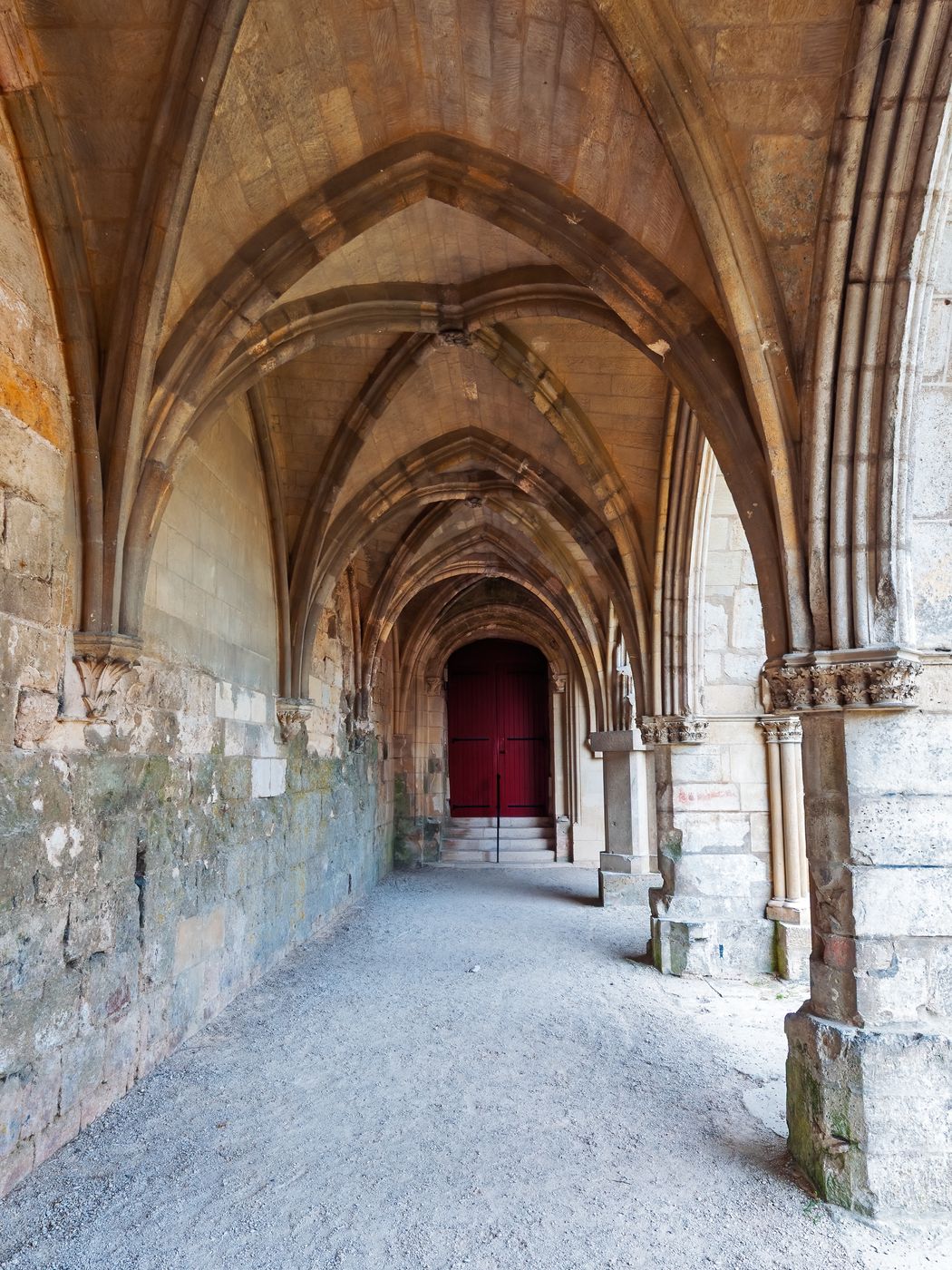
A few concrete strategies help when photographing the abbey. Starting with a wide-angle lens from the lawn lets you capture the full height of the façade and a generous slice of sky; keeping the camera as level as possible reduces converging verticals, which you can fine-tune later in post-processing. Walking closer and shooting upwards exaggerates the spires and makes the circular opening dominate the frame. A standard or short telephoto lens is useful for picking out details: weathered sculpture, tracery, stone textures and the rhythm of arches along the cloister. Cloudy, textured skies work particularly well behind the empty rose, so it is worth waiting a few minutes for interesting cloud formations to pass. Early morning and late afternoon light skim across the façade and bring out relief; at midday, embracing the harsh contrast can produce very graphic black-and-white images. Including people in the frame gives a sense of scale—the towers are taller than they first appear—and emphasises the abbey as a living historic site rather than just an abstract ruin.
Travel Information
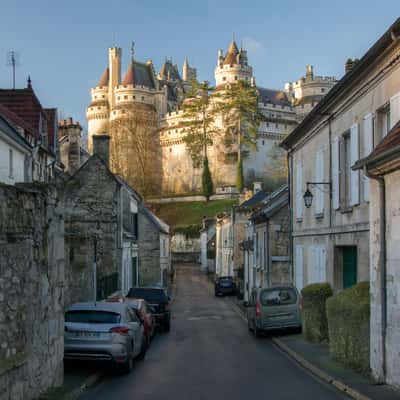
Getting to Saint-Jean-des-Vignes is straightforward once you reach Soissons. From the town centre and the cathedral, you walk uphill through the streets to the abbey in about ten to fifteen minutes; the towers soon appear above the rooftops and act as a natural landmark. From the railway station, the route on foot takes a little longer but remains manageable, passing through the centre before climbing towards the site. By car, Soissons is linked to the regional road network, and local signs indicate “Abbaye Saint-Jean-des-Vignes”; parking is available close to the entrance, so you step out almost directly onto the main lawn in front of the façade. Once there, the whole complex is easily explored on foot, with plenty of room to circle the ruin, wander the remaining cloisters and experiment with different viewpoints.
Spot Type
Outdoor
Crowd Factor
A decent amount of people
Best Timing
All timings are equally good
Sunrise & Sunset
08:18 - 18:43
| current local time: 14:18
Photo Themes
Abbey
Gothic
Gothic Architecture
Ruin
Locations
Paris
Hauts-de-France
Soissons





Spot comments (0)