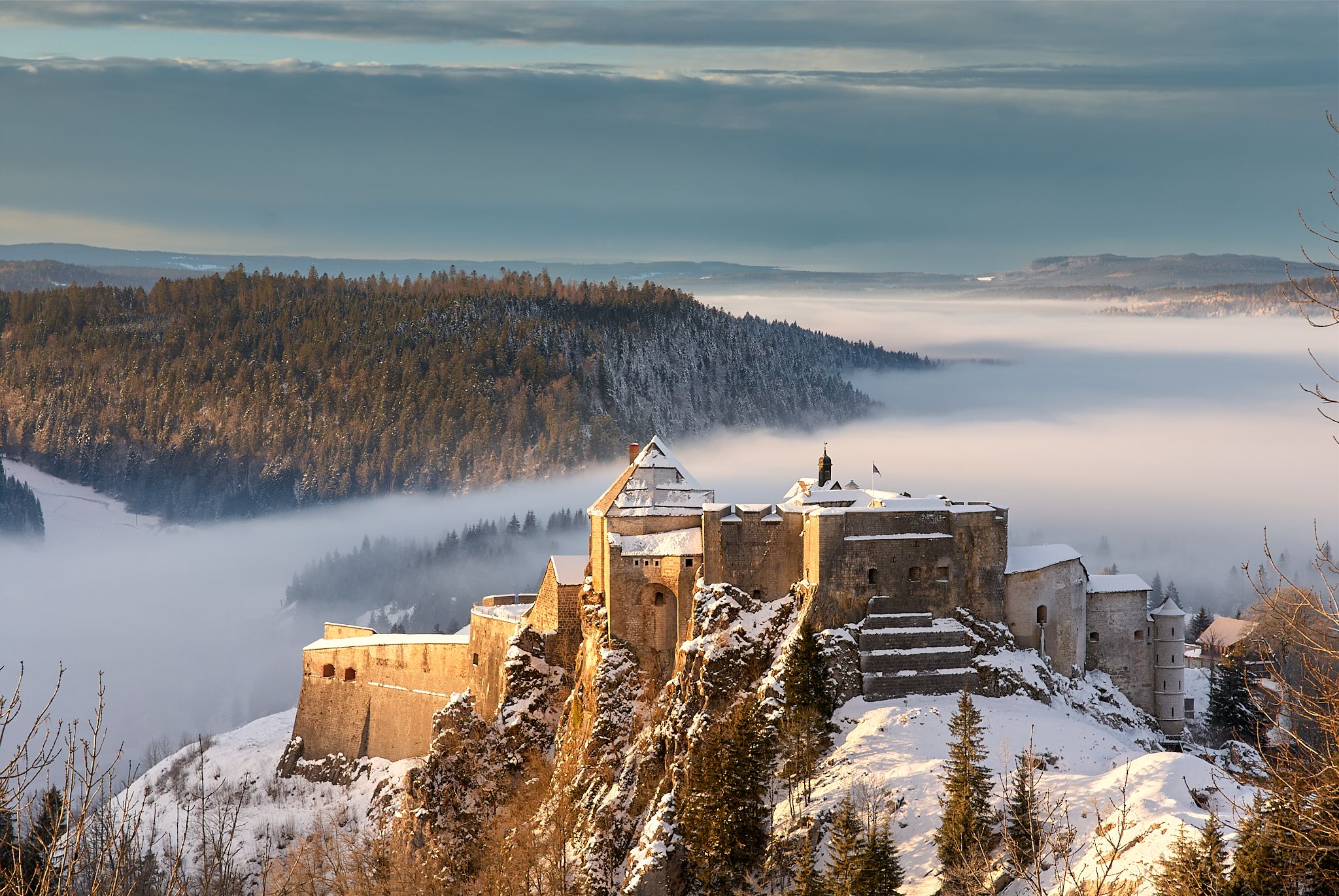

France Château de Joux
As far back as ancient times, there was a toll booth in the gorge and a wooden watchtower on the Rochette plateau.
In The Gallic Wars, Caesar mentions a high mountain defended by fifty men that provided access to the land of the Sequani, which may well have been the watchtower known as Iors by the Sequani.
It was through this route that the Helvetii fled into exile in 58 B.C. before being pursued by Caesar along the Saône.
It was in 1039, upon the death of Conrad II the Salian and the accession of Henry III of the Holy Roman Empire, that the castle was first mentioned in the Vita Mathildis under the name Miroaltum; indeed, in 1227, Henry of Joux refers to the “Castle of Joux, also known as Miroaz,” and similar names appear in the charters of the lords of Joux.
It was subsequently always referred to interchangeably as “Fort de Joux” or “chasteau, then château de Joux.”
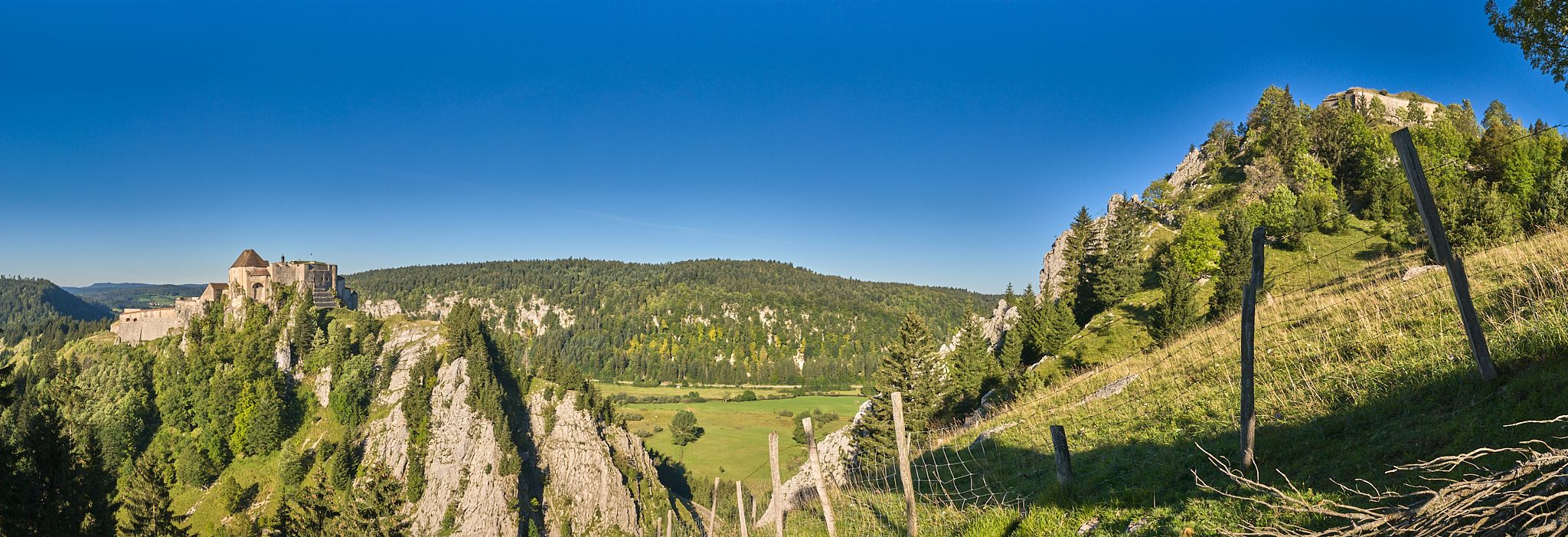
On the pano picture, on the upper right we can also see "Fort Malher"
In The Gallic Wars, Caesar mentions a high mountain defended by fifty men that provided access to the land of the Sequani, which may well have been the watchtower known as Iors by the Sequani.
It was through this route that the Helvetii fled into exile in 58 B.C. before being pursued by Caesar along the Saône.
It was in 1039, upon the death of Conrad II the Salian and the accession of Henry III of the Holy Roman Empire, that the castle was first mentioned in the Vita Mathildis under the name Miroaltum; indeed, in 1227, Henry of Joux refers to the “Castle of Joux, also known as Miroaz,” and similar names appear in the charters of the lords of Joux.
It was subsequently always referred to interchangeably as “Fort de Joux” or “chasteau, then château de Joux.”
On the pano picture, on the upper right we can also see "Fort Malher"
Spot Type
Outdoor
Crowd Factor
Just a few people
Best Timing
Sunrise
Sunrise & Sunset
07:55 - 18:44
| current local time: 20:10
Photo Themes
Castle
Landscape





Spot comments (0)