


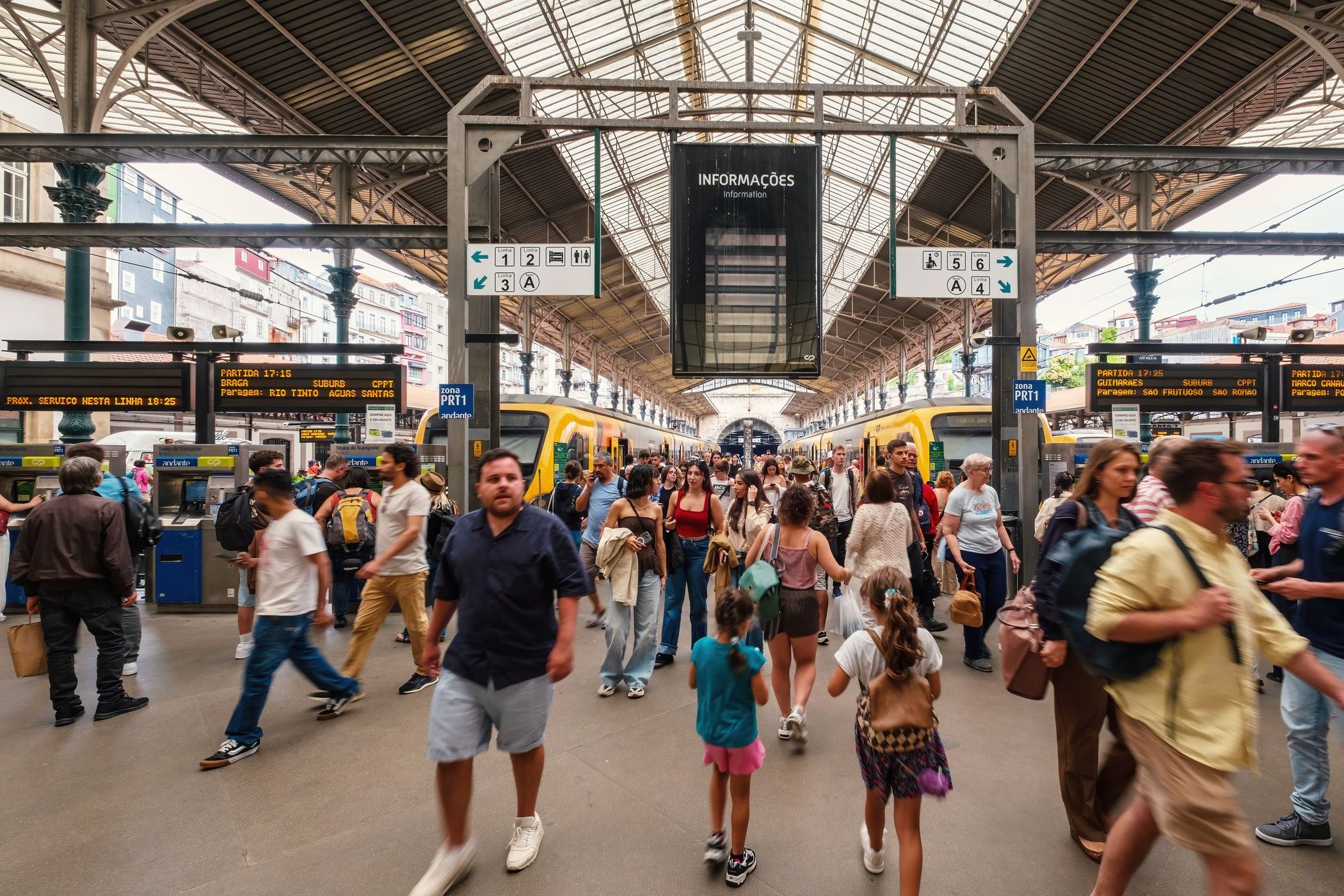
Portugal São Bento railway station
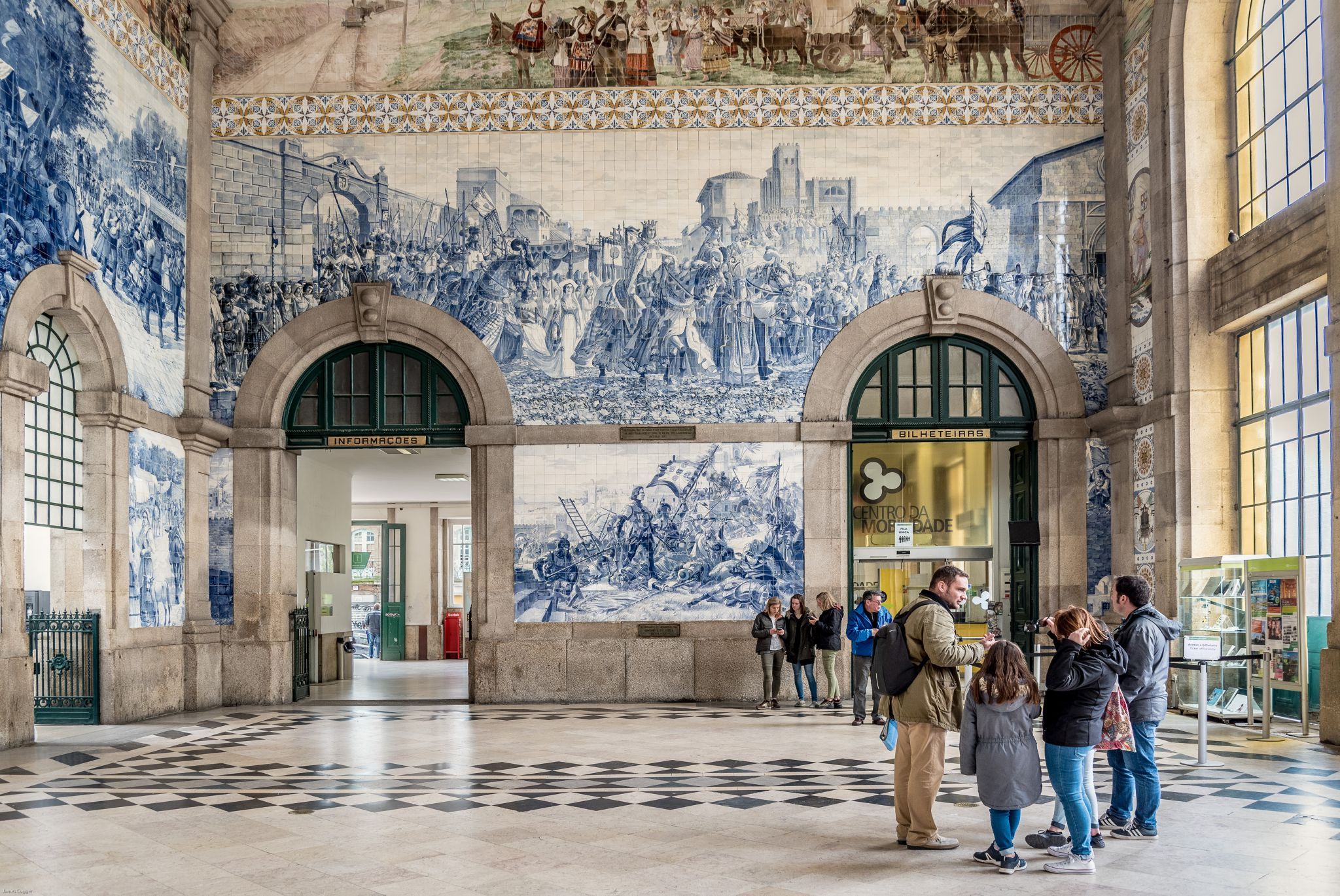
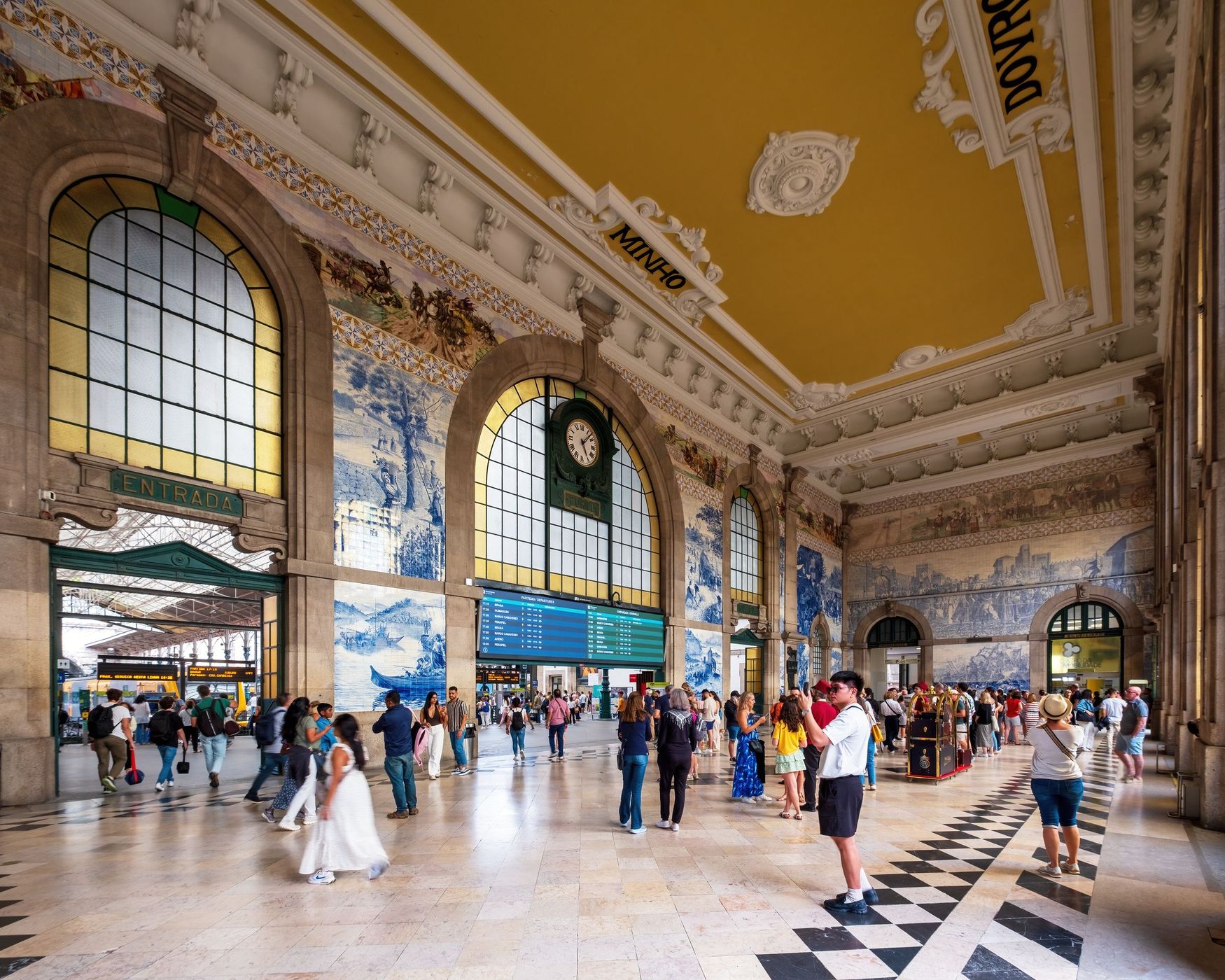
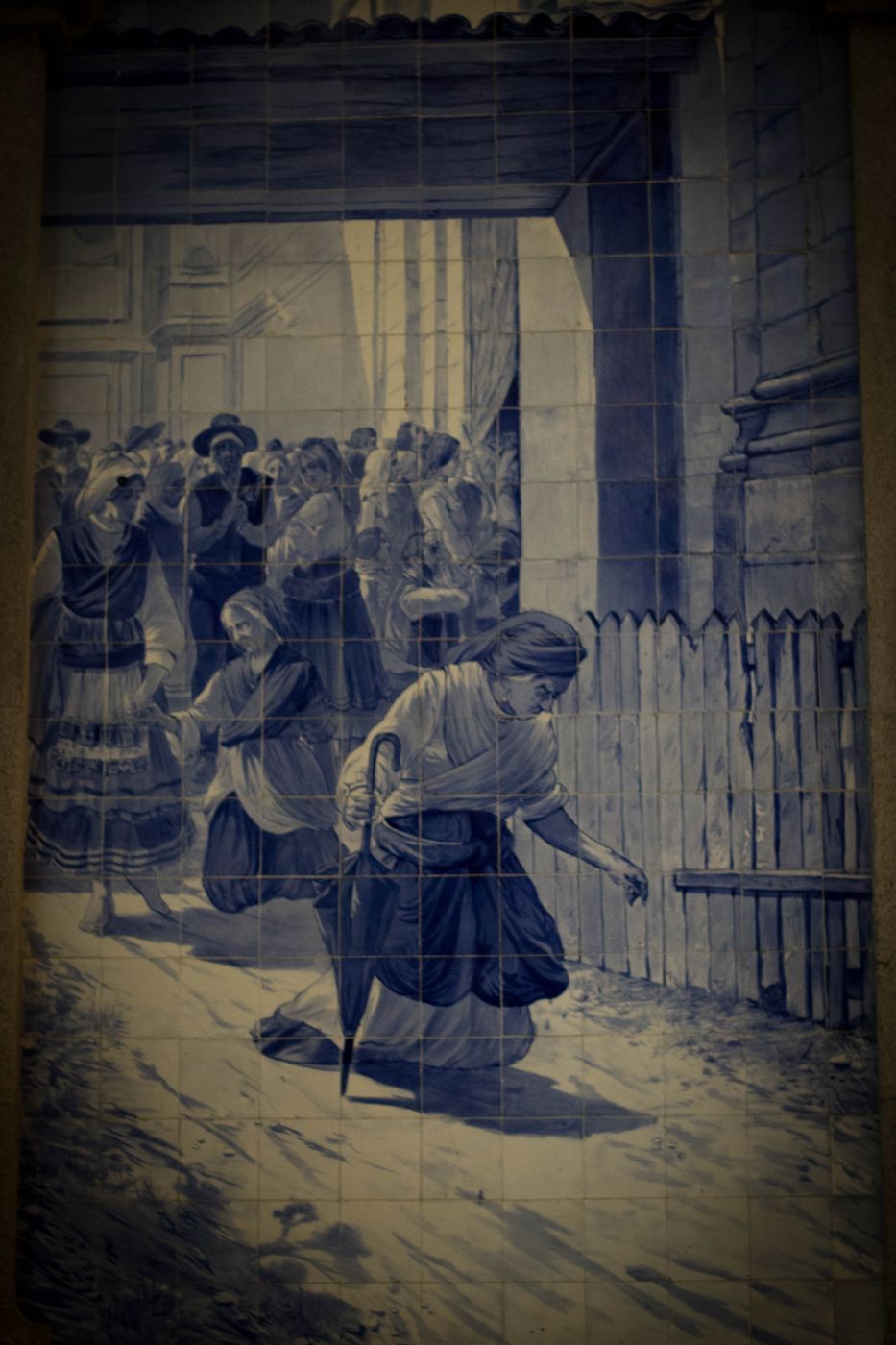
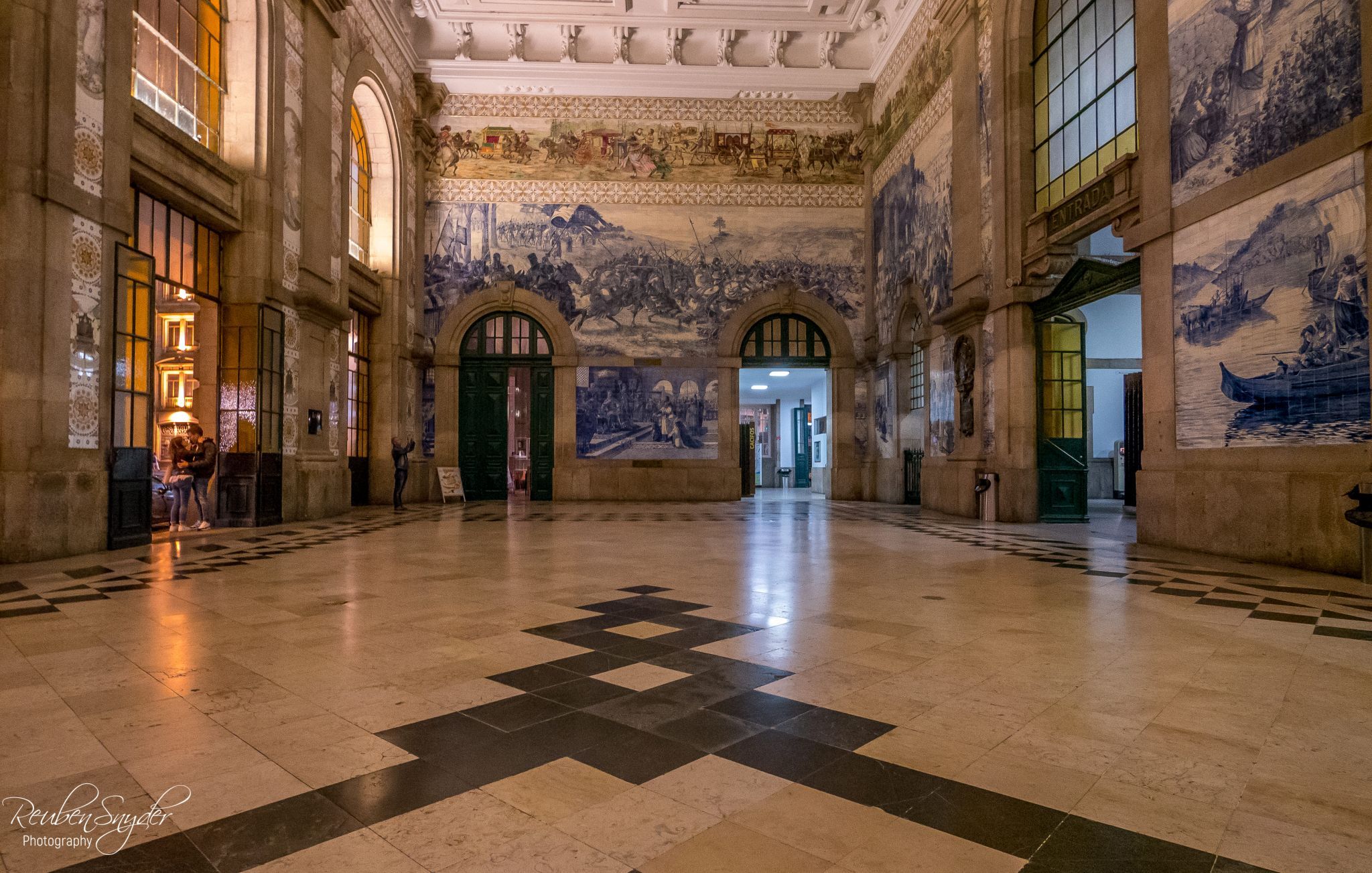
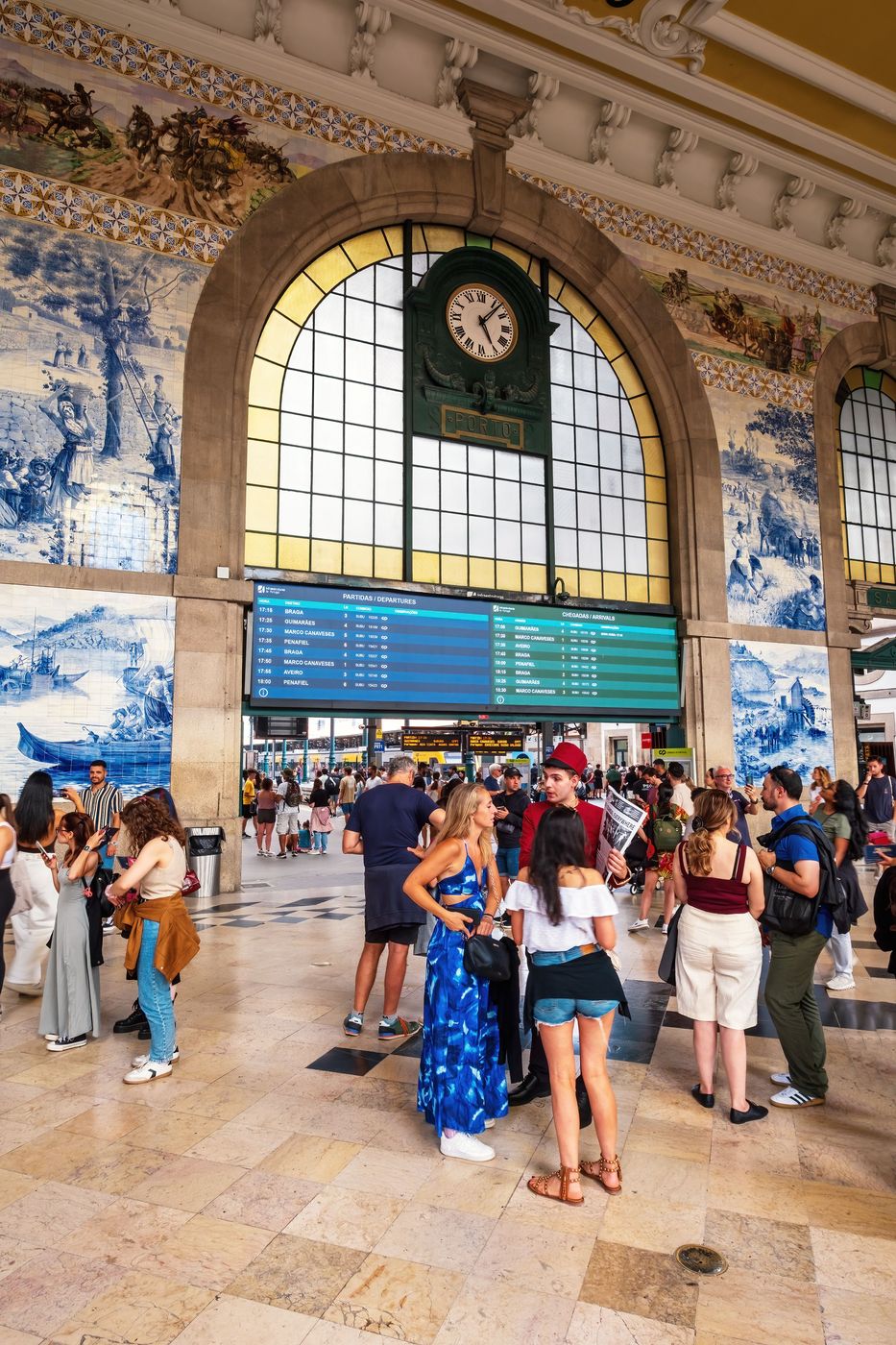
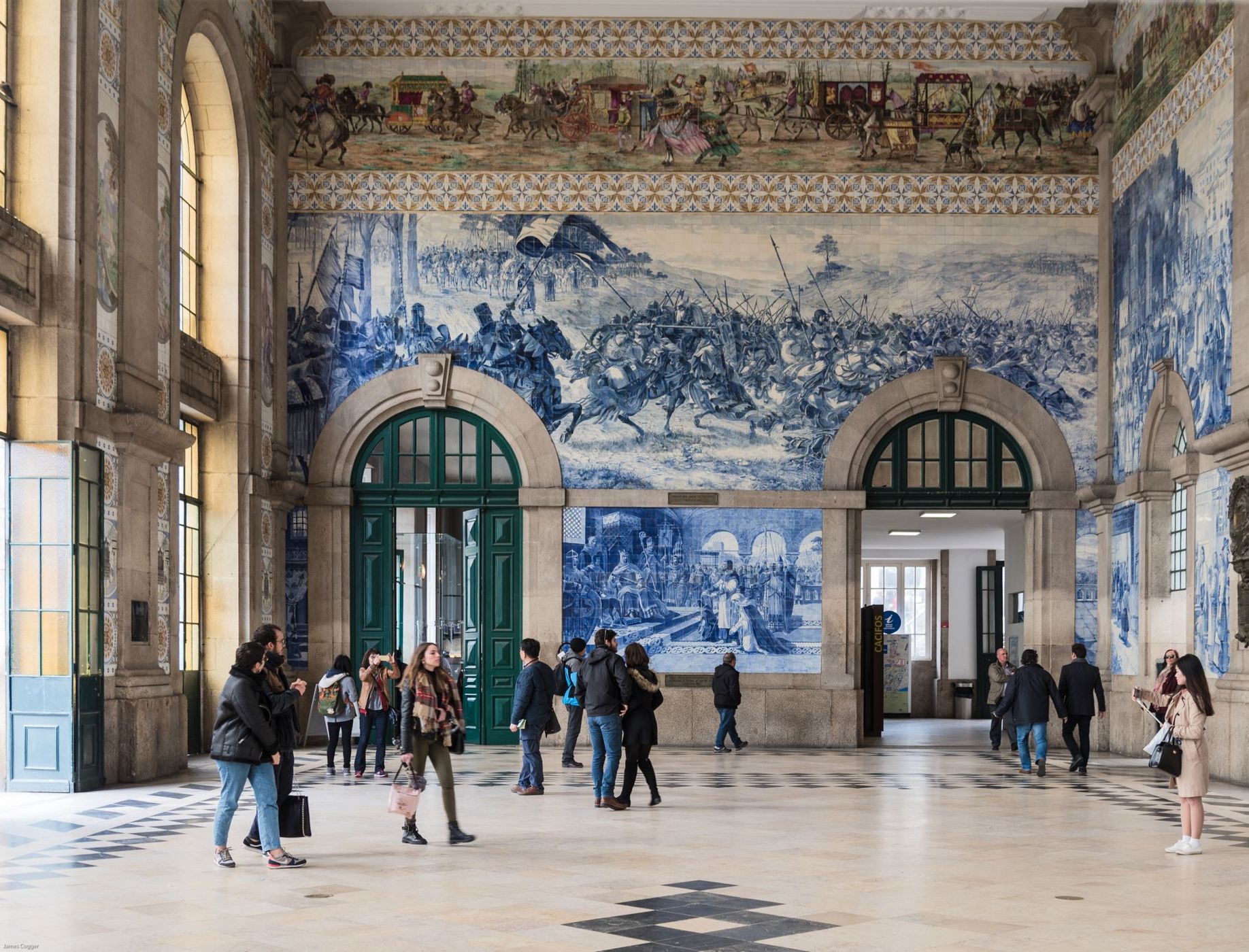
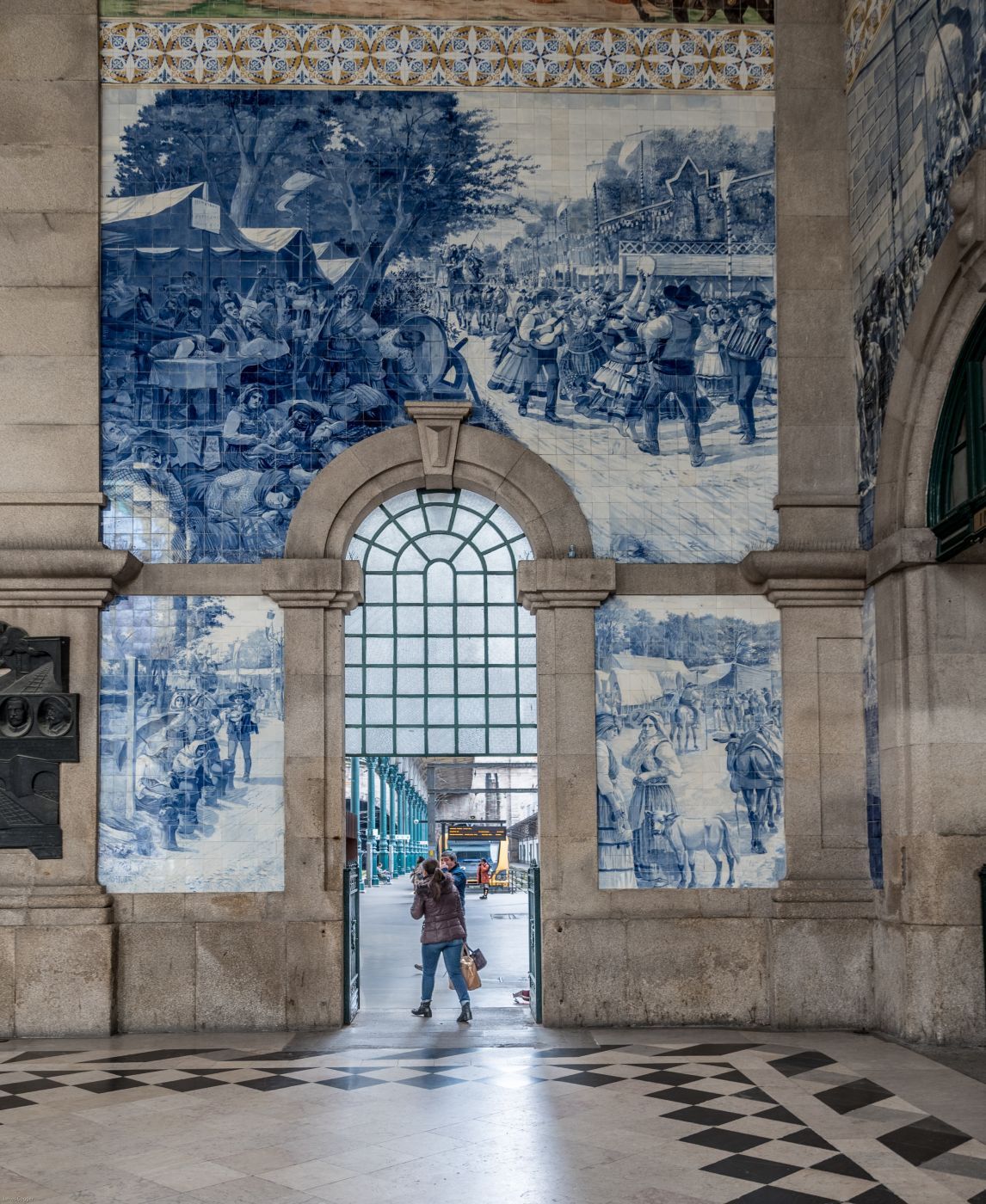
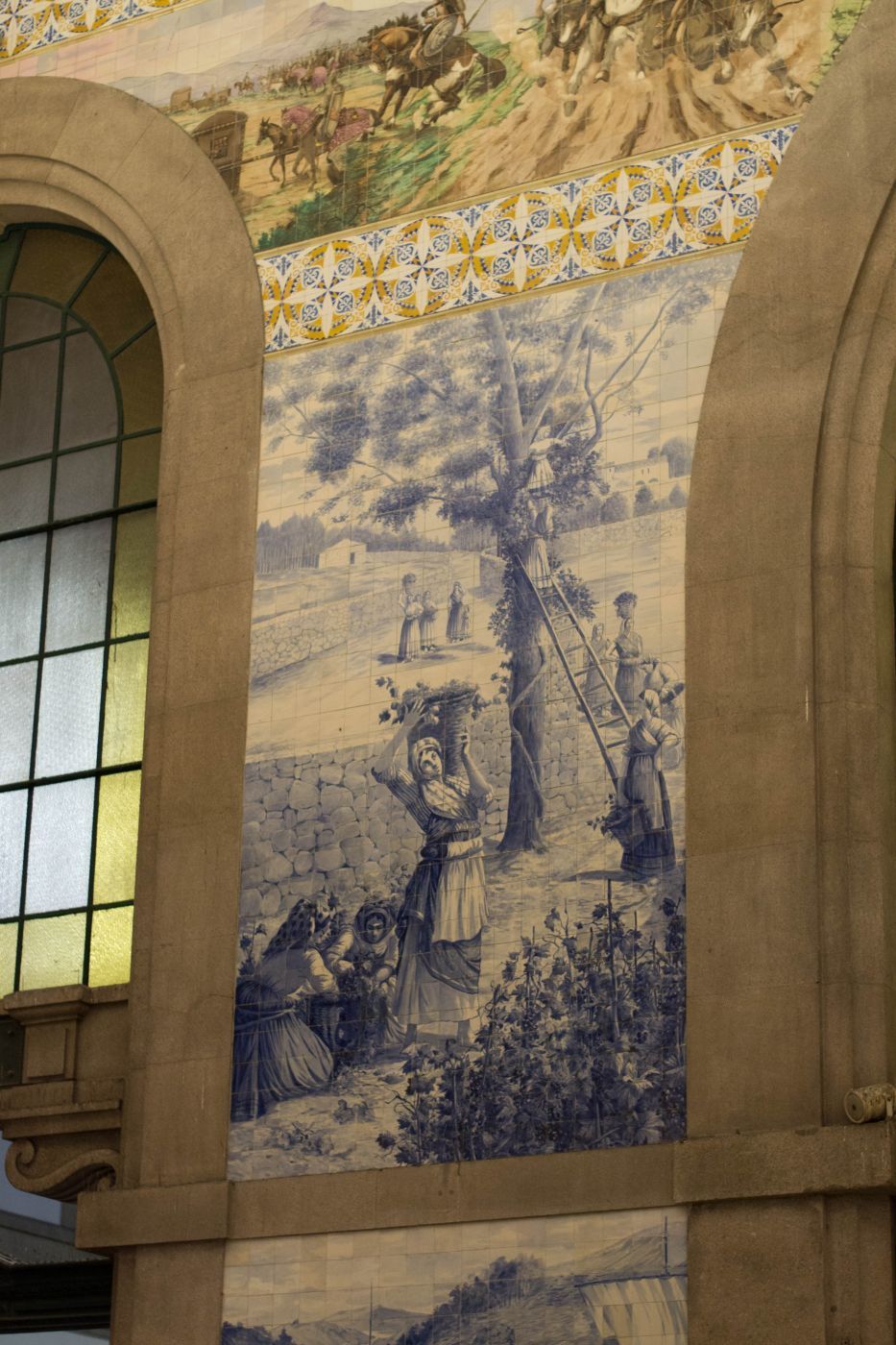
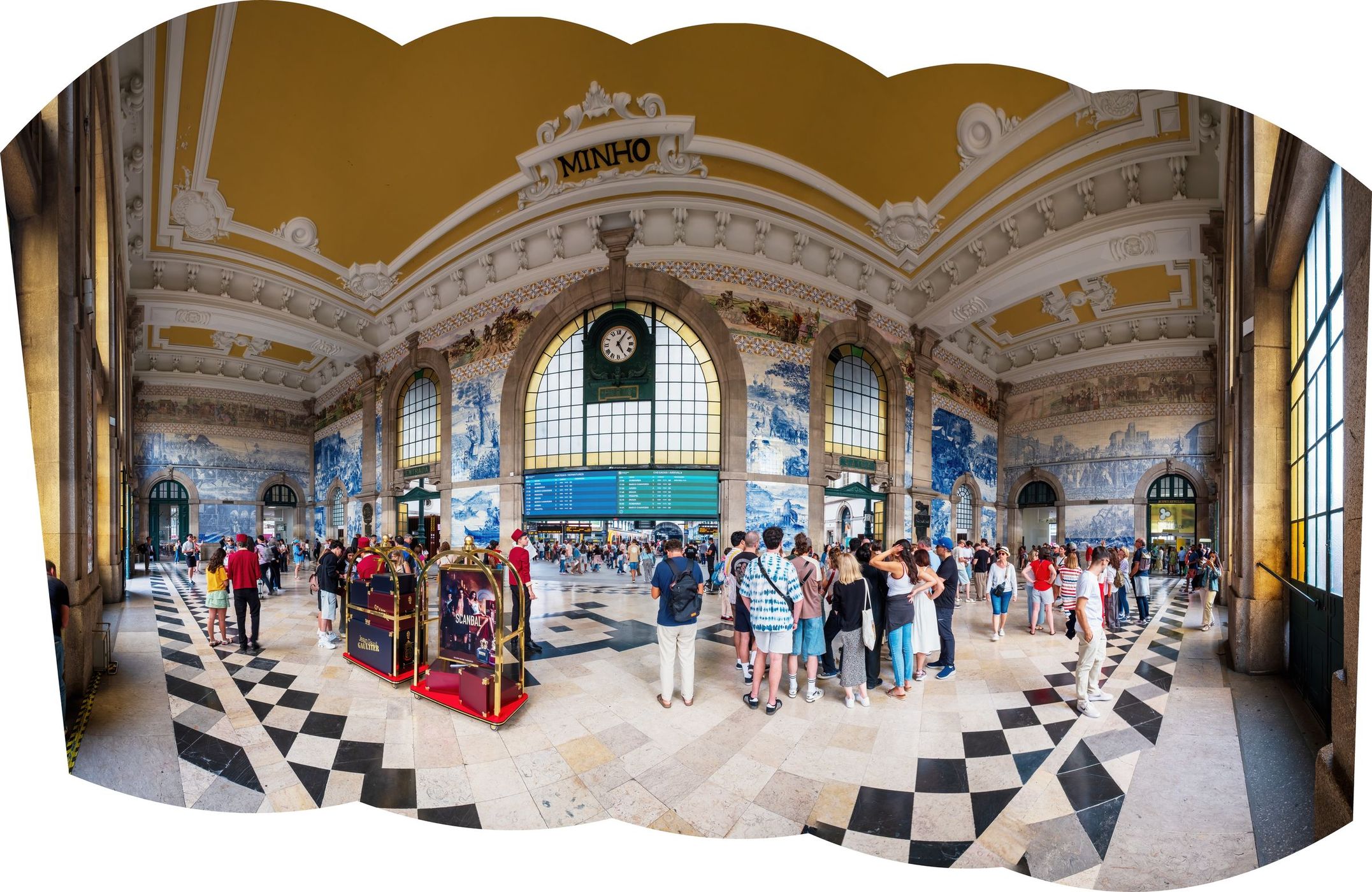
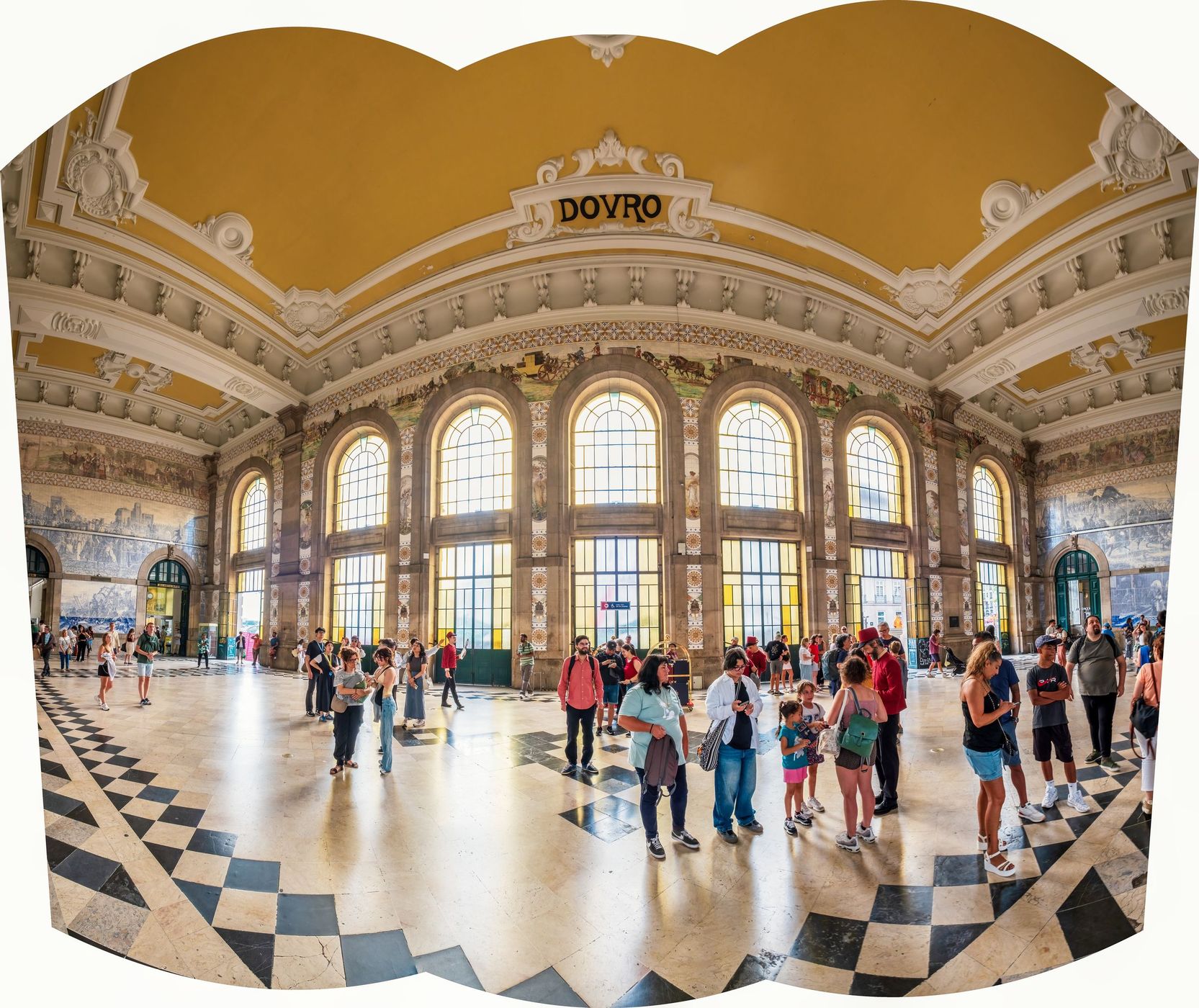
São Bento railway station was opened in 1916 on the site of the former Benedictine monastery of São Bento de Avé-Maria. It was designed by the architect José Marques da Silva, and a restrained Beaux-Arts façade was set onto Praça de Almeida Garrett to address the historic centre. The concourse was lined between 1905 and 1916 with some 20,000 azulejo tiles by Jorge Colaço, and sweeping panels were composed to depict episodes from Portuguese history alongside scenes of rural life and the evolution of transport.
The vestibule was celebrated for its luminous, ceramic storytelling, where cobalt and ochre glazes were balanced against granite details and clerestory light. Platforms were arranged in a shallow trench, and iron-and-glass canopies were carried over the tracks to temper the Atlantic weather. The station was used chiefly for suburban and regional services—towards the Douro valley and the Minho—while long-distance trains were routed via Campanhã, with easy connections provided.
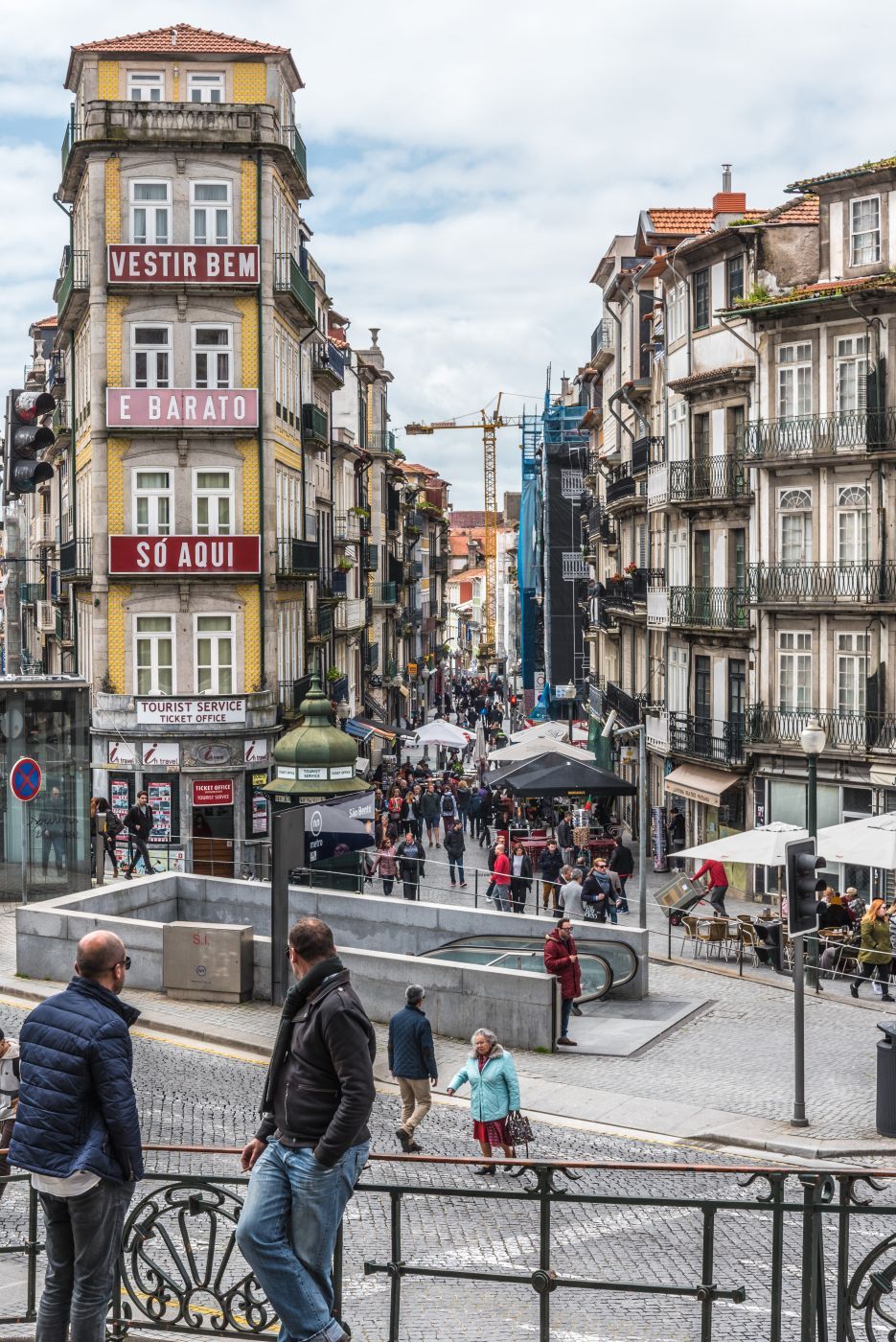
Over the twentieth century, the building was maintained as both transport hub and civic interior, and its tiled walls were regarded as one of Porto’s most visited works of art. Even as timetables changed, the station was kept in daily use, and its role in the city’s fabric was reinforced by the surrounding streets, cafés and viewpoints that were reached within minutes on foot.
The vestibule was celebrated for its luminous, ceramic storytelling, where cobalt and ochre glazes were balanced against granite details and clerestory light. Platforms were arranged in a shallow trench, and iron-and-glass canopies were carried over the tracks to temper the Atlantic weather. The station was used chiefly for suburban and regional services—towards the Douro valley and the Minho—while long-distance trains were routed via Campanhã, with easy connections provided.
Over the twentieth century, the building was maintained as both transport hub and civic interior, and its tiled walls were regarded as one of Porto’s most visited works of art. Even as timetables changed, the station was kept in daily use, and its role in the city’s fabric was reinforced by the surrounding streets, cafés and viewpoints that were reached within minutes on foot.
Photography Tips
Be patient, wait for people to clear.
Travel Information
Bus, metro line D, suburban train or just walk.
Spot Type
Outdoor
Crowd Factor
Lots of people
Best Timing
All timings are equally good
Sunrise & Sunset
07:49 - 18:49
| current local time: 07:28
Photo Themes
Railway Station
Street Photography
Locations
Porto
Porto Portugal





Spot comments (0)