


Spain Monastery of Santa Maria de Santes Creus
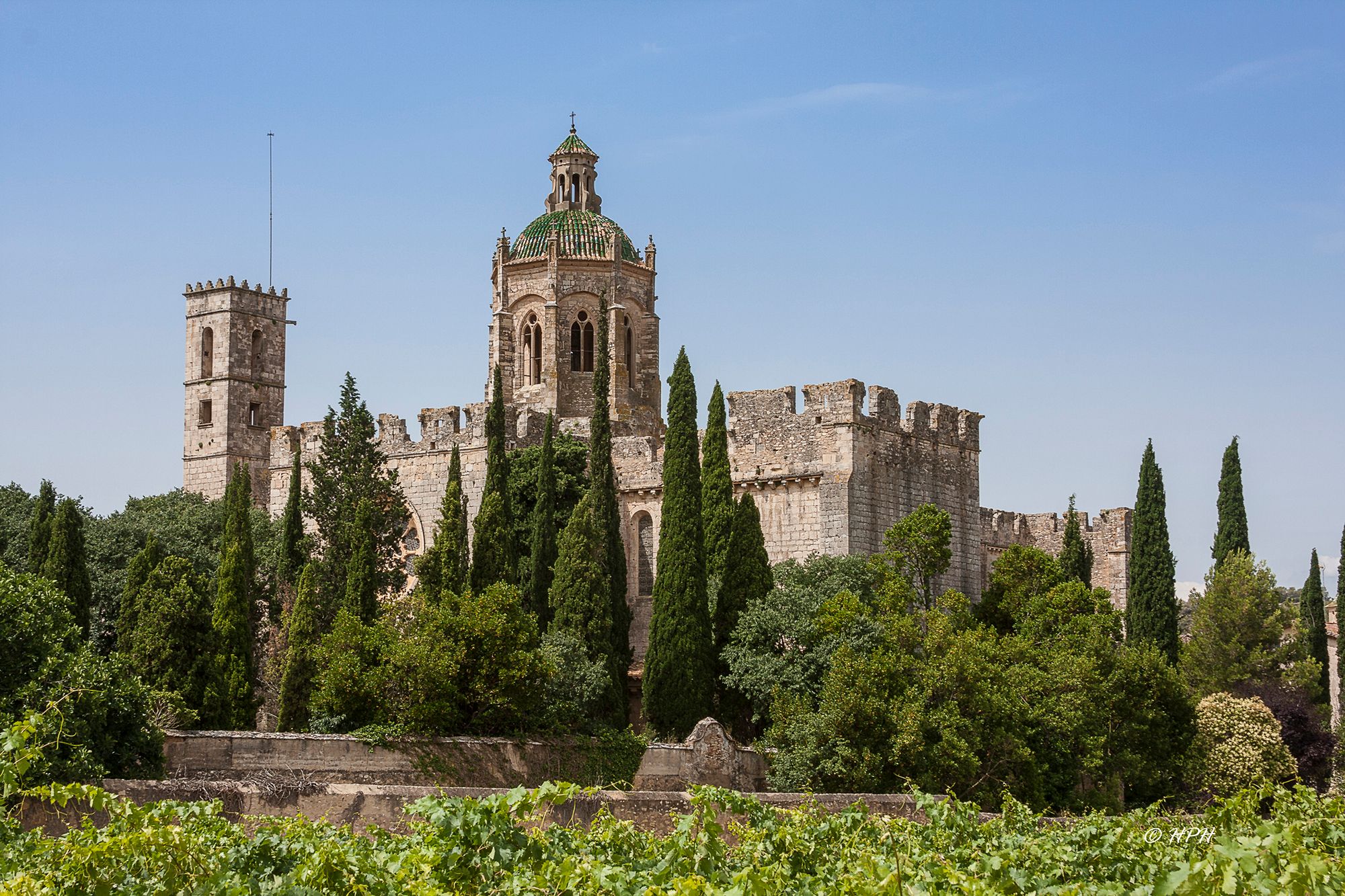
Reial Monastir de Santa Maria de Santes Creus is a Cistercian monastery in the municipality of Aiguamúrcia, Catalonia, Spain.
The monastery's origins date to 1158, when the Lords of Montagut y de Albá donated the village of Santes Creus to the monks of Valdaura. The papal decree that was required to establish a monastery was made by Pope Alexander II, and construction of the monastery began in 1174. The complex was completed in 1225.
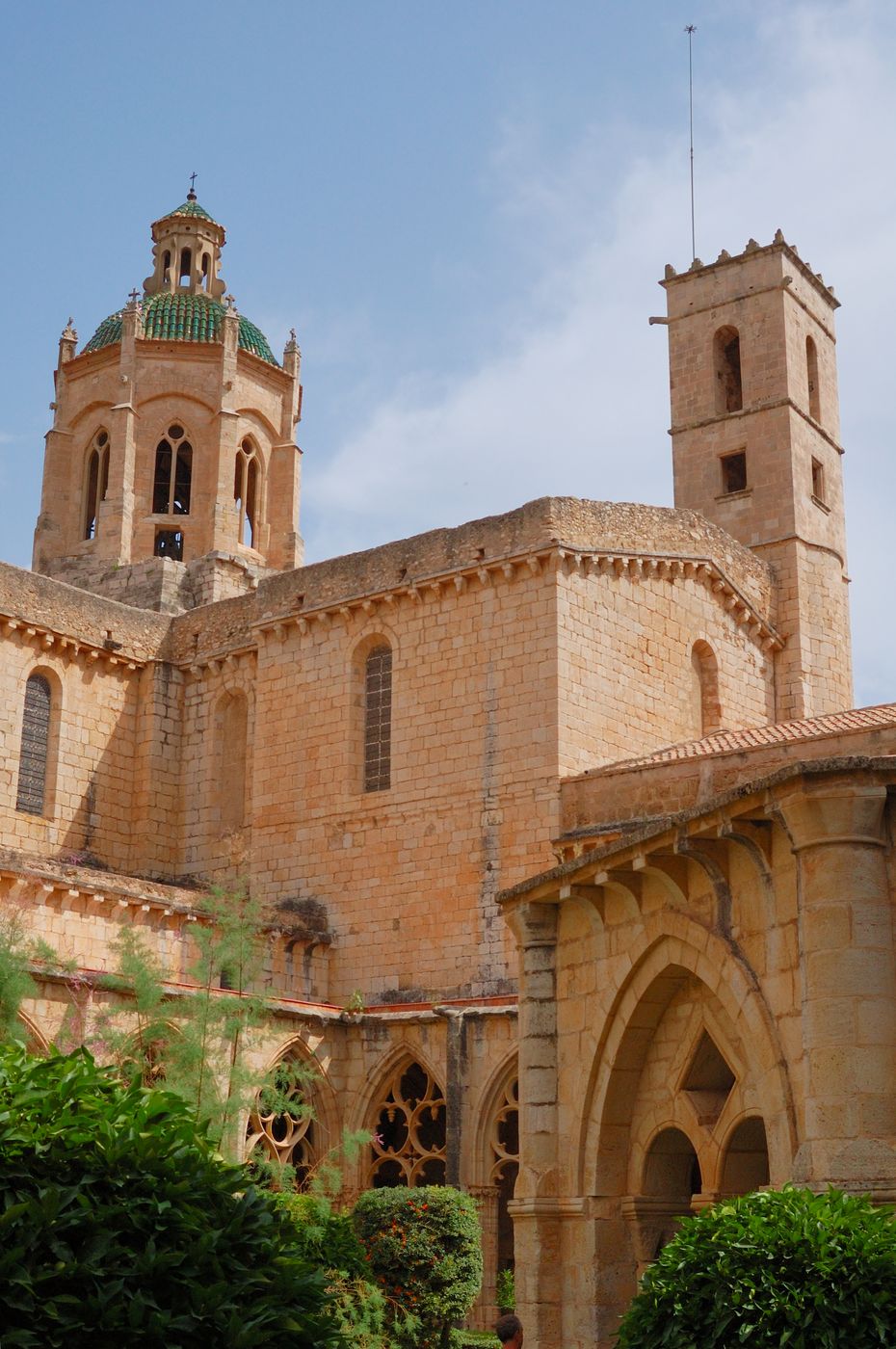
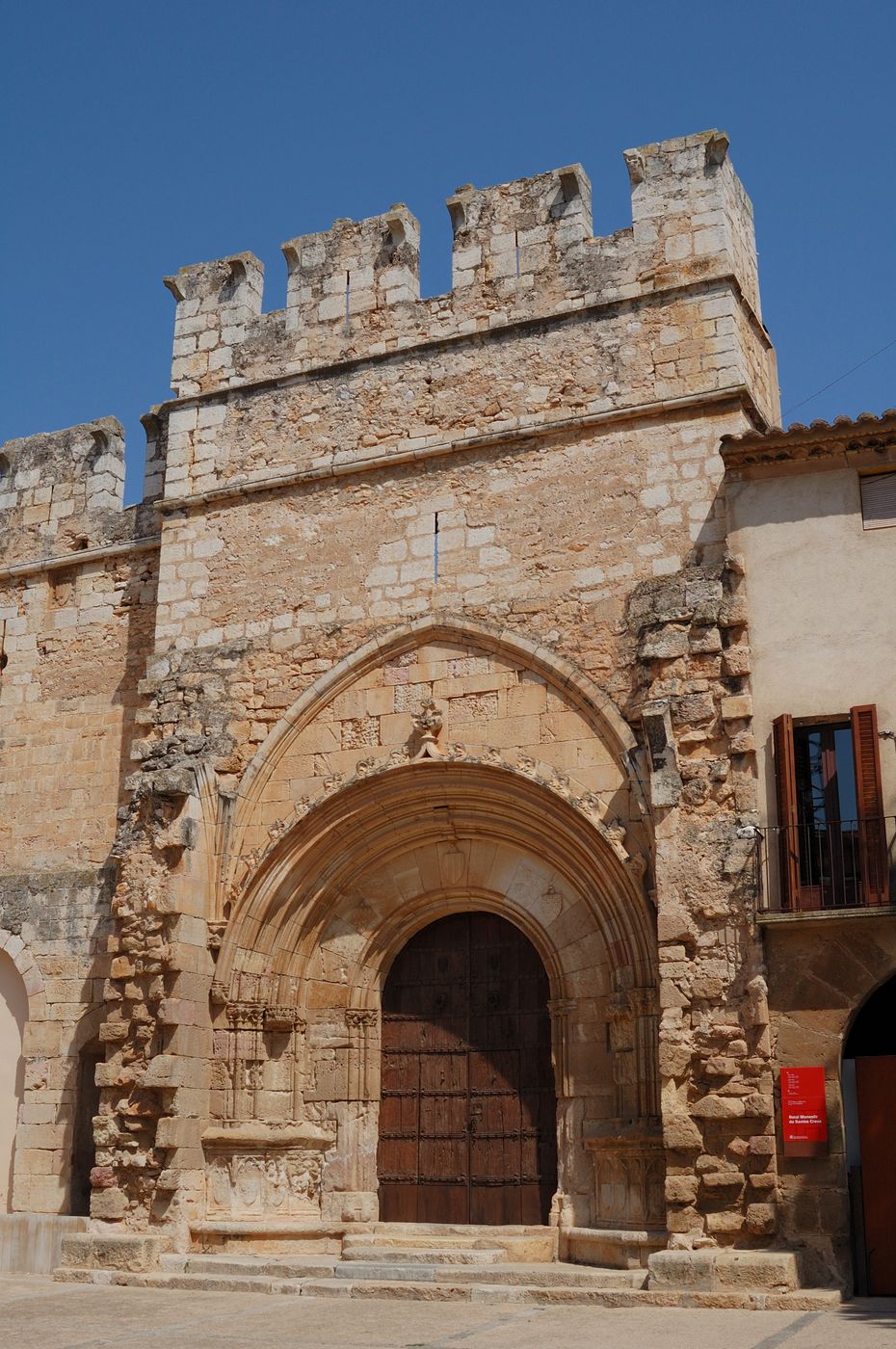
King Peter III of Aragon chose to be buried in the Monastery of Santes Creus, as did his son James II (1276–1285) and his wife, Blanche of Anjou. James II had a section of the abbey turned royal rooms, the original Romanesque cloister rebuilt in the Gothic style of the 13th century, and a dome added to the church's crossing. The walls were built under King Peter IV. From the time of Peter IV, the royal favour was transferred to the Monastery of Poblet.
The monastic complex continued to expand during the 17th and 18th century, until, following the Ecclesiastical Confiscations of Mendizábal in 1835, the Cistercians left and building activities ceased. The monastery was declared a national monument in 1921.
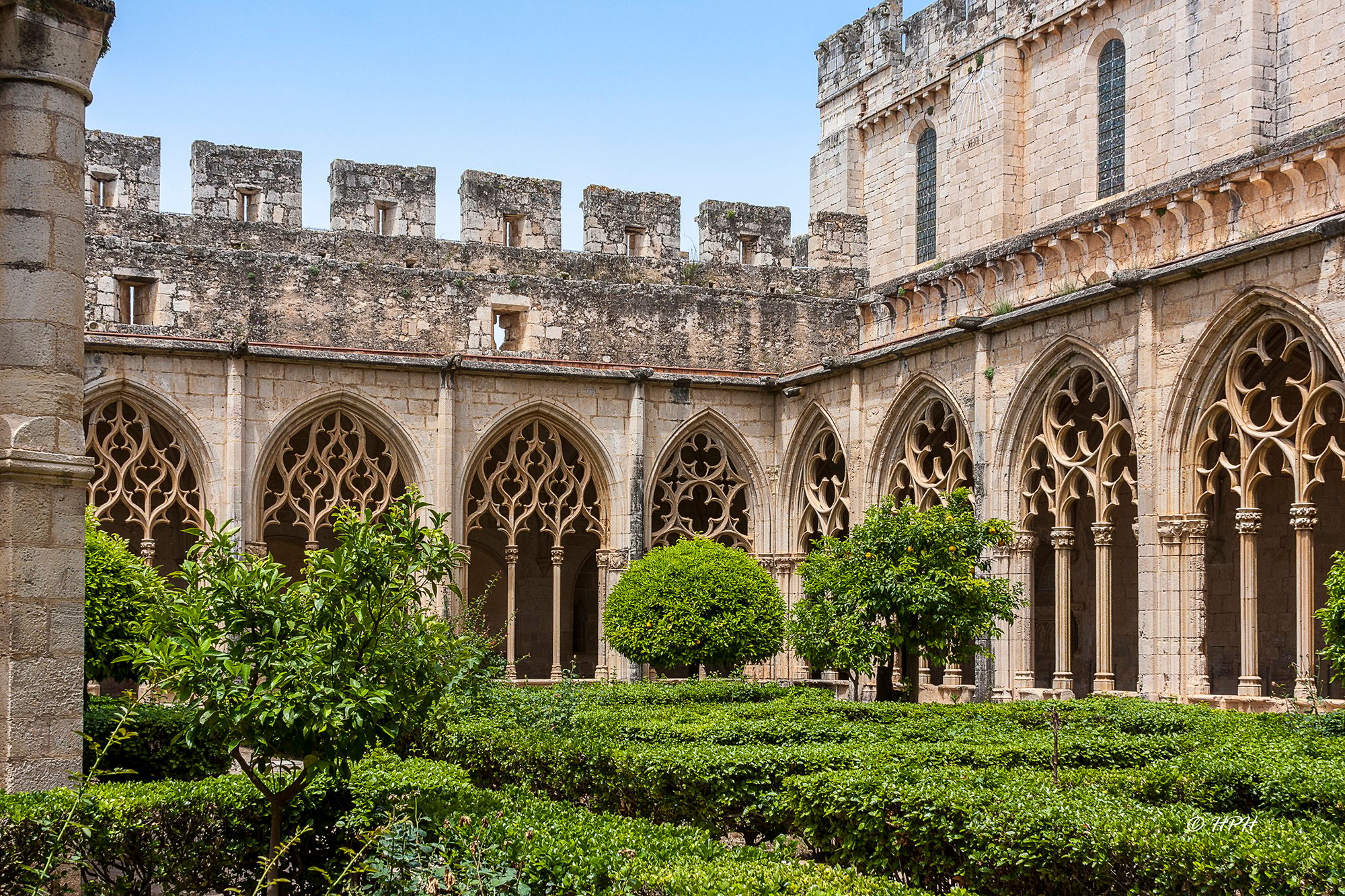
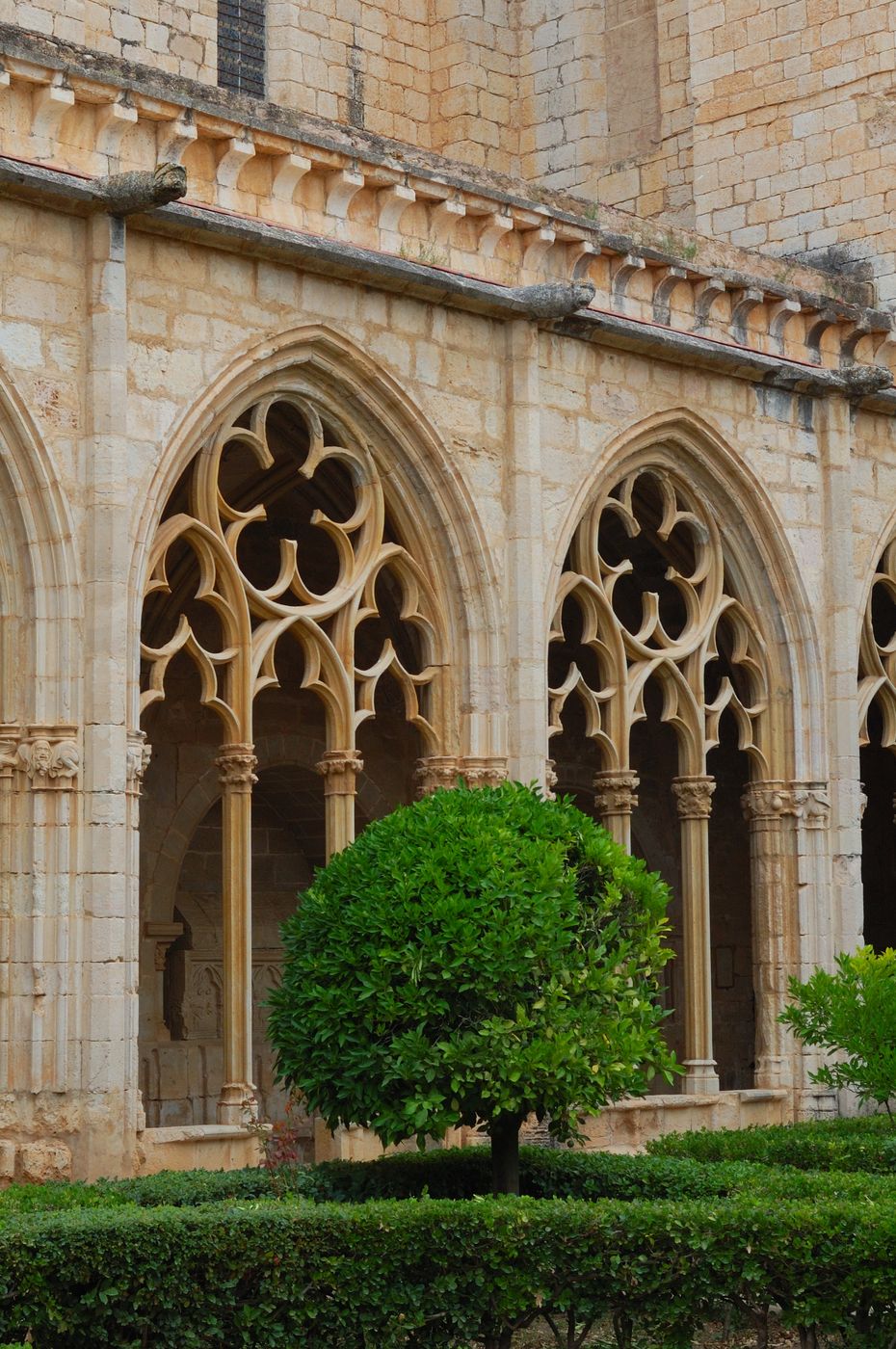
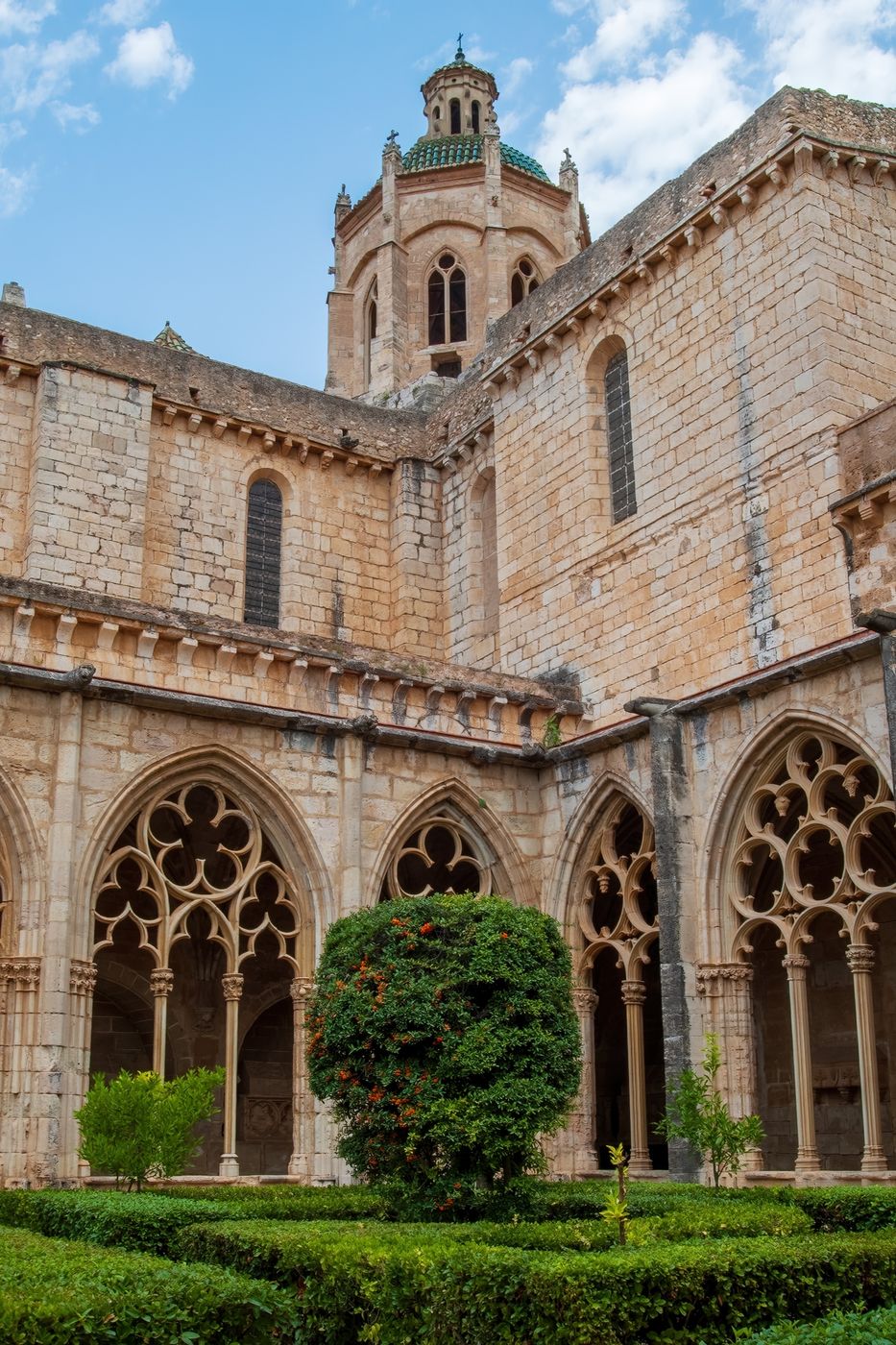
View of the cloister showing tracery in the Spanish style
The original cloister was a Romanesque structure, dating to the late 12th-early 13th century. All that remains of the first cloister is a hexagonal central shrine, containing the laundry
By request of King James II, the original cloister was largely demolished and replaced by a Gothic cloister designed by the English master Reynard of Fonoll, whose work was continued by his disciple Guillem de Seguer. The style of tracery which fills the upper parts of each ogival opening in the cloister arcade varies from English Geometric to Catalan in design. The clustered columns have highly ornamented capitals with foliate, animal and human figures, as well as biblical scenes. Recesses in the walls house tombs of several Catalan noblemen, and show remains of paintings, one representing the Annunciation.
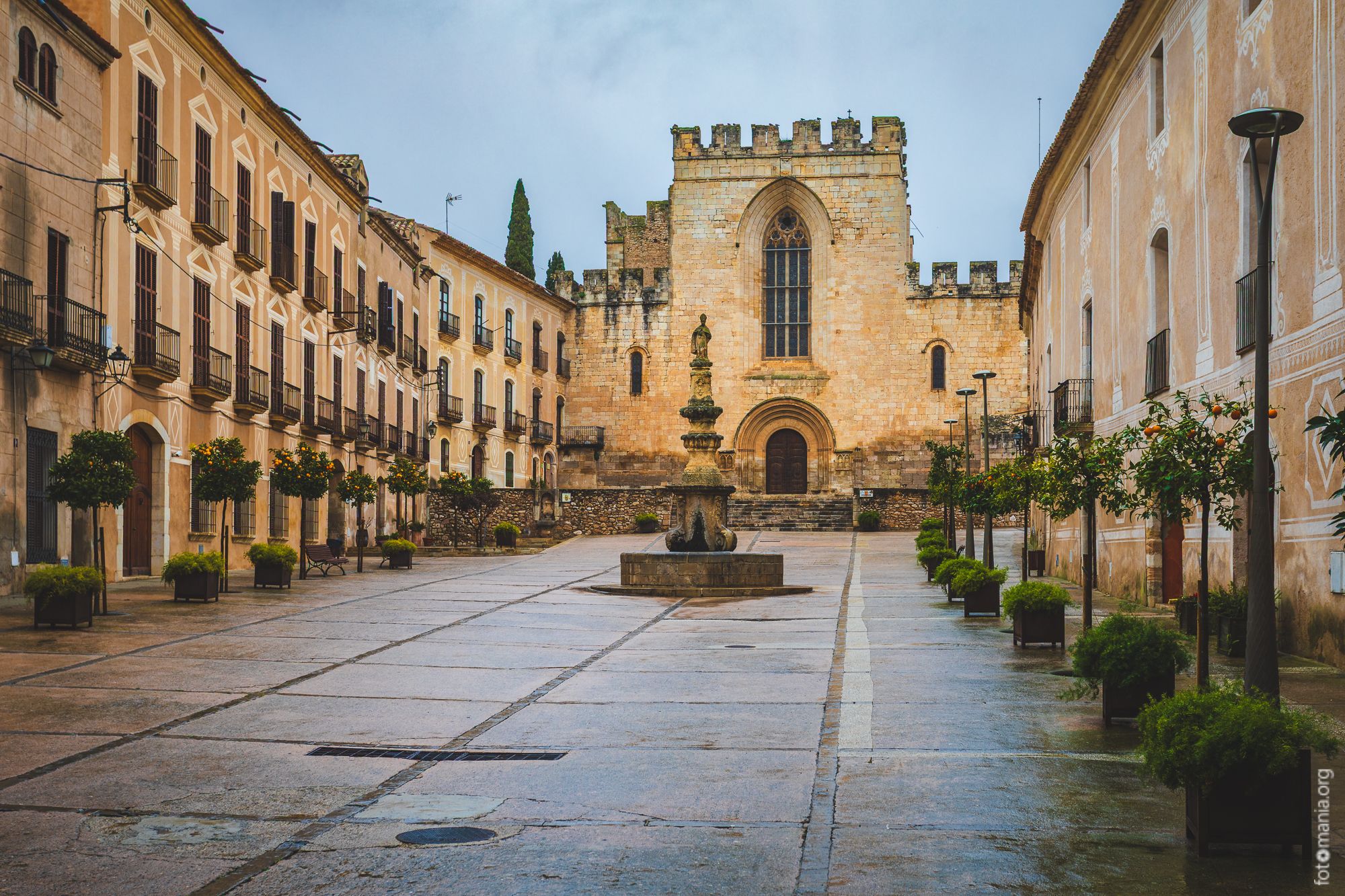
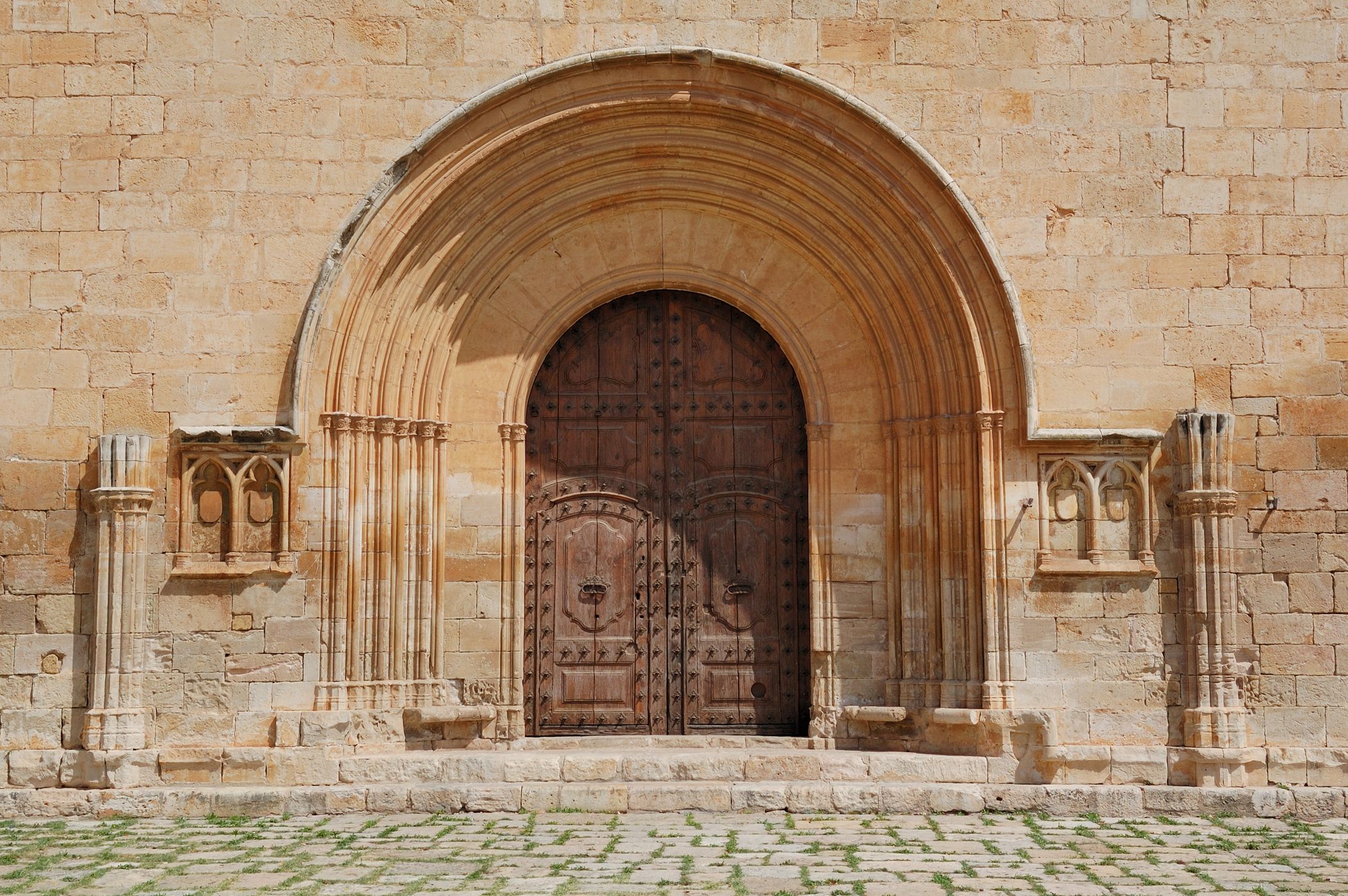
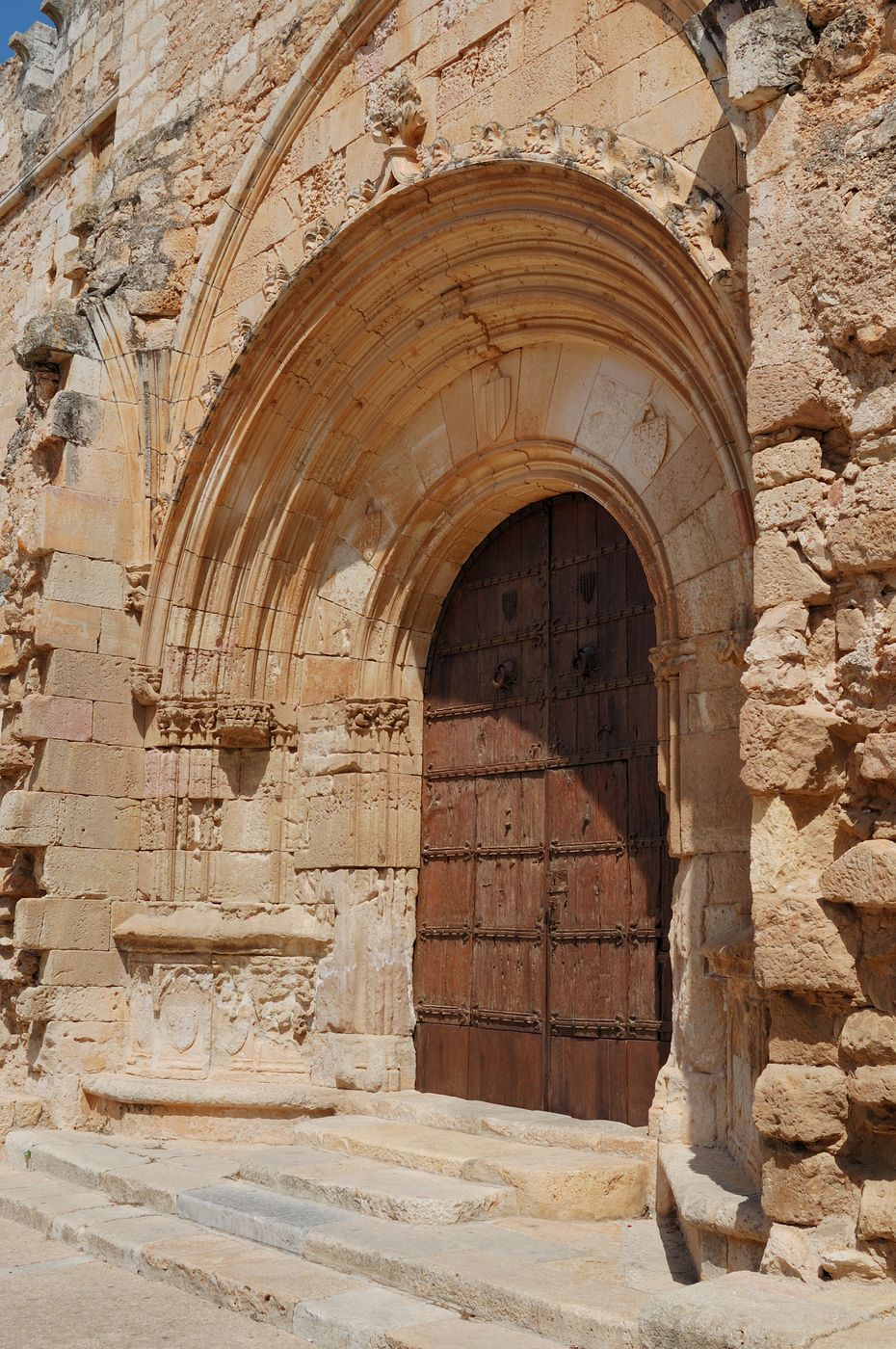
The cloister can be accessed from the monastery's external square through the Porta de l'Assumpta or Porta Reial ("Royal Gate"), a Romanesque portal.
The monastery's origins date to 1158, when the Lords of Montagut y de Albá donated the village of Santes Creus to the monks of Valdaura. The papal decree that was required to establish a monastery was made by Pope Alexander II, and construction of the monastery began in 1174. The complex was completed in 1225.
King Peter III of Aragon chose to be buried in the Monastery of Santes Creus, as did his son James II (1276–1285) and his wife, Blanche of Anjou. James II had a section of the abbey turned royal rooms, the original Romanesque cloister rebuilt in the Gothic style of the 13th century, and a dome added to the church's crossing. The walls were built under King Peter IV. From the time of Peter IV, the royal favour was transferred to the Monastery of Poblet.
The monastic complex continued to expand during the 17th and 18th century, until, following the Ecclesiastical Confiscations of Mendizábal in 1835, the Cistercians left and building activities ceased. The monastery was declared a national monument in 1921.
View of the cloister showing tracery in the Spanish style
The original cloister was a Romanesque structure, dating to the late 12th-early 13th century. All that remains of the first cloister is a hexagonal central shrine, containing the laundry
By request of King James II, the original cloister was largely demolished and replaced by a Gothic cloister designed by the English master Reynard of Fonoll, whose work was continued by his disciple Guillem de Seguer. The style of tracery which fills the upper parts of each ogival opening in the cloister arcade varies from English Geometric to Catalan in design. The clustered columns have highly ornamented capitals with foliate, animal and human figures, as well as biblical scenes. Recesses in the walls house tombs of several Catalan noblemen, and show remains of paintings, one representing the Annunciation.
The cloister can be accessed from the monastery's external square through the Porta de l'Assumpta or Porta Reial ("Royal Gate"), a Romanesque portal.
Photography Tips
For exterior shots, use golden hour for soft shadows and blue hour for long-exposure lamp-lit frames. Keep your camera level and centred to avoid distortion, and use a circular polariser to reveal textures in stone and wood. Include foreground elements like paving to create leading lines, and consider vertical panoramas in tight spaces. Use a short telephoto for details and include a person for scale. Overcast or post-rain conditions deepen colours and soften shadows.
Inside, respect no-flash rules and use higher ISO or image stabilization. Expose for the brightest areas to protect highlights and lift shadows in RAW. Capture cloisters symmetrically, then off-axis for depth, and use a polariser for reflections. Lenses: 24–28 mm for wide interiors, 70–100 mm for details, and a fast prime for low light. Time your shots between visitors or use slow shutter for ghosting effects, and set a neutral reference in post to balance mixed lighting.
Inside, respect no-flash rules and use higher ISO or image stabilization. Expose for the brightest areas to protect highlights and lift shadows in RAW. Capture cloisters symmetrically, then off-axis for depth, and use a polariser for reflections. Lenses: 24–28 mm for wide interiors, 70–100 mm for details, and a fast prime for low light. Time your shots between visitors or use slow shutter for ghosting effects, and set a neutral reference in post to balance mixed lighting.
Travel Information
By car: About 1–1½ hours from Barcelona and ~40 minutes from Tarragona. Follow the AP-7/AP-2 inland corridor toward Valls/Vila-rodona, then local roads signposted Monestir de Santes Creus. There’s parking near the entrance.
By train + taxi: Regional trains reach Valls or Sant Vicenç de Calders. From either, it’s a short taxi ride into Santes Creus.
By bus: Regional services run to nearby towns (Aiguamúrcia, Vila-rodona, l’Espluga de Francolí) with limited frequency; the last stretch is easiest by taxi if you’re not driving.
For a full Cistercian trifecta, pair Santes Creus with Poblet and Vallbona de les Monges—three different moods of stone, three different lighting puzzles.
By train + taxi: Regional trains reach Valls or Sant Vicenç de Calders. From either, it’s a short taxi ride into Santes Creus.
By bus: Regional services run to nearby towns (Aiguamúrcia, Vila-rodona, l’Espluga de Francolí) with limited frequency; the last stretch is easiest by taxi if you’re not driving.
For a full Cistercian trifecta, pair Santes Creus with Poblet and Vallbona de les Monges—three different moods of stone, three different lighting puzzles.
Spot Type
Outdoor
Crowd Factor
A decent amount of people
Best Timing
All timings are equally good
Sunrise & Sunset
08:14 - 19:03
| current local time: 20:49
Photo Themes
Alte Architektur
Architecture
Monastery





Spot comments (0)