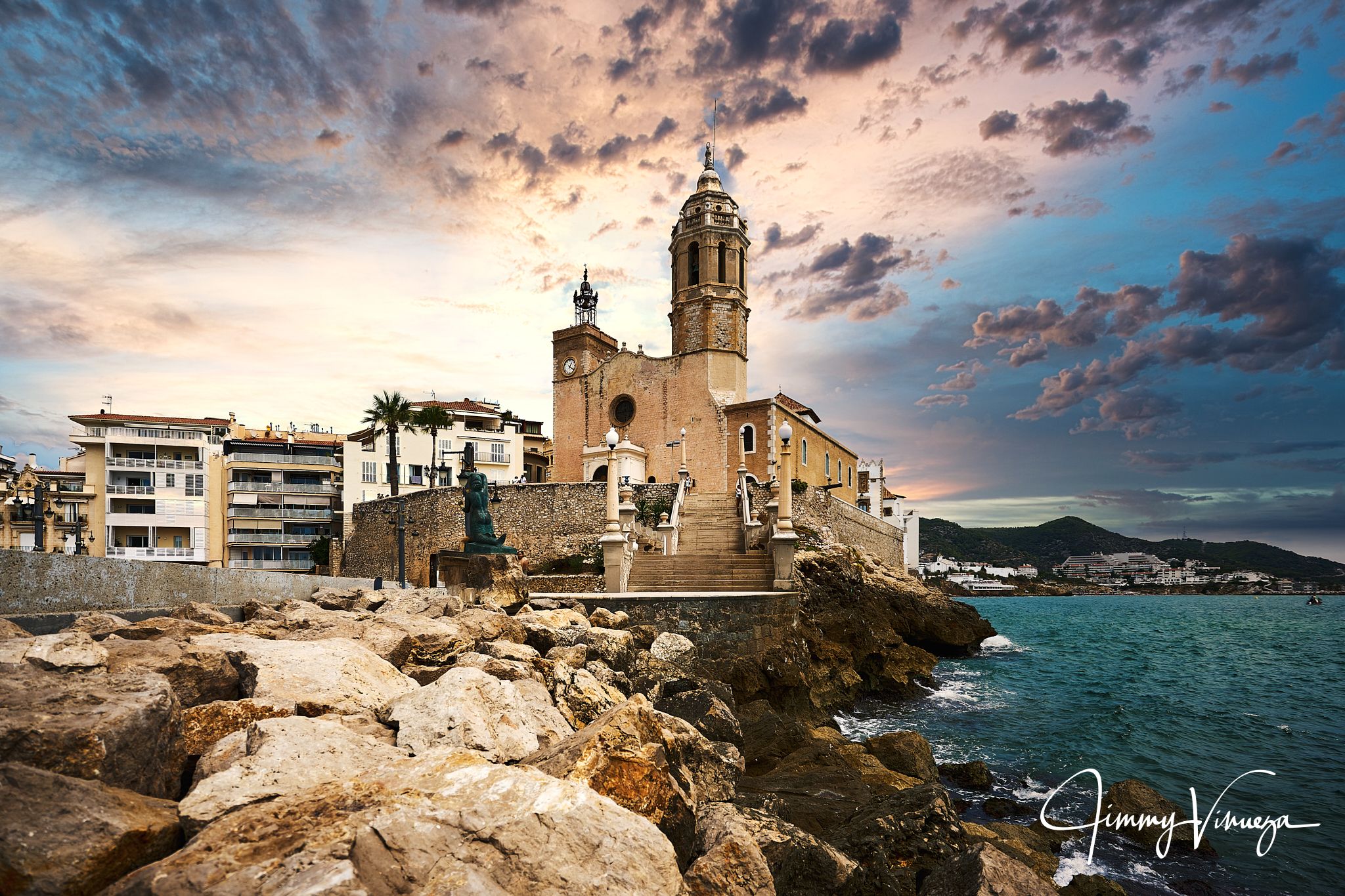

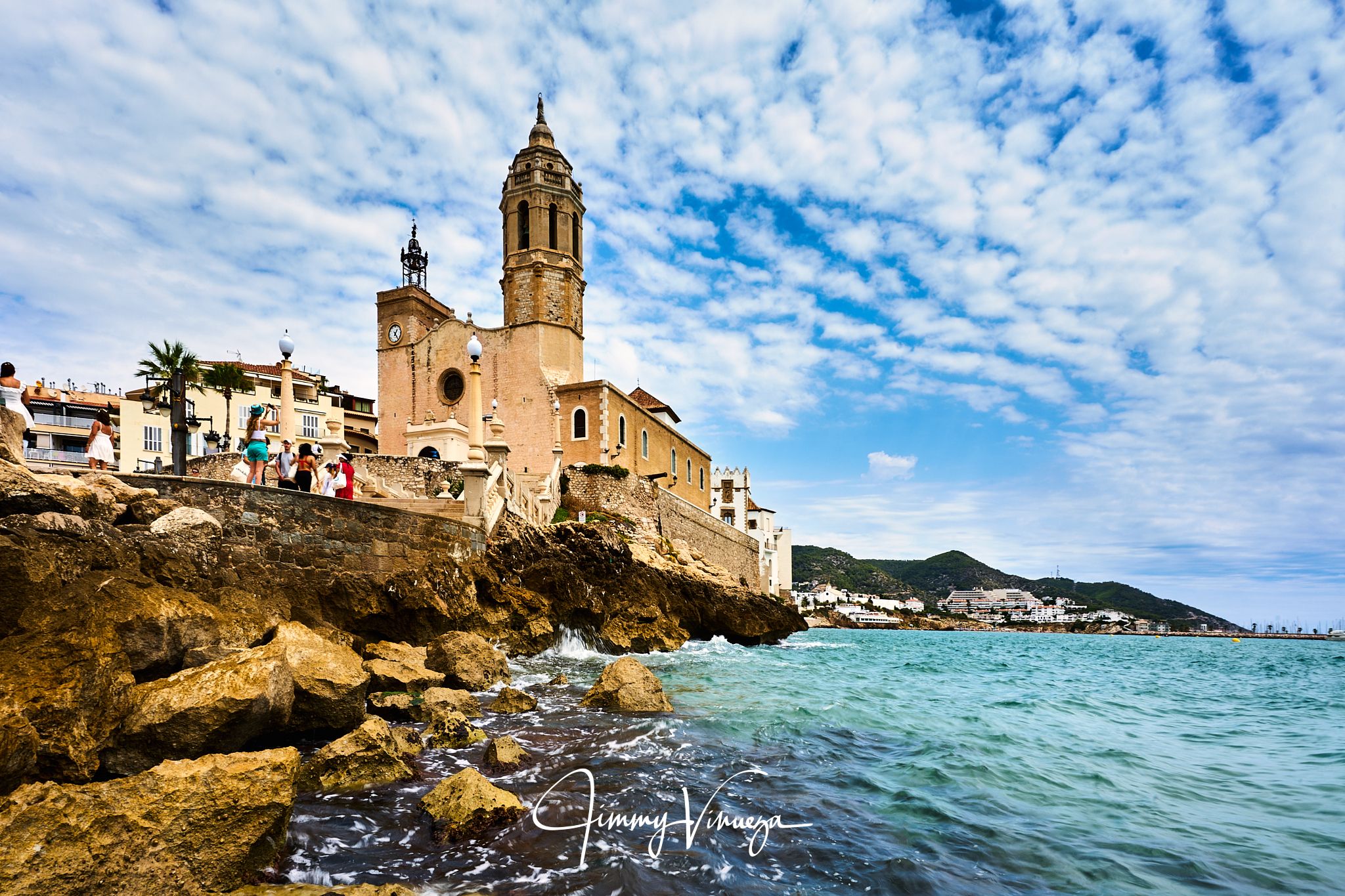
Spain The church of Sant Bartolomeu i Santa Tecla
Construction of this church started in the 17th century, although there are documents proving the existence of two earlier temples in the same place.
This is a temple with three naves, the central one being higher and with side chapels and tribunes. The apse is polygonal with the choir at the foot of it. The roof is supported by semicircular arches and the main façade, where we can find three access doors, has a round opening at the top and is crowned by a cornice and spheres. The octagonal belfry, which is located to the right of the façade, is formed by three stacked sections and was consecrated in 1672 and renovated in 1863. The other belfry, which dates from 1674, is known as the “conjuratory” and it is where the city clock and bells were installed in 1868. The ensemble is completed by the chapel of the Holy Sacrament, located on the right-hand side of the temple, where we can find Corinthian capitals and figures of angels.
This is a temple with three naves, the central one being higher and with side chapels and tribunes. The apse is polygonal with the choir at the foot of it. The roof is supported by semicircular arches and the main façade, where we can find three access doors, has a round opening at the top and is crowned by a cornice and spheres. The octagonal belfry, which is located to the right of the façade, is formed by three stacked sections and was consecrated in 1672 and renovated in 1863. The other belfry, which dates from 1674, is known as the “conjuratory” and it is where the city clock and bells were installed in 1868. The ensemble is completed by the chapel of the Holy Sacrament, located on the right-hand side of the temple, where we can find Corinthian capitals and figures of angels.
Photography Tips
Take a grand angular with you, it
Travel Information
Line R32 Sud links Barcelona with Sitges. There are three rail stops in Barcelona, the so-called Ciutat Comtal or County City. You can check timetables at renfe.es.






Spot comments (0)