
Spain Teruel
History
Teruel sits on a high plateau in Aragón and carries a layered past. It grew at the frontier between Islamic Al-Andalus and the Christian kingdoms, and its character formed after the Christian conquest, when Muslim, Jewish, and Christian craftsmen shaped a shared urban language. This blend—known as Mudéjar—defines Teruel’s towers, brickwork, and glazed tiles. The city’s identity also leans on the legend of the Lovers of Teruel, a medieval tale of star-crossed devotion commemorated in the Church of San Pedro and its mausoleum. Across centuries, Teruel remained a provincial capital with a fiercely local spirit, preserving craft traditions and an urban scale that still feels intimate.
Site description
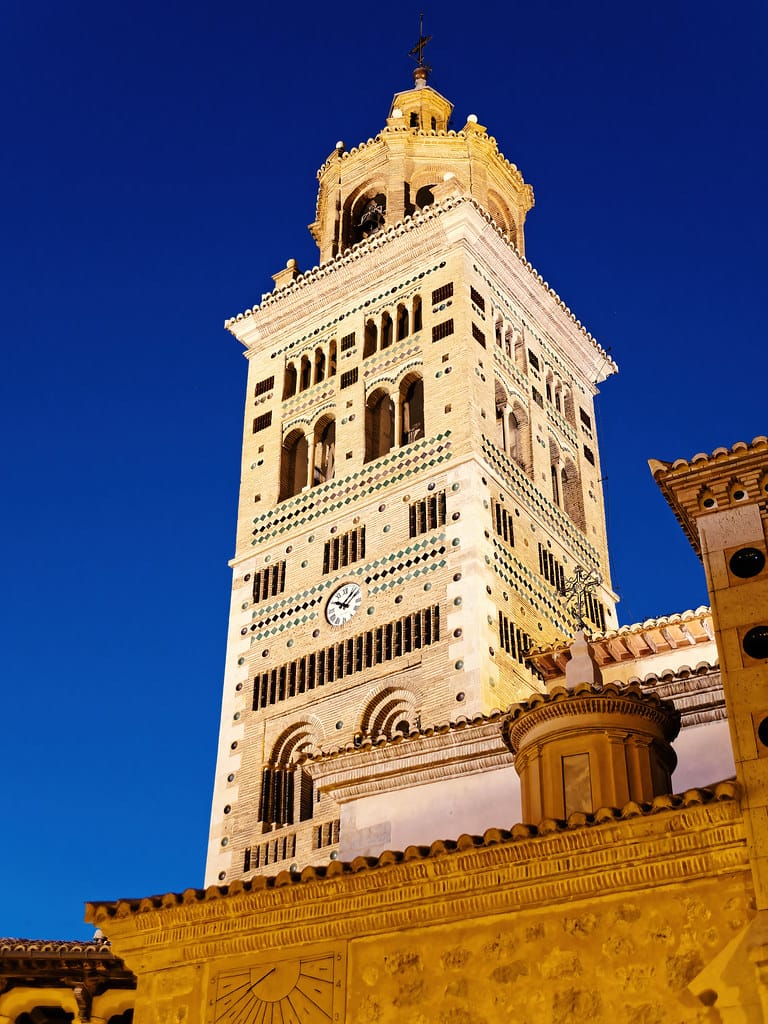
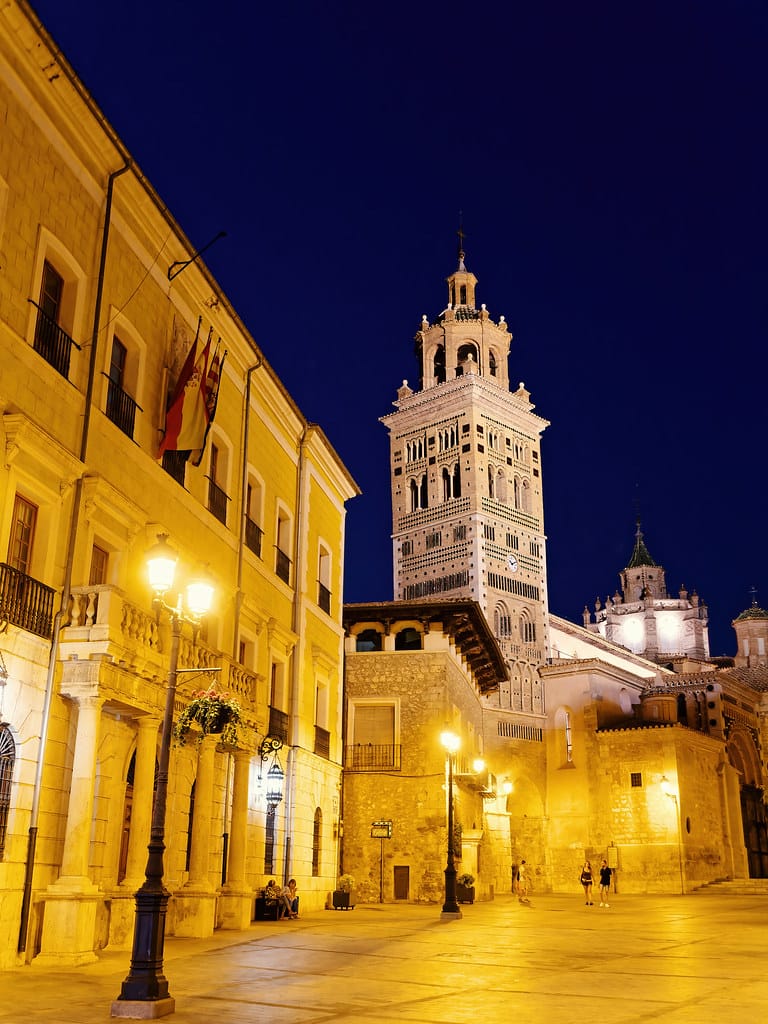
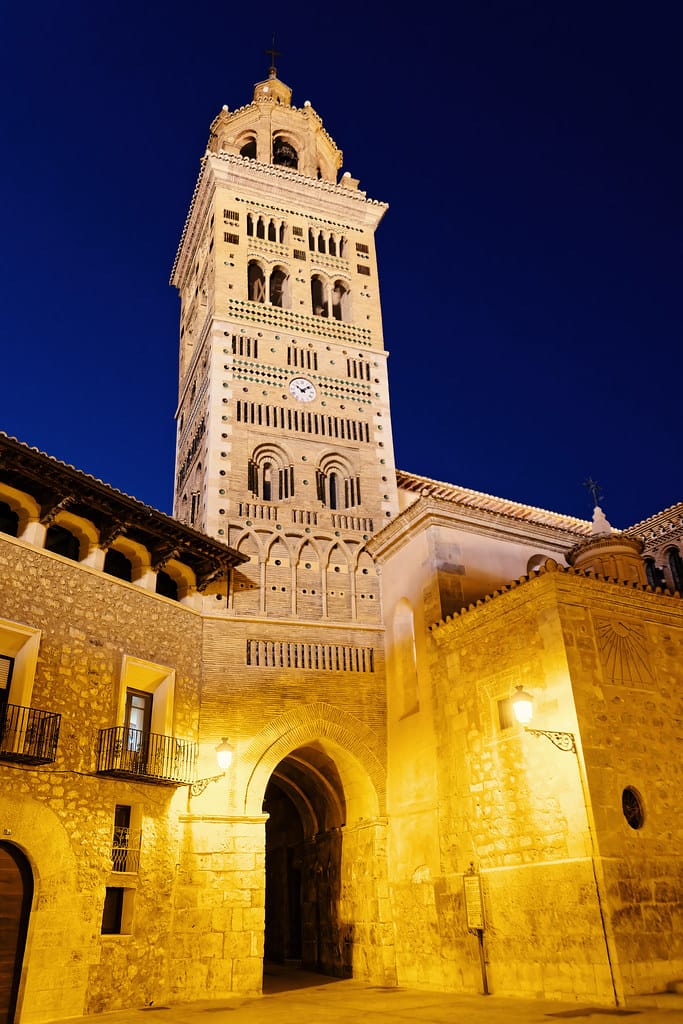
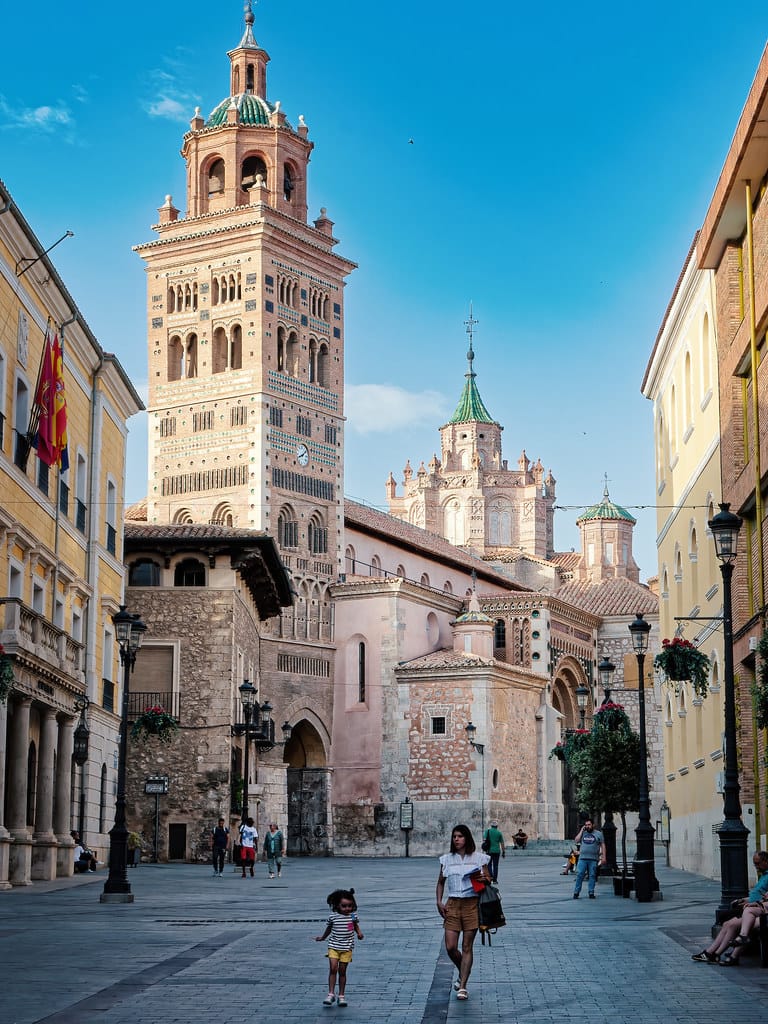
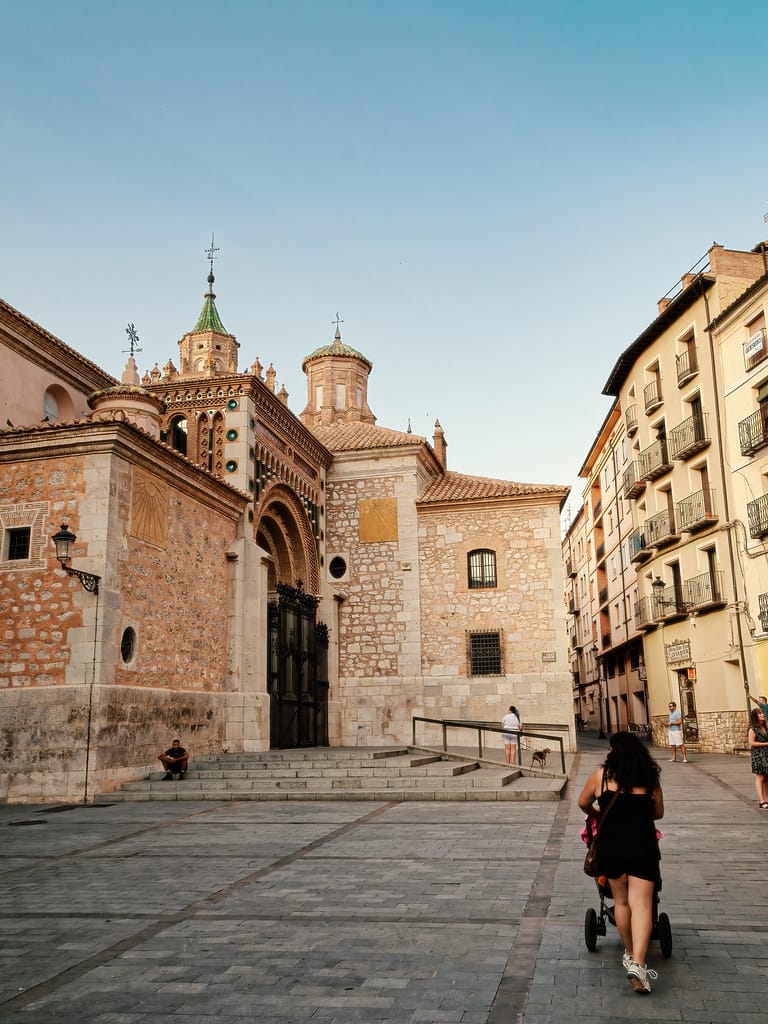
Teruel’s historic core crowns a rocky spur above the confluence of the Guadalaviar (Turia) and Alfambra rivers. Narrow lanes loop around small squares, with arcades and modest townhouses in warm brick. Four Mudéjar bell towers—San Martín, San Salvador, the Cathedral of Santa María, and San Pedro—punctuate the skyline with patterned brick and emerald-white ceramic inlays. The Cathedral hides a celebrated painted wooden ceiling; the Church of San Pedro anchors a quieter corner with cloisters and gardens.
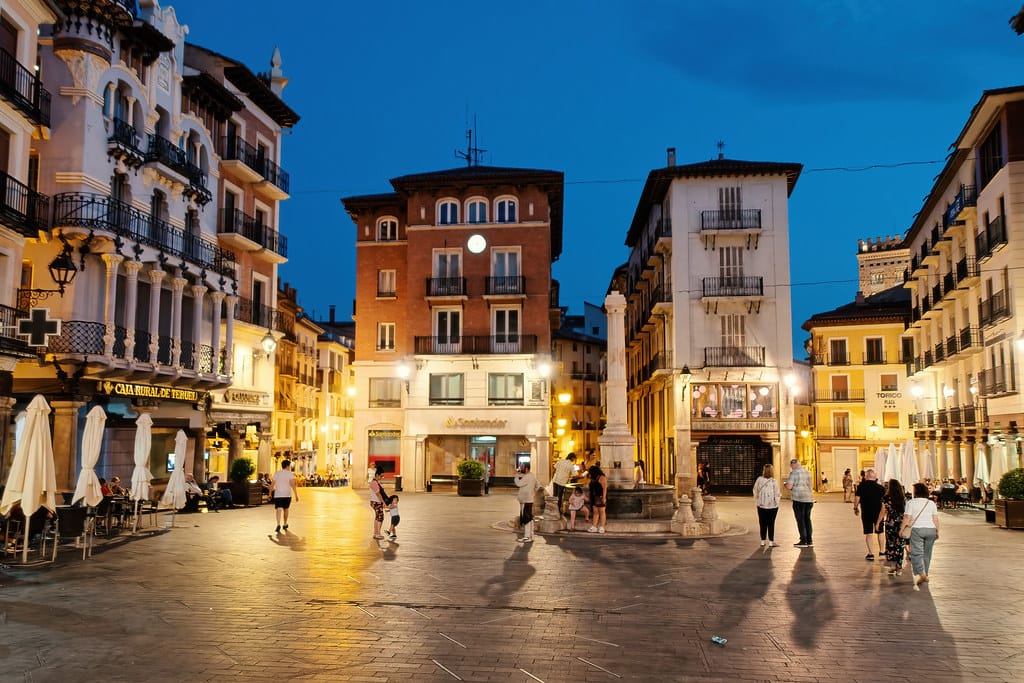
Plaza del Torico forms the social heart, famous for its petite bull statue atop a slender column and for the gentle slope that funnels life toward cafés and arcades. At the edge of the centre, the Escalinata del Óvalo—an early 20th-century monumental staircase in Neo-Mudéjar style—links the railway level to the old town. Stone viaducts stride across the ravines, framing long views toward the sierra and giving the compact city an unexpectedly dramatic setting.
Photography potential
Teruel rewards both architectural study and atmospheric street work. The Mudéjar towers offer graphic patterns in brick and tile that shine in raking light; climbable towers (when open) give elevated views over the terracotta roofs and the folds of the surrounding hills. Plaza del Torico delivers lively scenes and clean, symmetrical frames, while side streets provide chiaroscuro—bright plaster and deep shadow—perfect for black-and-white sets. The Escalinata supplies strong leading lines, relief tiles, and layered perspectives down to the rail cutting. Blue hour enriches the brick and ceramic with warm highlights, and winter mist over the ravines adds a soft backdrop for long lenses. Indoors, the Cathedral’s painted ceiling and San Pedro’s cloister offer controlled light, textures, and details that pair well with the bold geometry outside.
Teruel sits on a high plateau in Aragón and carries a layered past. It grew at the frontier between Islamic Al-Andalus and the Christian kingdoms, and its character formed after the Christian conquest, when Muslim, Jewish, and Christian craftsmen shaped a shared urban language. This blend—known as Mudéjar—defines Teruel’s towers, brickwork, and glazed tiles. The city’s identity also leans on the legend of the Lovers of Teruel, a medieval tale of star-crossed devotion commemorated in the Church of San Pedro and its mausoleum. Across centuries, Teruel remained a provincial capital with a fiercely local spirit, preserving craft traditions and an urban scale that still feels intimate.
Site description
Teruel’s historic core crowns a rocky spur above the confluence of the Guadalaviar (Turia) and Alfambra rivers. Narrow lanes loop around small squares, with arcades and modest townhouses in warm brick. Four Mudéjar bell towers—San Martín, San Salvador, the Cathedral of Santa María, and San Pedro—punctuate the skyline with patterned brick and emerald-white ceramic inlays. The Cathedral hides a celebrated painted wooden ceiling; the Church of San Pedro anchors a quieter corner with cloisters and gardens.
Plaza del Torico forms the social heart, famous for its petite bull statue atop a slender column and for the gentle slope that funnels life toward cafés and arcades. At the edge of the centre, the Escalinata del Óvalo—an early 20th-century monumental staircase in Neo-Mudéjar style—links the railway level to the old town. Stone viaducts stride across the ravines, framing long views toward the sierra and giving the compact city an unexpectedly dramatic setting.
Photography potential
Teruel rewards both architectural study and atmospheric street work. The Mudéjar towers offer graphic patterns in brick and tile that shine in raking light; climbable towers (when open) give elevated views over the terracotta roofs and the folds of the surrounding hills. Plaza del Torico delivers lively scenes and clean, symmetrical frames, while side streets provide chiaroscuro—bright plaster and deep shadow—perfect for black-and-white sets. The Escalinata supplies strong leading lines, relief tiles, and layered perspectives down to the rail cutting. Blue hour enriches the brick and ceramic with warm highlights, and winter mist over the ravines adds a soft backdrop for long lenses. Indoors, the Cathedral’s painted ceiling and San Pedro’s cloister offer controlled light, textures, and details that pair well with the bold geometry outside.
Photography Tips
For photos in Teruel, chase golden hour on the Mudéjar towers (San Martín, El Salvador, Cathedral, San Pedro) to make brick and green-white tiles glow, then stay for blue hour when lamps add warmth to arcades and plazas. Work centred frames for patterns, diagonals for depth, and go low in Plaza del Torico to exaggerate the slope; the Escalinata del Óvalo gives perfect leading lines. A 24–35 mm covers façades, 50–85 mm isolates details; try ISO 100–400, f/5.6–f/8 outside, and bracket highlights on pale plaster. After rain, hunt puddle reflections; in winter, fog softens the ravines for long lenses.
Travel Information
Getting there is straightforward: regional trains link Teruel with Zaragoza-Delicias and Valencia Nord (from Madrid, change in Zaragoza), and coaches from Valencia, Zaragoza, and Madrid are frequent. By car, follow the A-23 (Autovía Mudéjar); parking is easiest at the edge of the old town. The nearest commercial airports are Valencia (VLC) and Zaragoza (ZAZ). In town, it’s a compact, walkable centre, with lifts and the Escalinata connecting the rail level to the historic core.
Spot Type
Outdoor
Crowd Factor
A decent amount of people
Best Timing
Blue hour/at night in summer
Sunrise & Sunset
08:18 - 19:20
| current local time: 10:15
Photo Themes
City
Old Building
Old Church
Old Town
Locations
Aragon
Southern Spain
Teruel





Spot comments (0)