
Spain Tarragona, old city
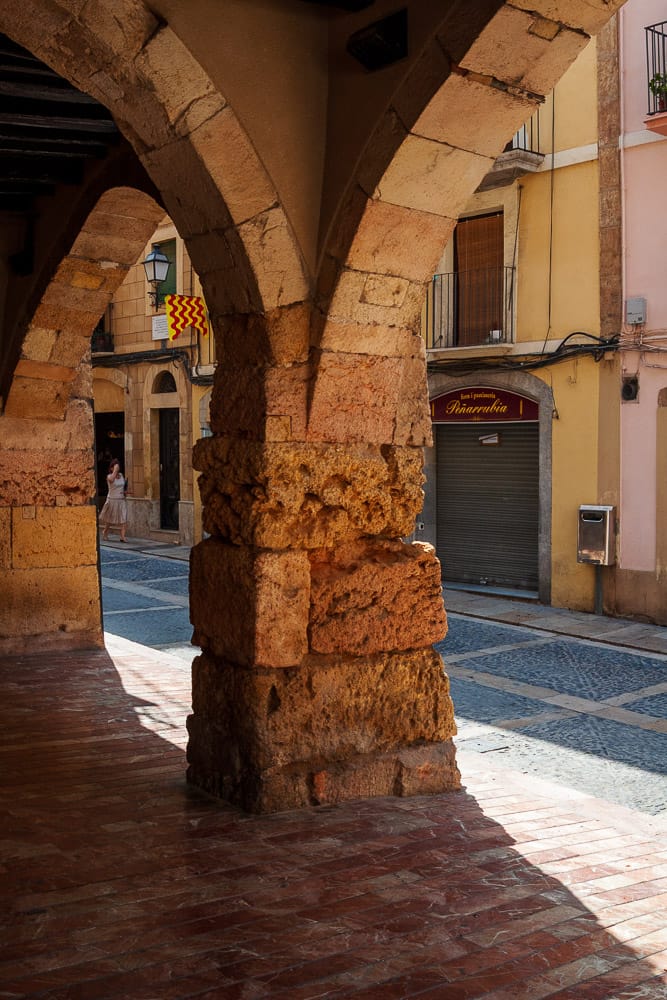
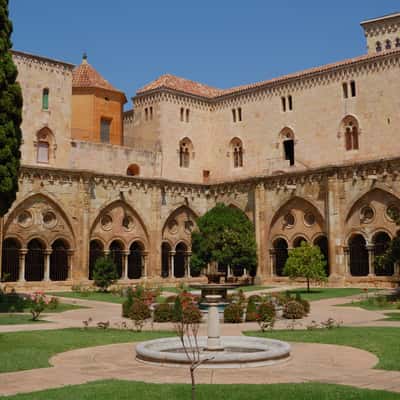
Tarragona’s old city, known locally as the Part Alta, sits on a hill above the Mediterranean and keeps layers of history in walking distance. The Romans established Tarraco here in the 3rd century BCE, and you still feel that power in the surviving city walls, the Praetorium, and the remains of the circus that once hosted chariot races. After the Roman period came Visigothic, Islamic and then medieval Catalan rule, and the old city kept growing inward rather than outward. The result is a dense, walled core of stone streets, vaulted passages, and small plazas where laundry, flags and saints all hang from balconies at the same time. At the highest point stands the cathedral, which rises from the site of a Roman temple and shows a mix of late Romanesque and early Gothic style: heavy carved apostles and prophets around the portal, a huge rose window over the entrance, and a cloister that opens onto a quiet garden with arcades, palm trees and a little fountain. Walking through the old town is basically walking through a timeline of Mediterranean urban architecture, from Roman ashlar blocks to medieval arches to 19th-century façades painted in warm ochre.
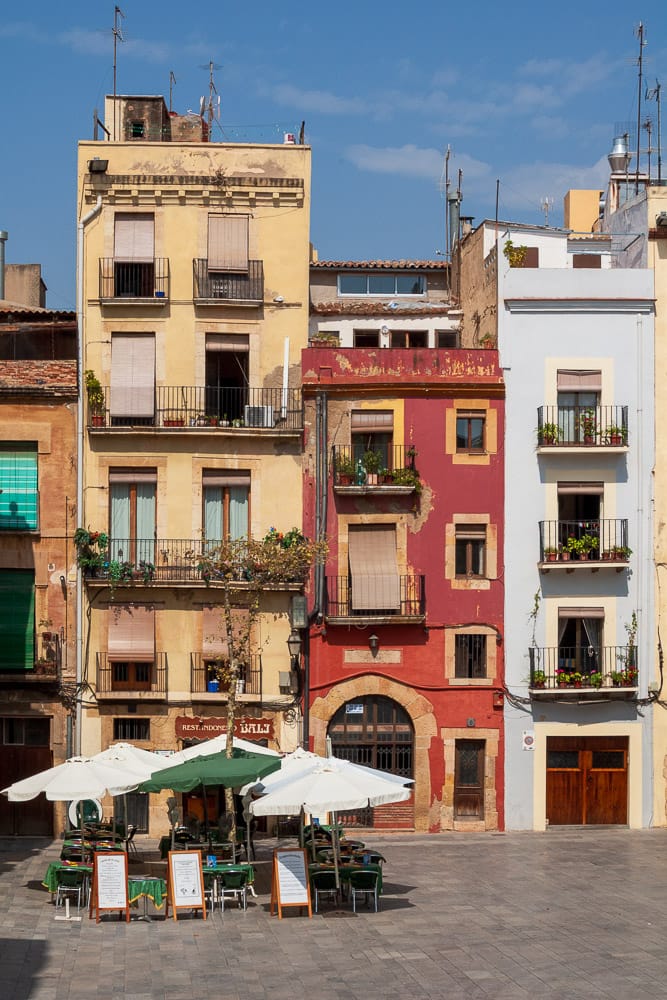
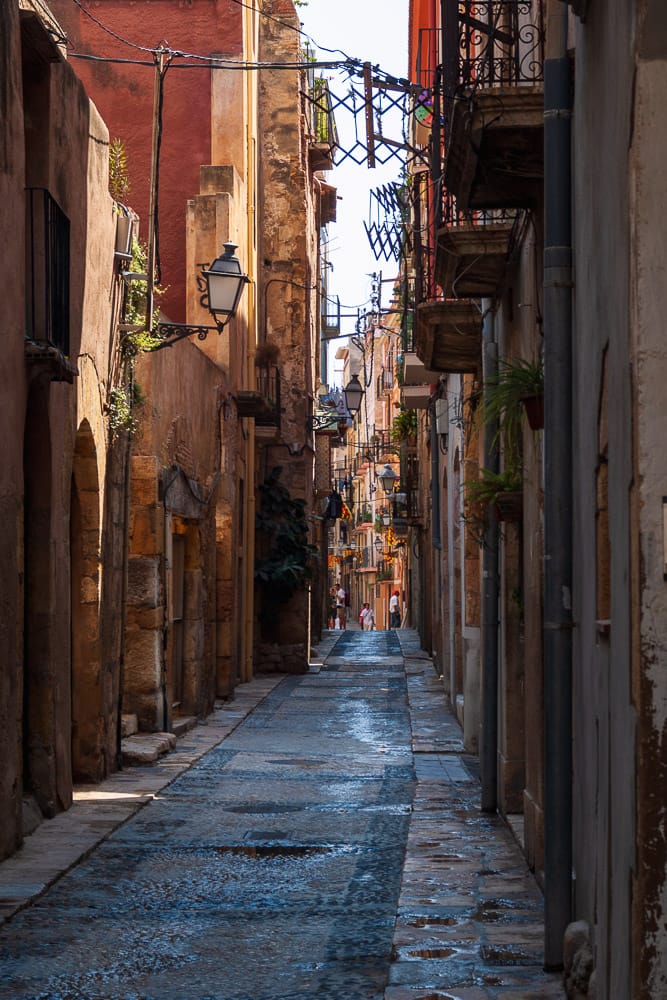
Architecturally, the Part Alta is a playground for anyone into textures and proportions. You get the thick, almost fort-like Roman stone at the base of the old walls. You get narrow medieval streets where two balconies almost shake hands above your head. You get grander civic squares like Plaça de la Font and Plaça del Fòrum, where cafés spill into public space in that very Catalan way: tables, sunlight, voices. And then you get the big gestures. The cathedral façade is all sculpted figures, layered columns and deep shadow under the pointed main arch. The Roman circus ruins cut through the modern street grid and create sudden drops, tunnels and viewpoints. The Mediterranean itself keeps flashing into view at the end of a street, just to remind you the Romans did not build this city inland. Everything sits close together, which makes it easy to read the city as a fabric instead of a list of monuments.
For photography, the old city is ridiculously generous. The stone here reflects warm light, so the first couple of hours after sunrise and the last couple before sunset turn the streets golden and soft. The cathedral from Carrer Major, framed by tall buildings and Catalan flags, gives you a strong “compressed perspective” shot: long street, receding balconies, then suddenly the rose window filling the end of the frame. The cloister gives you symmetry and calm — arches repeating around a garden courtyard, great for centred compositions. The Roman walls and towers work well for scale, especially if you include a person to show how massive the blocks really are. Night shots in the old town also work well because many streets use warmer-toned lamps that bring out the texture of the stone instead of blasting it flat and white.
Architecturally, the Part Alta is a playground for anyone into textures and proportions. You get the thick, almost fort-like Roman stone at the base of the old walls. You get narrow medieval streets where two balconies almost shake hands above your head. You get grander civic squares like Plaça de la Font and Plaça del Fòrum, where cafés spill into public space in that very Catalan way: tables, sunlight, voices. And then you get the big gestures. The cathedral façade is all sculpted figures, layered columns and deep shadow under the pointed main arch. The Roman circus ruins cut through the modern street grid and create sudden drops, tunnels and viewpoints. The Mediterranean itself keeps flashing into view at the end of a street, just to remind you the Romans did not build this city inland. Everything sits close together, which makes it easy to read the city as a fabric instead of a list of monuments.
For photography, the old city is ridiculously generous. The stone here reflects warm light, so the first couple of hours after sunrise and the last couple before sunset turn the streets golden and soft. The cathedral from Carrer Major, framed by tall buildings and Catalan flags, gives you a strong “compressed perspective” shot: long street, receding balconies, then suddenly the rose window filling the end of the frame. The cloister gives you symmetry and calm — arches repeating around a garden courtyard, great for centred compositions. The Roman walls and towers work well for scale, especially if you include a person to show how massive the blocks really are. Night shots in the old town also work well because many streets use warmer-toned lamps that bring out the texture of the stone instead of blasting it flat and white.
Photography Tips
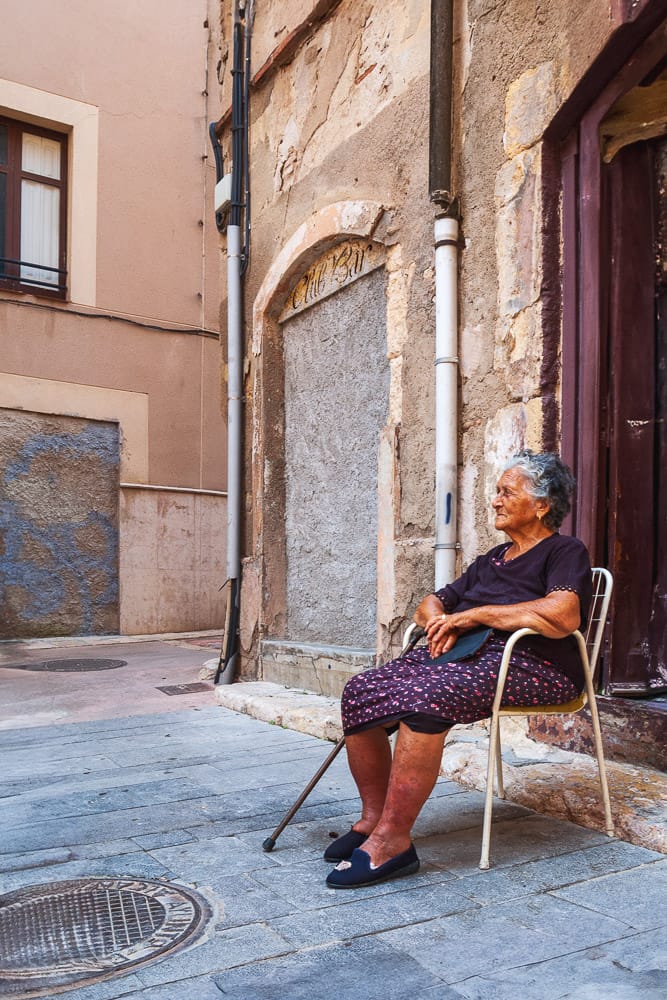
Some practical photography tips: shoot low and slightly off-axis in the narrow alleys to exaggerate depth and pull the eye toward the cathedral or an archway; don’t be afraid to tilt the camera a little upward so balconies, flags and lanterns stack in the frame. Bring a fast lens (wide aperture) if you want clean handheld shots inside dim spaces like cloisters or tunnels under the circus. Reflections after rain are fantastic in Plaça del Fòrum and Plaça de la Catedral, so puddles are your friend. Human activity belongs in the picture here — locals chatting in front of a doorway or children playing in a plaza will do more for atmosphere than an empty street.
Travel Information
Getting there is simple. Tarragona sits on the Catalan coast, about an hour south of Barcelona by regional train. The main railway station lies down by the waterfront. From the station you walk inland and uphill for roughly ten to fifteen minutes to reach the old city. The climb is gentle but steady: follow Rambla Nova toward the Balcó del Mediterrani for a sea view, then cut into the historic core through one of the old gates in the walls, for example near Portal del Roser. Once you enter Part Alta you no longer need transport. The old city works best on foot, and the distances between the cathedral, the Roman circus, the forum square and the cafés of Plaça de la Font are small enough that you can drift without planning. Tarragona’s old centre rewards slow wandering, and every corner gives you another meeting point between empire, faith, daily life and light.
Spot Type
Outdoor
Crowd Factor
A decent amount of people
Best Timing
Summer
Sunrise & Sunset
08:08 - 19:11
| current local time: 19:36
Photo Themes
City
Old Town
Locations
Catalonia
Tarragona
catalunya
Northern Spain
Eastern Spain





Spot comments (0)