
Spain Empúries
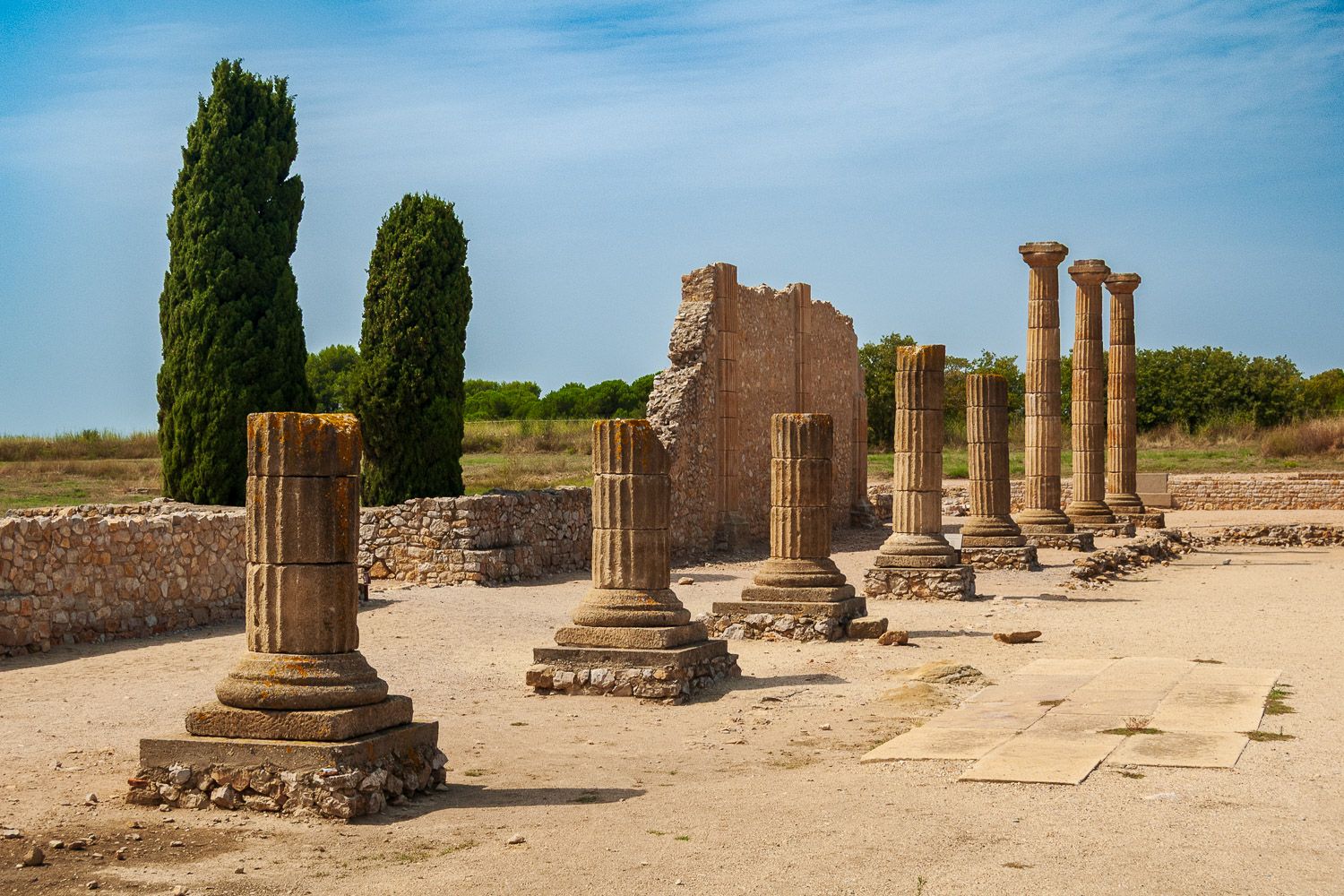
Empúries — in Spanish often Ampurias, in Latin Emporiae, and in Greek Emporion — sits right on the Costa Brava in Catalonia, just north of today’s L’Escala, staring straight at the Mediterranean. It began as a Greek trading outpost, Emporion, founded by colonists from Phocaea in the 6th century BCE, basically a beachhead for Mediterranean commerce at the edge of the Iberian world. Later, during the Second Punic War in 218 BCE, Roman forces landed here and turned the settlement into their launch point for the conquest of Hispania. The Romans then built their own planned city, Emporiae, with straight streets and a forum, and eventually absorbed the Greek settlement. Julius Caesar later refounded the Roman town as a colony for veterans in the 1st century BCE, tightening Roman control and giving the place a proper imperial makeover. The result is unusual: Empúries is the only archaeological site on the Iberian Peninsula where Greek and Roman urban remains sit side by side in the same landscape, making it a literal gateway through which classical culture entered Iberia and shaped local peoples. Excavations started in 1908 and have continued ever since, and finds from those digs — including mosaics, sculpture, and the famous statue of Asclepius, god of healing — now live in the on-site branch of the Archaeology Museum of Catalonia (MAC-Empúries).
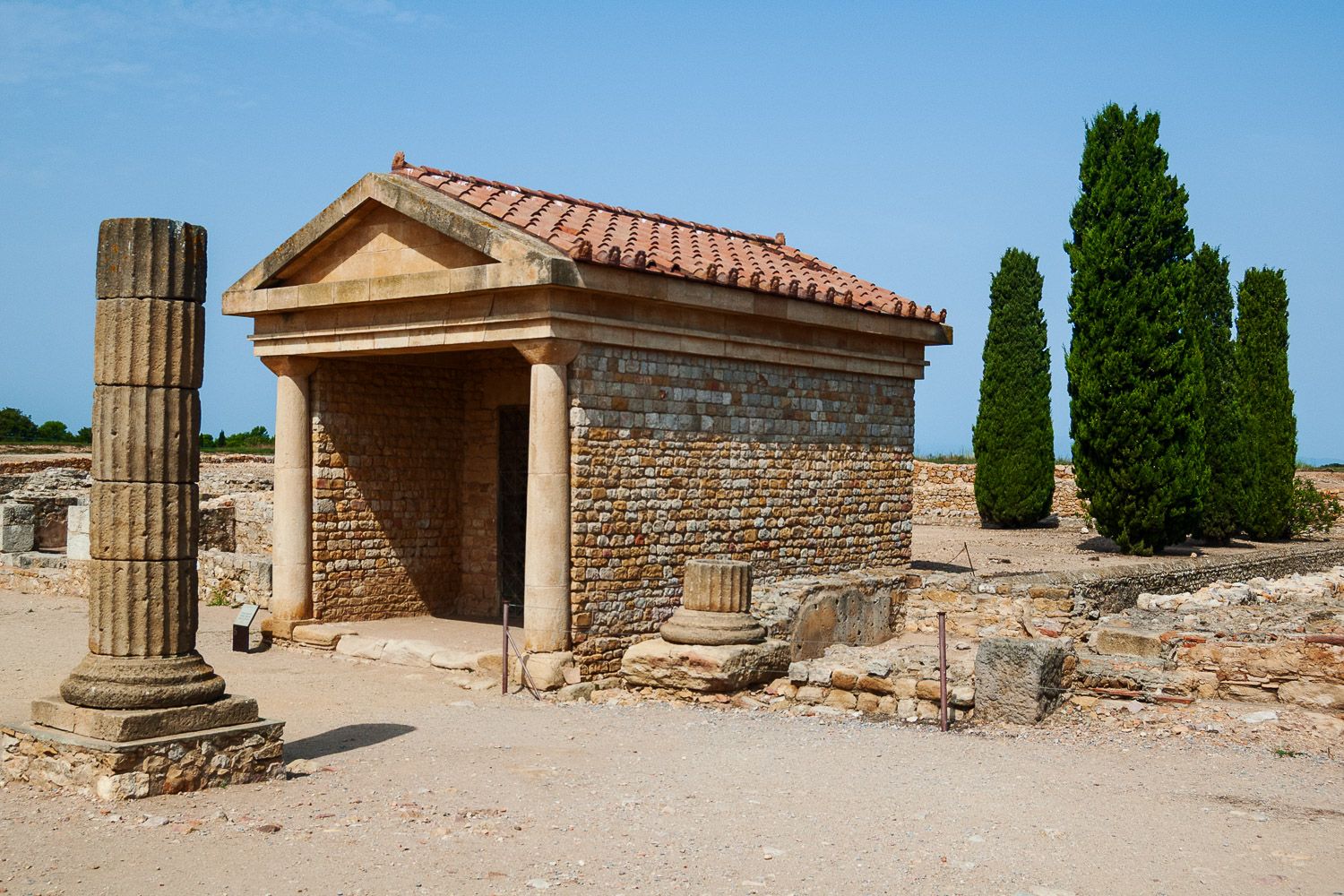
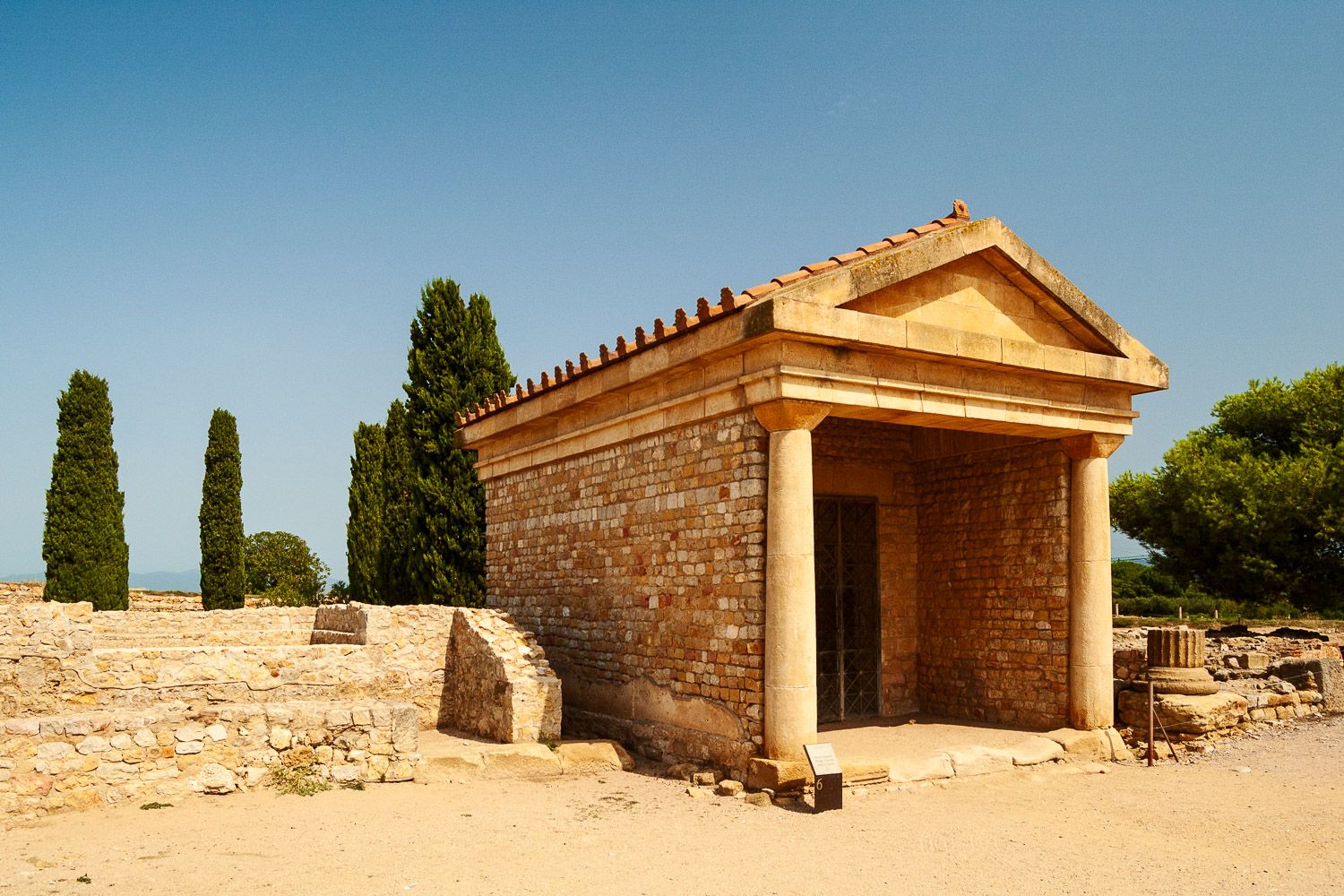
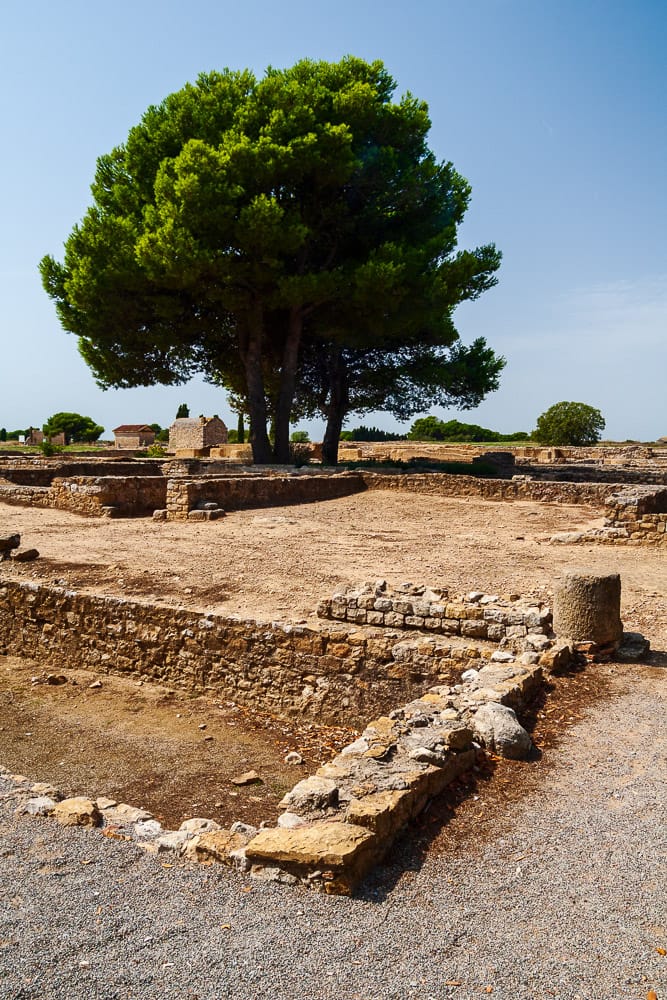
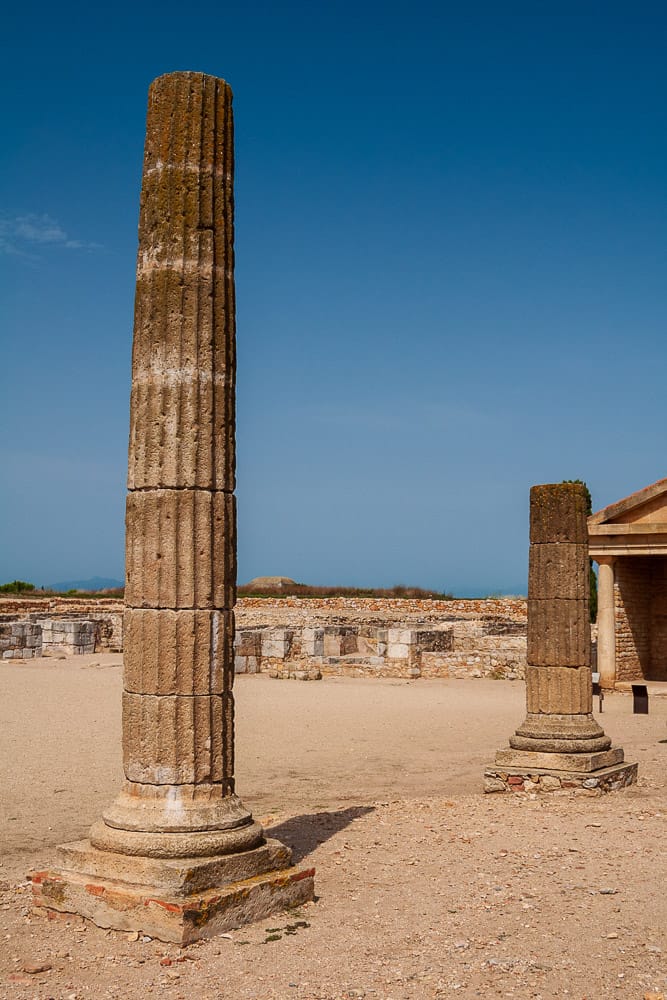
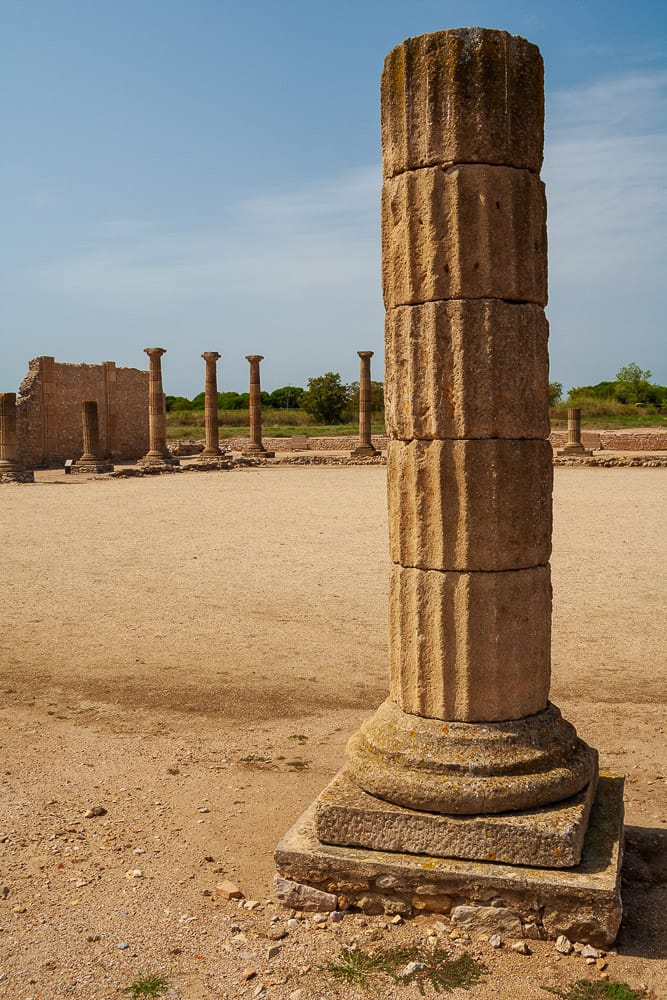
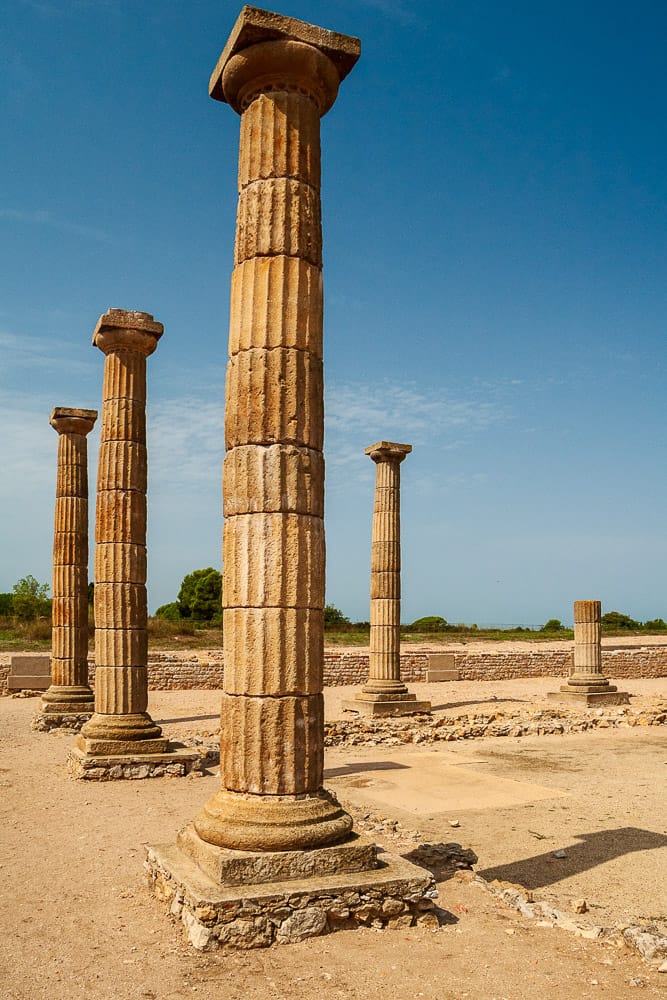
The architecture on the ground tells the story in two accents. In the Greek sector (the Neapolis), you walk through low stone walls that once outlined houses, workshops and shrines. You can still trace the marketplace (agora) and the sanctuary areas, including the temple dedicated to Asclepius, which hints at how Emporion acted not just as a trading node but also as a cultural transmitter of Greek religion, medicine, and craft. The plan here feels organic and irregular: streets bend, walls meet at odd angles, and you get the sense of a bustling port town that grew in response to the shoreline. Cross into the Roman area and everything snaps to discipline. The Romans imposed their standard grid — long straight streets, a clear north–south and east–west axis, and a central forum for politics and commerce. You still see outlines of townhouses with inner courtyards, public baths, and stretches of black-and-white mosaic flooring laid in geometric patterns or mythological scenes, plus the remains of an amphitheatre and palaestra (a kind of training ground). In late antiquity the site even gained an early Christian basilica, so you watch the shift from pagan marble gods to Christian worship within a few minutes of walking.
The architecture on the ground tells the story in two accents. In the Greek sector (the Neapolis), you walk through low stone walls that once outlined houses, workshops and shrines. You can still trace the marketplace (agora) and the sanctuary areas, including the temple dedicated to Asclepius, which hints at how Emporion acted not just as a trading node but also as a cultural transmitter of Greek religion, medicine, and craft. The plan here feels organic and irregular: streets bend, walls meet at odd angles, and you get the sense of a bustling port town that grew in response to the shoreline. Cross into the Roman area and everything snaps to discipline. The Romans imposed their standard grid — long straight streets, a clear north–south and east–west axis, and a central forum for politics and commerce. You still see outlines of townhouses with inner courtyards, public baths, and stretches of black-and-white mosaic flooring laid in geometric patterns or mythological scenes, plus the remains of an amphitheatre and palaestra (a kind of training ground). In late antiquity the site even gained an early Christian basilica, so you watch the shift from pagan marble gods to Christian worship within a few minutes of walking.
Photography Tips
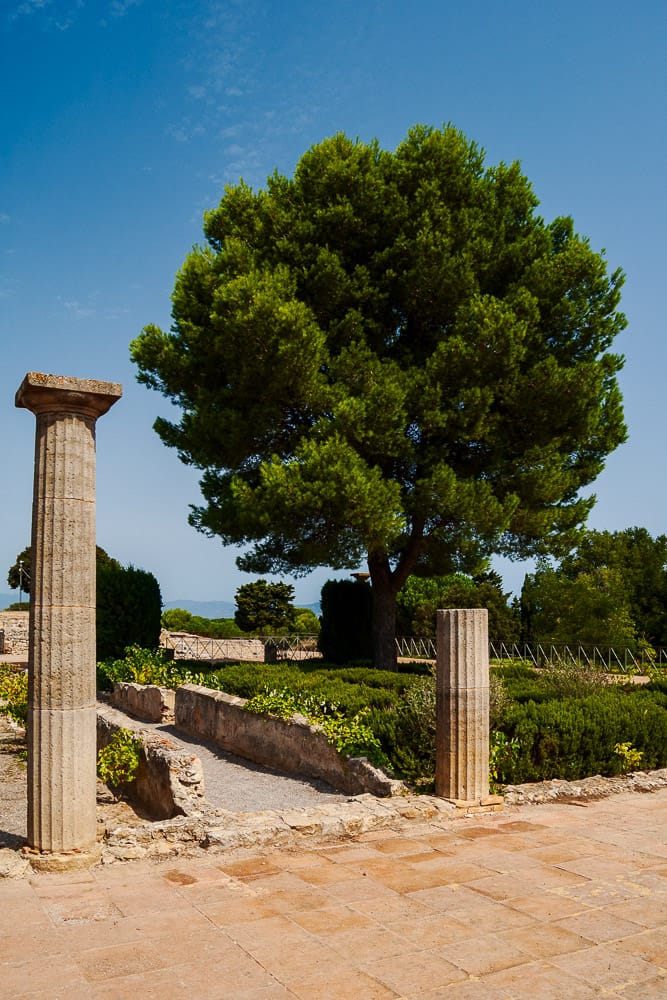
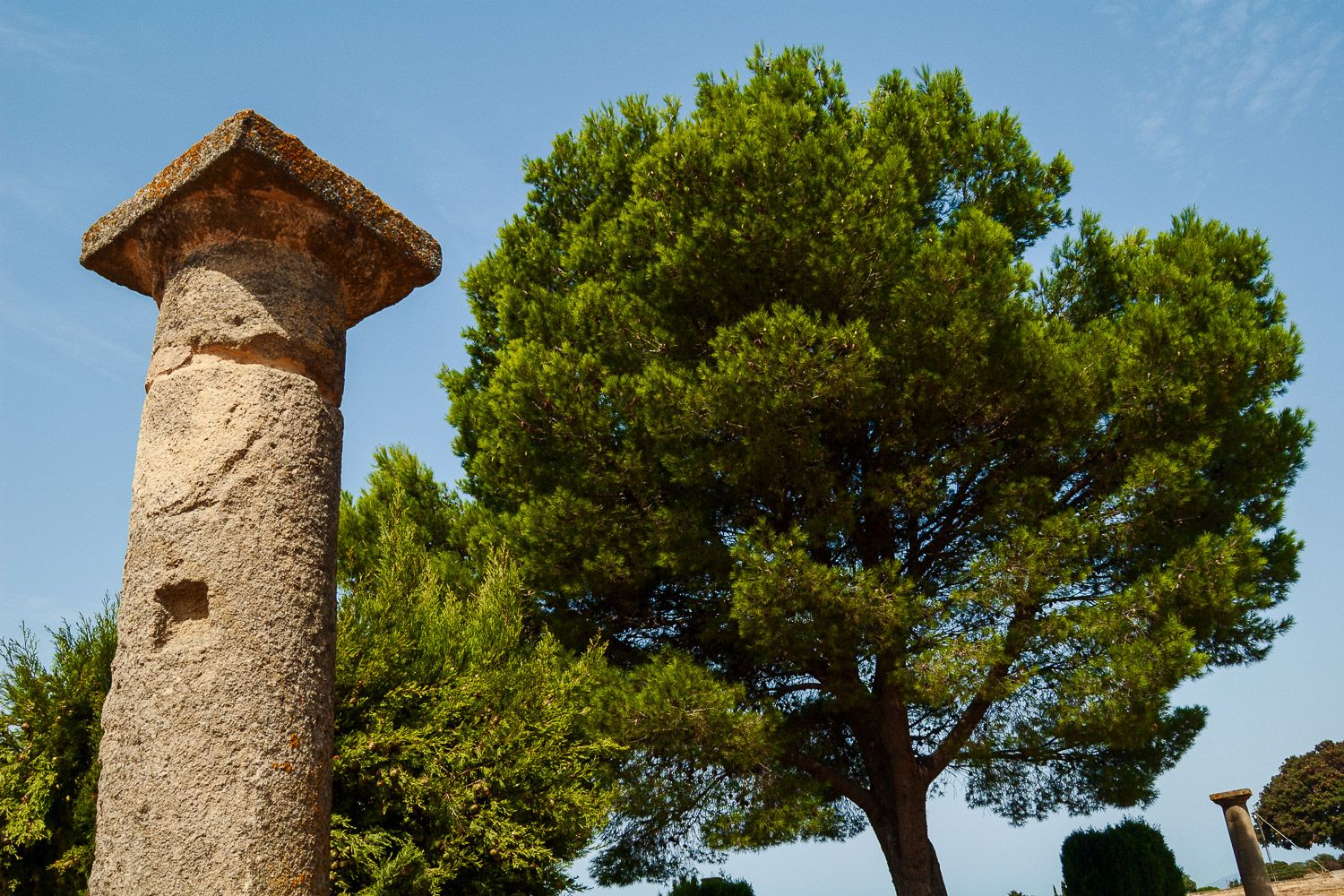
For photography, Empúries is generous in a very coastal way. The ruins sit almost at the water, so you can frame Roman columns and mosaic floors against the blue of the Mediterranean and the pines behind them, which gives you that “ancient city by the sea” energy that most sites lost long ago when their harbours silted up. Early morning light comes in low from the water and rakes across the stone, pulling out texture in walls and floor patterns; late afternoon warms the limestone and lights up the mosaics without blowing out the sky. Wide shots from slightly above ground level work well in the Roman quarter, because the orthogonal street grid naturally creates leading lines into the forum. In the Greek quarter, go lower and closer: shoot along the tops of the surviving foundations so the shallow walls run diagonally across the frame, which helps show how the town once layered shops, shrines and houses in tight proximity. Close-ups of mosaics and inscriptions reward a downward, almost archaeological view — camera pointed straight down, fill the frame with pattern, let the shadow of your own body fall outside the shot. Human scale helps: one person walking through the forum ruins instantly communicates the size of the place without needing any caption.
Travel Information
Getting there is easy for something this old. The site lies a short walk or bike ride up the coast from L’Escala, along a mostly traffic-free seaside path that runs past beaches and dunes toward the tiny village of Sant Martí d’Empúries. There is also a local Moventis bus linking L’Escala with the “Ruïnes d’Empúries” stop; it runs roughly hourly, and the ride is only a few minutes because the distance is about two kilometres. If you’re coming from inland, Girona sits about 40 kilometres away by road, so the drive takes under an hour, and there are regular bus connections between Girona and L’Escala. Once you arrive, you enter an archaeological park right by the sea, with the ruins of the Greek town, the Roman town and the museum all in one walkable loop, so you move from archaic Greece to imperial Rome to early Christianity in the span of an afternoon.
Spot Type
Outdoor
Crowd Factor
A decent amount of people
Best Timing
Summer
Sunrise & Sunset
08:03 - 19:01
| current local time: 22:21
Photo Themes
Ancient Ruins
Roman Empire
Roman temple





Spot comments (0)