
Syrian Arab Republic St George Chruch in Ezra, Syria
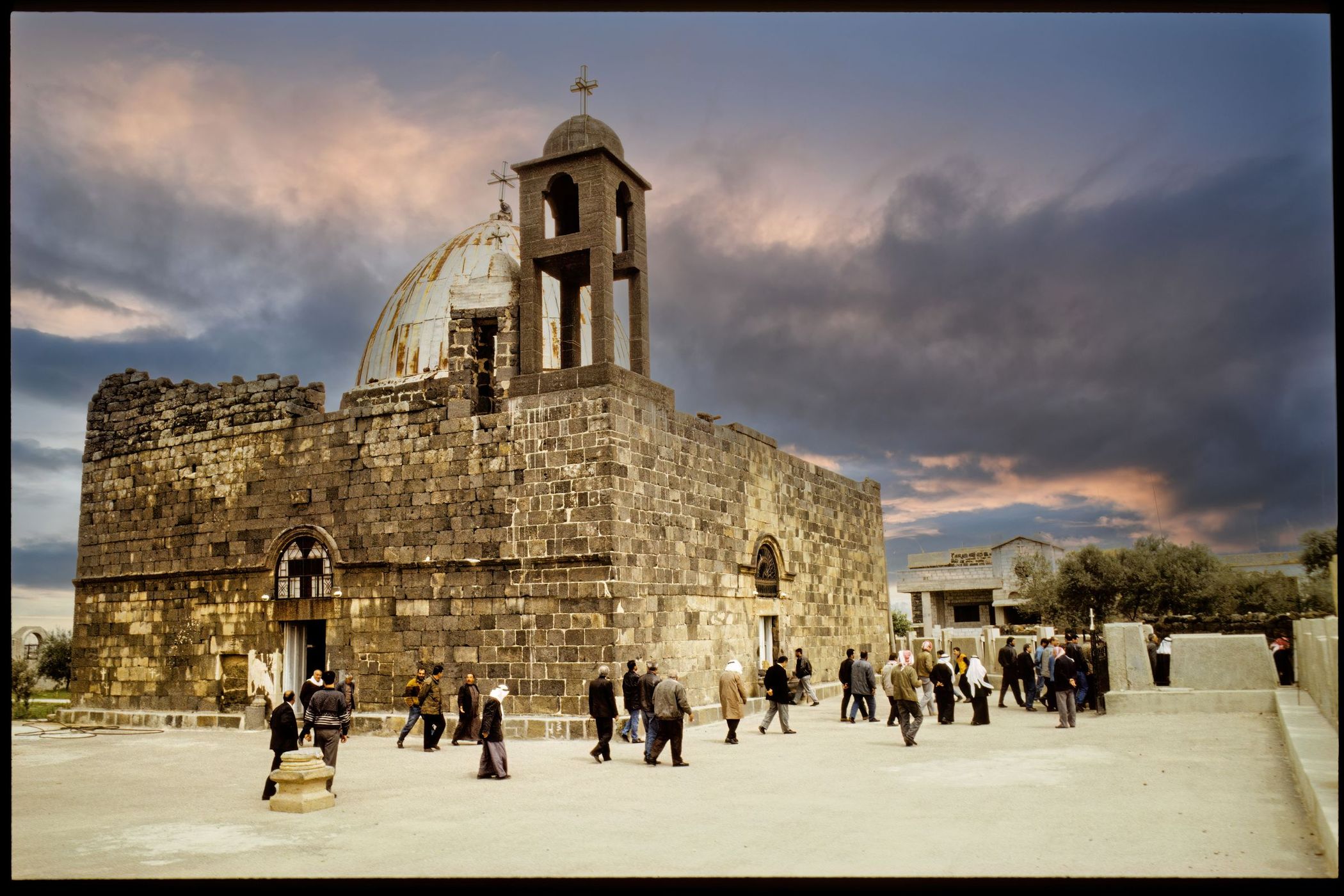
Ezra (Izraʿ) in southern Syria was marked by one of the region’s oldest surviving churches, traditionally dedicated to St George and dated to the late antique/Byzantine period. Its foundation was tied to the Christianisation of the Hauran and it was maintained, adapted, and repaired across centuries of shifting rule and pilgrimage.
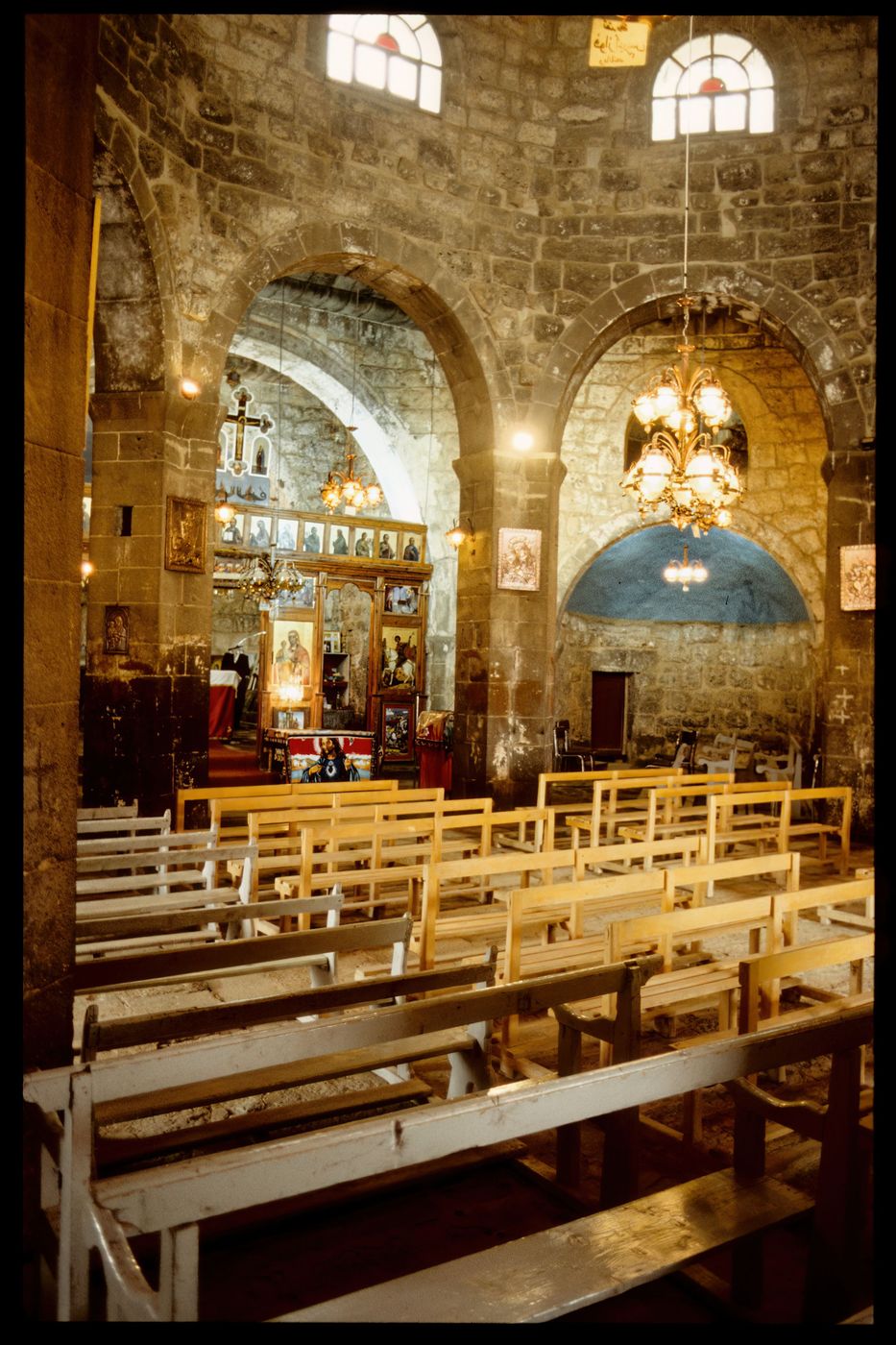
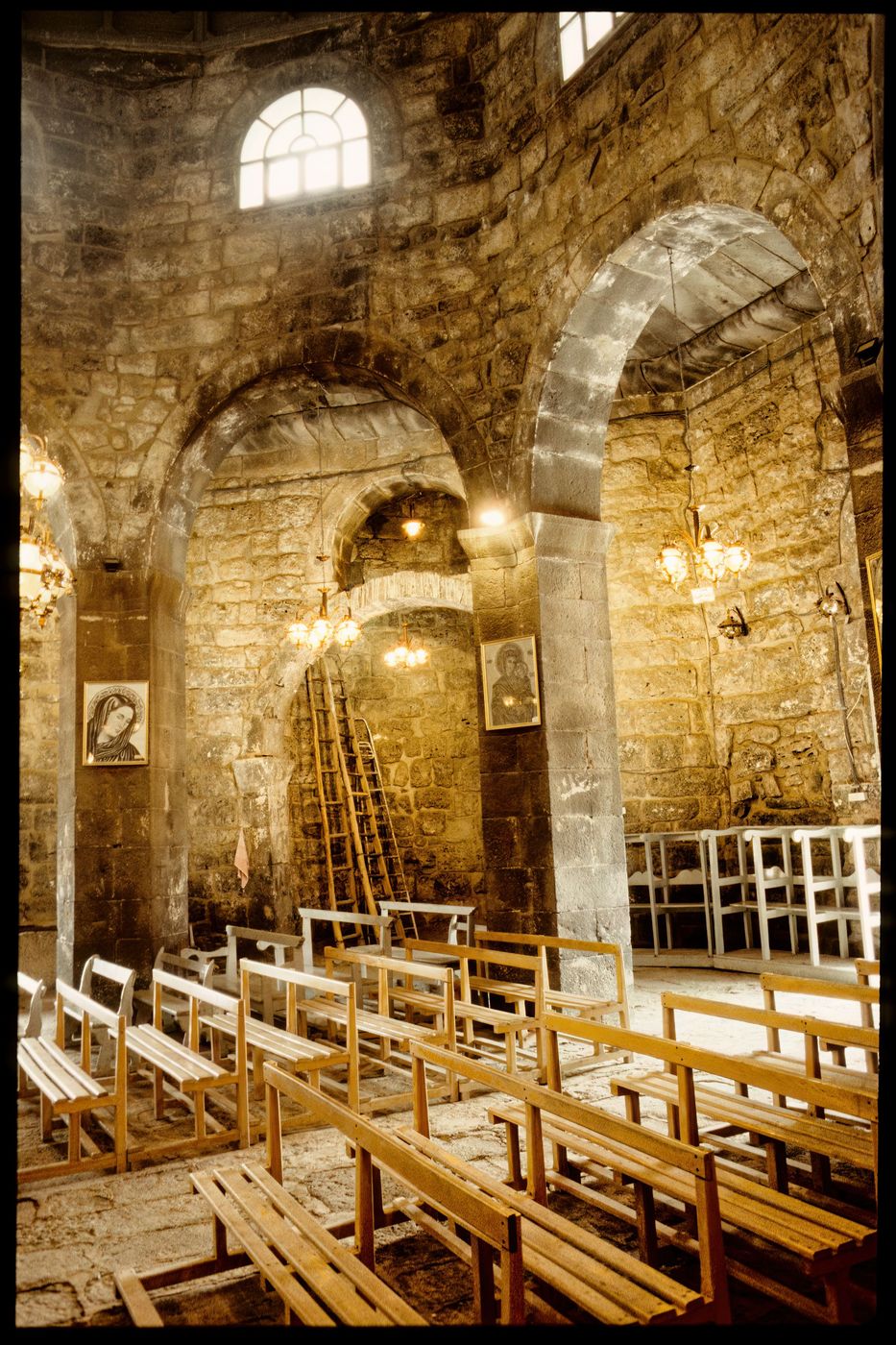
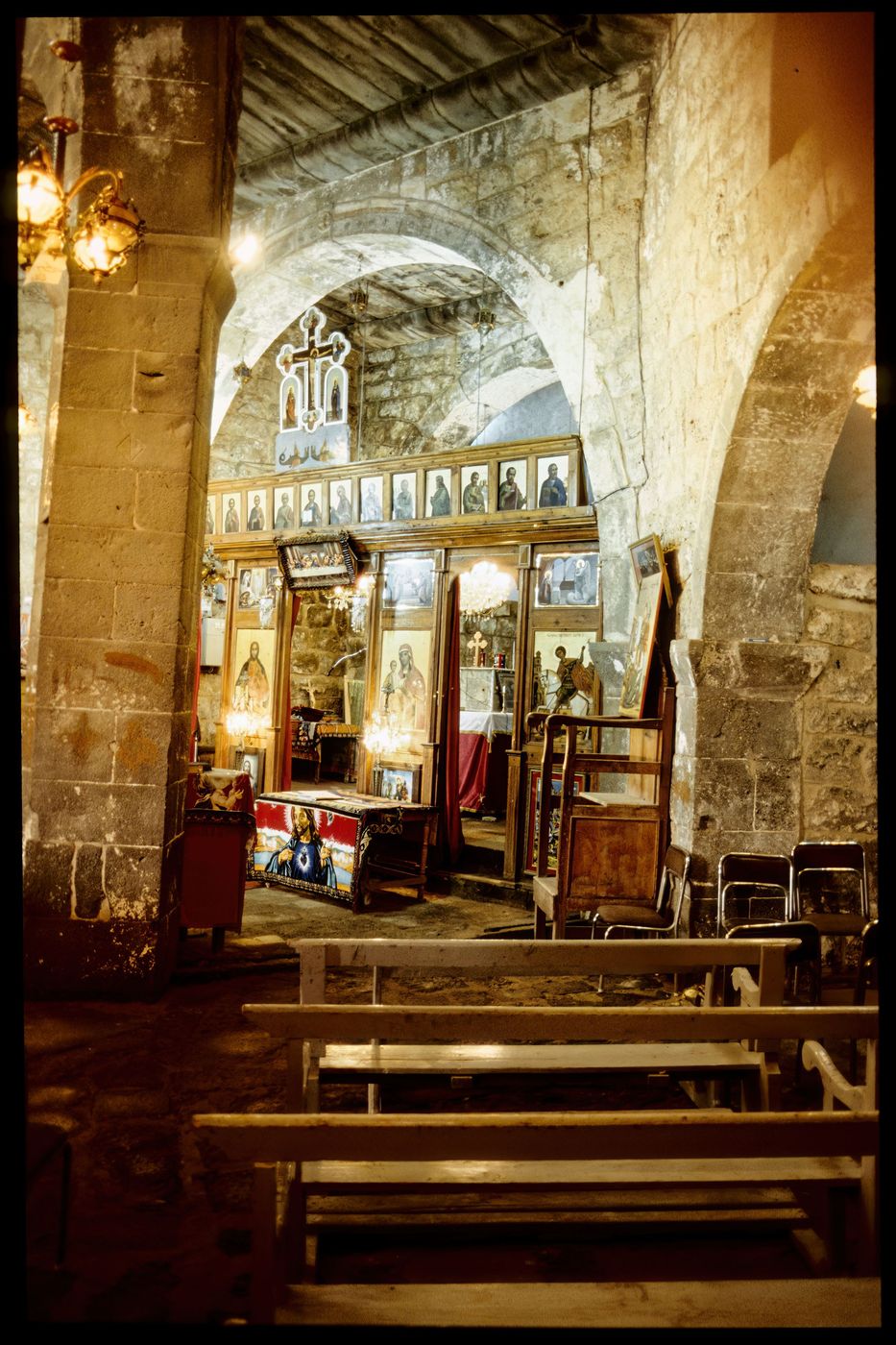
The building was set in dark local basalt and was composed as a compact basilican volume with a pronounced apse and robust arcades. Carved lintels, door frames, and reused classical blocks were employed, and inscriptions in Greek and Syriac were reported on stones and thresholds. The massing read as low and weighty; small, deep-set openings and thick walls were used to temper heat and glare, while the interior was organised in simple bays that guided movement towards the sanctuary.
For photography, the black basalt rewarded soft light: early and late hours were favoured so textures were brought up without harsh contrast. Doorways and arcades were framed to stack shapes and shadows; carved inscriptions and mouldings were isolated with a short telephoto. After rain, shallow puddles were used for reflections against the pale sky. Inside, a tripod and bracketing were preferred so the dynamic range was handled gently; silhouettes were placed against the apse and clerestory glow so a sense of depth and scale was retained.
The building was set in dark local basalt and was composed as a compact basilican volume with a pronounced apse and robust arcades. Carved lintels, door frames, and reused classical blocks were employed, and inscriptions in Greek and Syriac were reported on stones and thresholds. The massing read as low and weighty; small, deep-set openings and thick walls were used to temper heat and glare, while the interior was organised in simple bays that guided movement towards the sanctuary.
For photography, the black basalt rewarded soft light: early and late hours were favoured so textures were brought up without harsh contrast. Doorways and arcades were framed to stack shapes and shadows; carved inscriptions and mouldings were isolated with a short telephoto. After rain, shallow puddles were used for reflections against the pale sky. Inside, a tripod and bracketing were preferred so the dynamic range was handled gently; silhouettes were placed against the apse and clerestory glow so a sense of depth and scale was retained.
Photography Tips
Have a wide angle at hands.
Travel Information
You need your own car.





Spot comments (0)