

Hungary Kettenbrücke
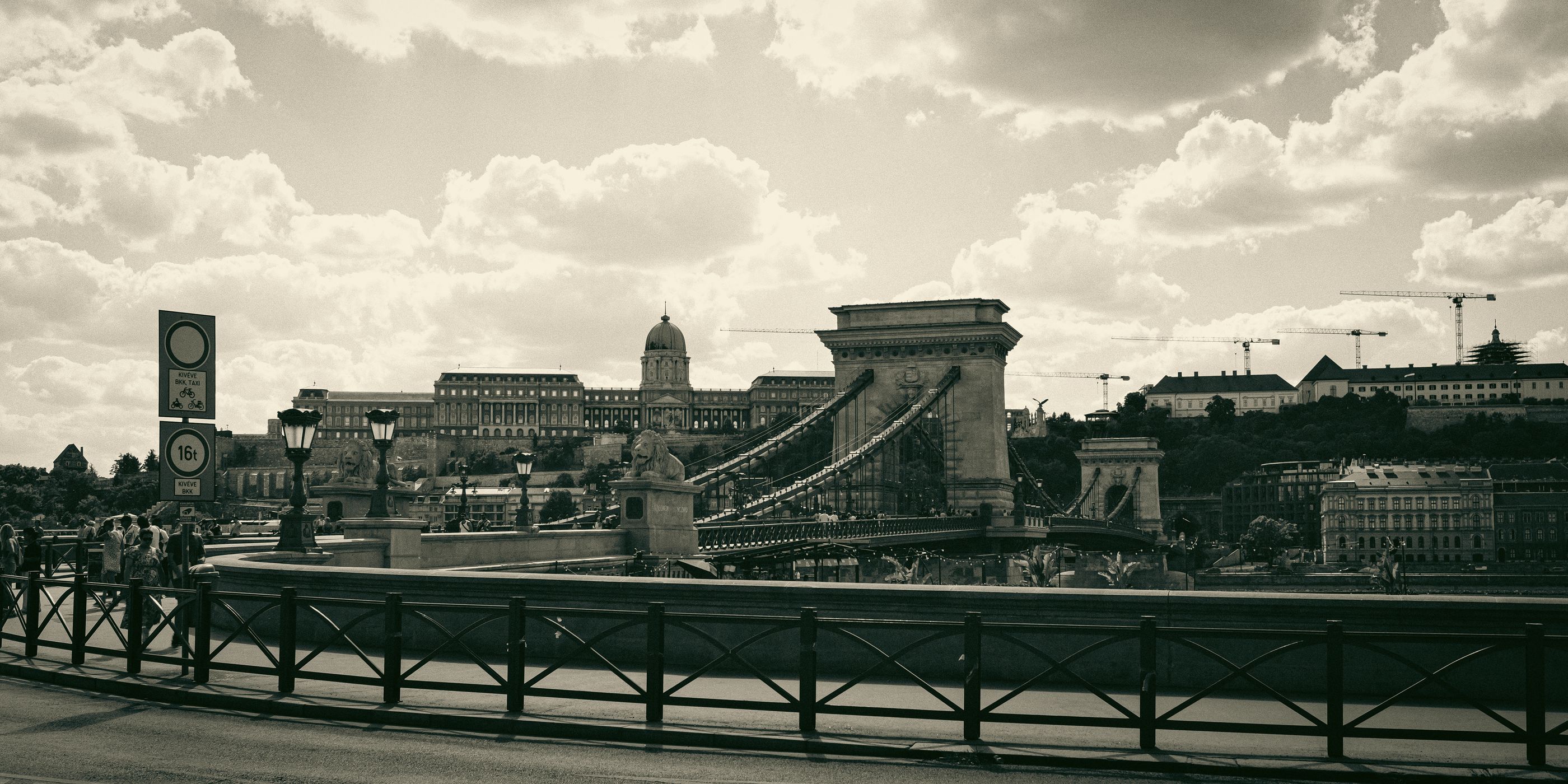
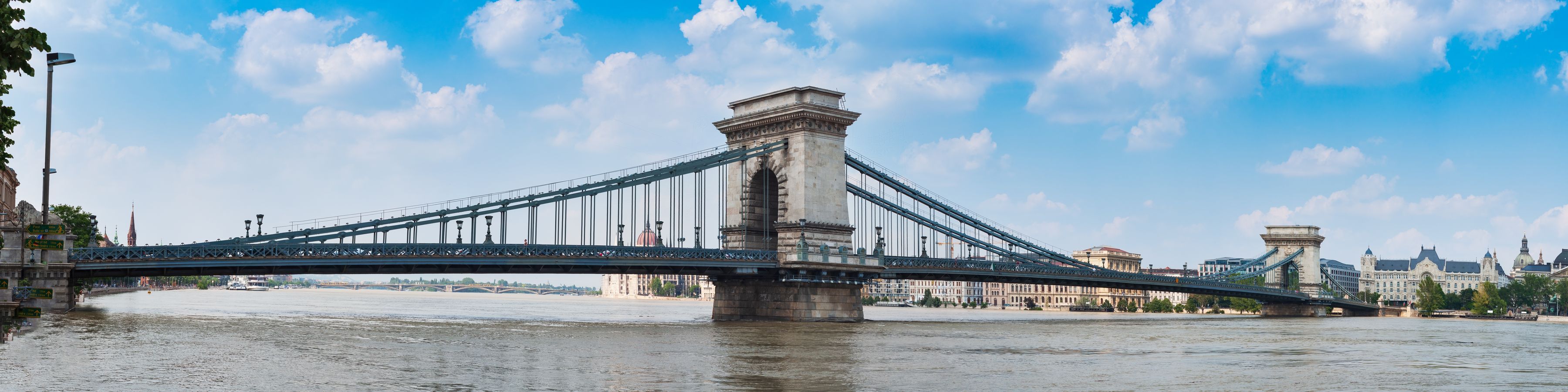
The Chain Bridge in Budapest stands as one of the city’s most iconic landmarks. Designed by English engineer William Tierney Clark and built under the supervision of Scottish engineer Adam Clark, it opens in 1849 as the first permanent bridge to connect Buda and Pest across the Danube.
The bridge showcases a remarkable example of 19th-century engineering and neoclassical design. Its massive stone lions, sculpted by János Marschalkó, guard each end, while its cast-iron structure and chains create both strength and elegance. Two classical river piers, resembling triumphal arches, rise to support the suspension chains and give the bridge its monumental character.
During World War II, retreating German forces blow up the bridge, leaving only its towers standing. Reconstruction follows, and in 1949—exactly one hundred years after its opening—the restored bridge reopens. Today, it symbolises resilience, unity, and the architectural ingenuity that helped shape Budapest’s identity.
The bridge showcases a remarkable example of 19th-century engineering and neoclassical design. Its massive stone lions, sculpted by János Marschalkó, guard each end, while its cast-iron structure and chains create both strength and elegance. Two classical river piers, resembling triumphal arches, rise to support the suspension chains and give the bridge its monumental character.
During World War II, retreating German forces blow up the bridge, leaving only its towers standing. Reconstruction follows, and in 1949—exactly one hundred years after its opening—the restored bridge reopens. Today, it symbolises resilience, unity, and the architectural ingenuity that helped shape Budapest’s identity.
Photography Tips
Layering is the most important part ;)
Spot Type
Outdoor
Crowd Factor
A decent amount of people
Best Timing
Blue hour/at night in summer
Sunrise & Sunset
06:26 - 18:48
| current local time: 21:37
Photo Themes
Bridge
Locations
Budapest





Spot comments (0)