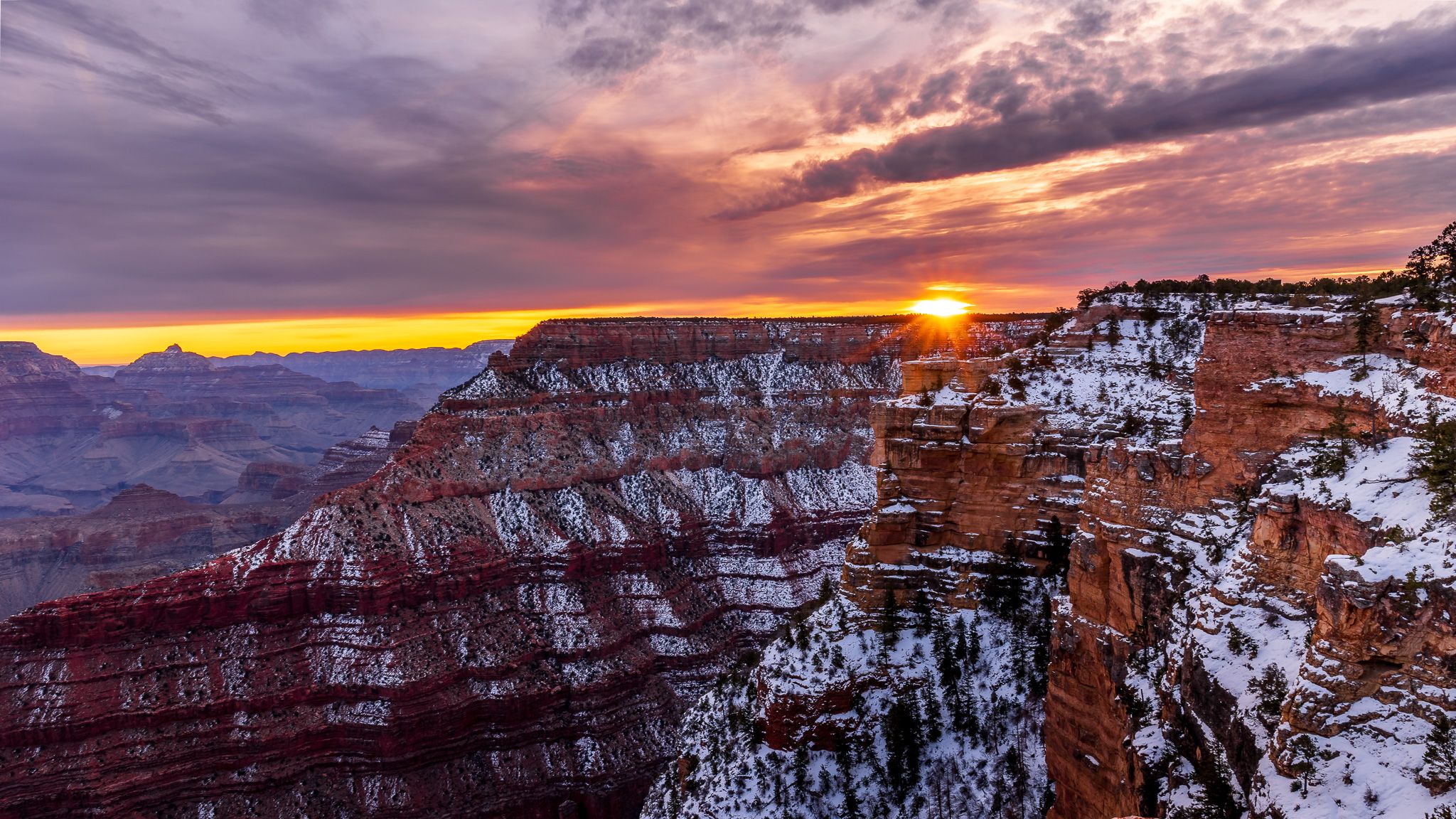

USA Grand Canyon South Rim
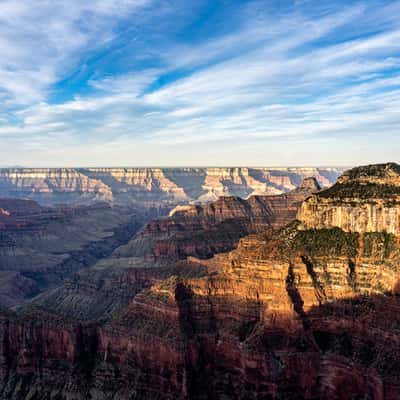
Winter sunrise at the Grand Canyon’s South Rim. Crisp air, quiet canyon, and warm light breaking over the cliffs.
Photography Tips
Best light is right at sunrise when the first warm tones hit the canyon walls.
Use a wide‑angle lens to capture the depth and layered cliffs.
Keep ISO low (100–200) to preserve detail in the shadows.
Shoot at f/8–f/11 for sharpness across the frame.
Arrive early — winter mornings are cold and windy, and good spots fill quickly.
Expose for the bright sky, then lift canyon shadows gently in post.
Tripod recommended; batteries drain faster in cold weather — bring spares.
Watch how the light shifts minute by minute — the canyon changes fast at sunrise.
Use a wide‑angle lens to capture the depth and layered cliffs.
Keep ISO low (100–200) to preserve detail in the shadows.
Shoot at f/8–f/11 for sharpness across the frame.
Arrive early — winter mornings are cold and windy, and good spots fill quickly.
Expose for the bright sky, then lift canyon shadows gently in post.
Tripod recommended; batteries drain faster in cold weather — bring spares.
Watch how the light shifts minute by minute — the canyon changes fast at sunrise.
Travel Information
Location: Grand Canyon National Park — South Rim (open year‑round).
Best time: Winter sunrise offers the clearest air and warm canyon colors, but temperatures can drop below ‑10°C.
Access: Most viewpoints are reachable via paved paths; sunrise spots like Mather Point, Yavapai Point, and Yaki Point are easy to reach in the dark with a headlamp.
Parking: Available near the Visitor Center; some sunrise points require using the shuttle depending on season.
Conditions: Expect icy paths, strong wind, and very cold mornings. Dress in layers and bring gloves — photography becomes tough without them.
Crowds: Winter is quieter than peak season, but sunrise still attracts photographers. Arrive 30–45 minutes early.
Safety: Stay on marked paths; canyon edges can be icy and slippery before sunrise.
Best time: Winter sunrise offers the clearest air and warm canyon colors, but temperatures can drop below ‑10°C.
Access: Most viewpoints are reachable via paved paths; sunrise spots like Mather Point, Yavapai Point, and Yaki Point are easy to reach in the dark with a headlamp.
Parking: Available near the Visitor Center; some sunrise points require using the shuttle depending on season.
Conditions: Expect icy paths, strong wind, and very cold mornings. Dress in layers and bring gloves — photography becomes tough without them.
Crowds: Winter is quieter than peak season, but sunrise still attracts photographers. Arrive 30–45 minutes early.
Safety: Stay on marked paths; canyon edges can be icy and slippery before sunrise.
Spot Type
Outdoor
Crowd Factor
A decent amount of people
Best Timing
Sunrise
Sunrise & Sunset
06:16 - 18:25
| current local time: 18:04
Photo Themes
cold
golden light
Landscape
Rock Formation
South Rim
Sunrise
Travel Photography
Winter landscape





Spot comments (0)