



17 Photo Spots at the Manhattan Bridge

The Manhattan Bridge is an iconic suspension bridge that serves as a quintessential backdrop for capturing the industrial grit and architectural grandeur of New York City. Its striking blue steel cables and massive granite towers offer a distinct aesthetic contrast to the neighboring Brooklyn Bridge.

latest contributors
Rene Tenteris Flicwork Morlow1984 Christian Lamine Jiasong Zhu

Tips for your trip to Manhattan Bridge

About the location

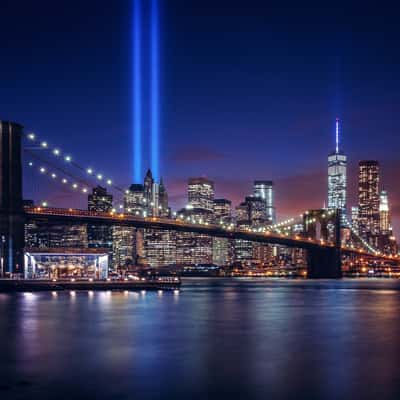
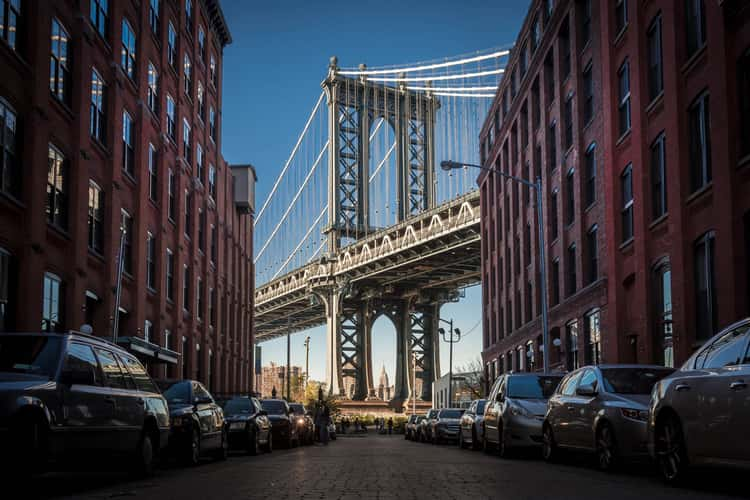
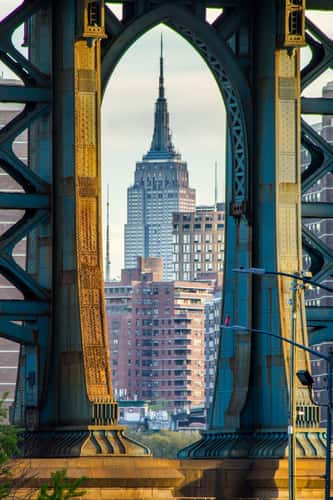
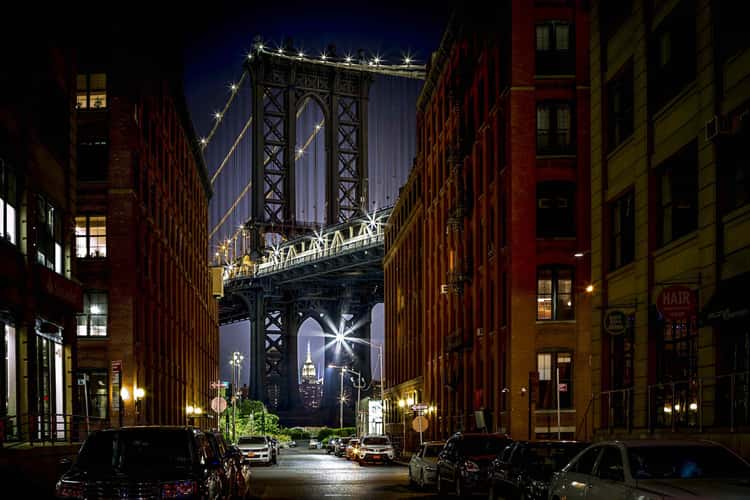
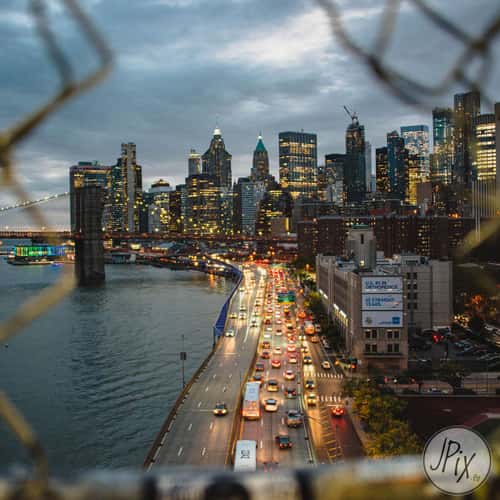
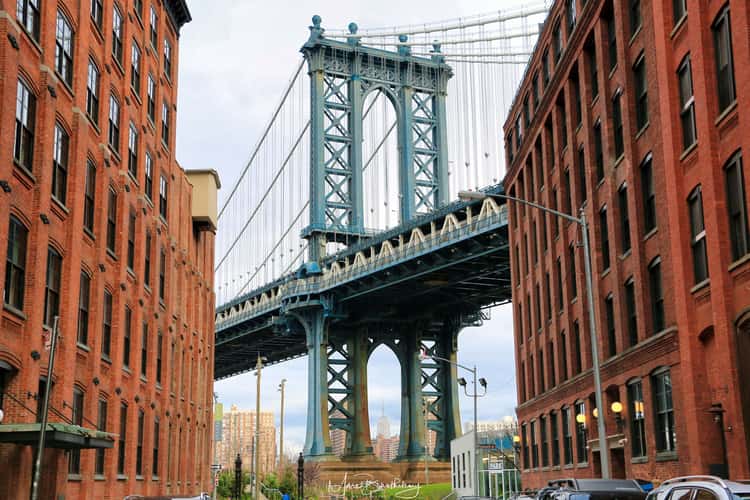
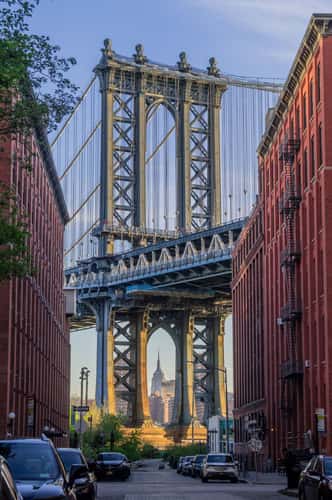
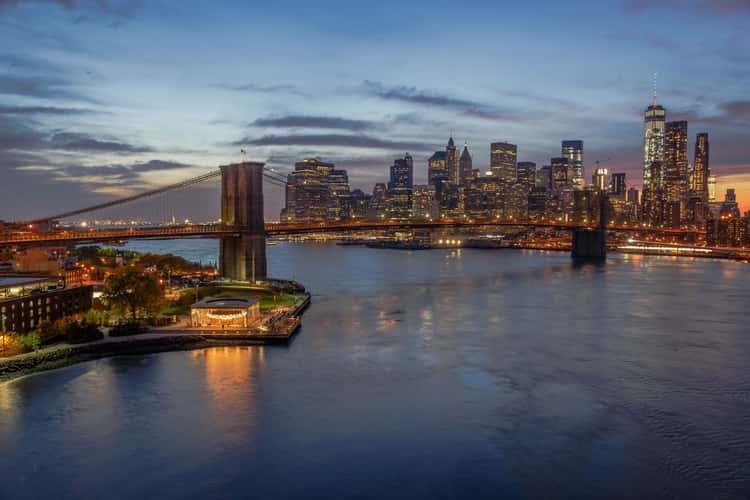
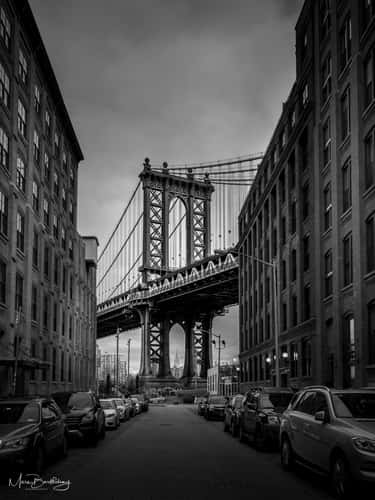
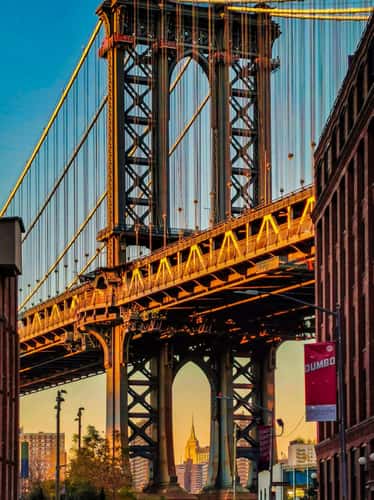
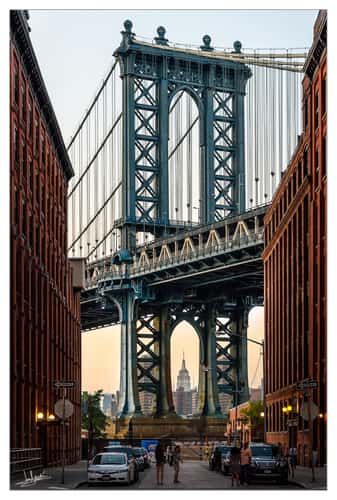
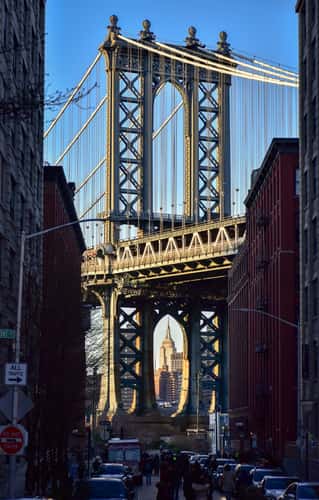
The bridge is most famous among photographers for the perspective from Washington Street in DUMBO, where the Empire State Building is perfectly framed by the bridge's steel legs. Beyond this classic shot, the pedestrian walkway on the south side provides an elevated vantage point with sweeping views of the East River, the Financial District skyline, and the Statue of Liberty. The bridge's constant movement, driven by passing subway trains and heavy traffic, creates a dynamic environment for long-exposure photography and urban street scenes. Its intricate steel lattice and the ornate neoclassical arch at the Manhattan entrance provide additional textures and geometric patterns for architectural enthusiasts.
Best timing

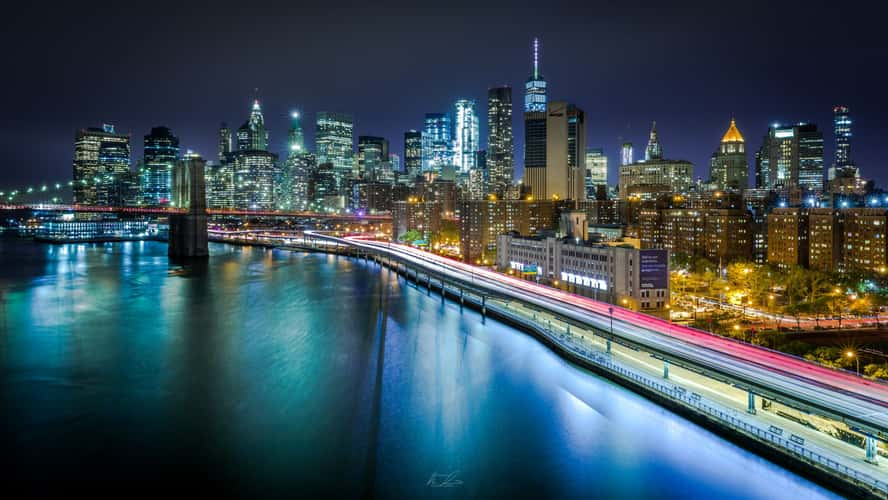
Blue hour and golden hour are the most rewarding times for photography, as the low sun accentuates the bridge's steel textures and the city lights begin to sparkle. Sunrise is particularly effective for avoiding the dense crowds that typically gather at the popular DUMBO vantage points later in the day. Night photography is also highly recommended to capture the light trails of the subway trains crossing the bridge, though photographers should be prepared for significant vibrations on the pedestrian path. The south-facing views are best captured in the late afternoon when the sun illuminates the Manhattan skyline and the Brooklyn Bridge.

Traveling

The Manhattan Bridge is easily reached via public transportation from both Brooklyn and Manhattan. In Brooklyn, the closest subway stations are York Street (F train) and High Street (A and C trains), while the Manhattan side is best served by the Canal Street or Grand Street stations (B, D, N, Q, R, W, 6 trains). Pedestrian access starts at Sands Street and Jay Street in Brooklyn or at the intersection of Bowery and Canal Street in Manhattan. Parking is notoriously difficult and expensive in both DUMBO and Chinatown, so using the subway, a bicycle, or a ride-sharing service is the most practical option for photographers carrying gear.

Photography tips for Manhattan Bridge

For the iconic shot of the Empire State Building framed by the bridge, use a medium telephoto lens (50mm to 85mm) to compress the perspective at the intersection of Washington and Water Streets. When shooting from the pedestrian walkway, a wide-angle lens is essential to capture the massive scale of the suspension towers and the broad sweep of the skyline. Because the bridge vibrates intensely when subway trains pass, use a high shutter speed for handheld shots or time your long exposures carefully between train crossings if using a tripod. Don't overlook the Manhattan-side entrance at Canal Street, where the grand arch and colonnade provide a majestic, old-world foreground for wide-angle street photography.

Other languages

Here is how Manhattan Bridge is called in other languages:
CS Manhattanský most DE Manhattan Bridge EL Γέφυρα Μανχάταν ES Puente de Manhattan FI Manhattan Bridge FR Pont de Manhattan HI मैनहट्टन ब्रिज HR Manhattan Bridge IS Manhattan-brúin IT Ponte di Manhattan JA マンハッタン橋 NL Manhattan Bridge NO Manhattan-broen PL Most Manhattański PT Ponte de Manhattan RU Манхэттенский мост SV Manhattanbron TR Manhattan Köprüsü ZH 曼哈顿大桥

Imprint & Contact © Locationscout 2026 Privacy / Terms