


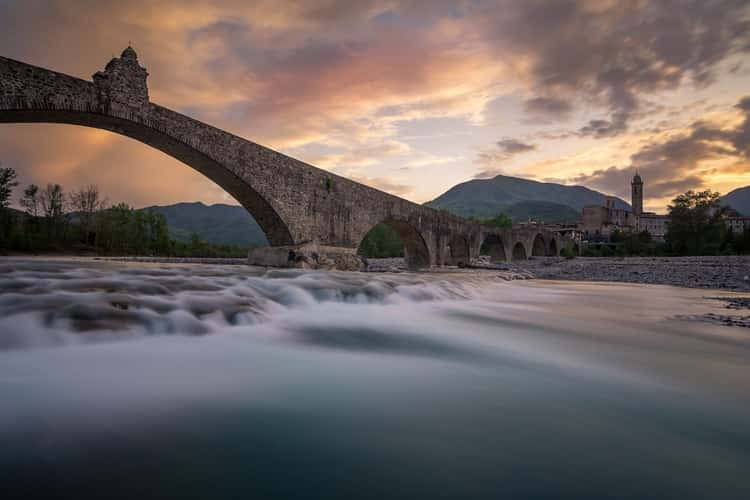
6 Photo Spots at the Devil's Bridge

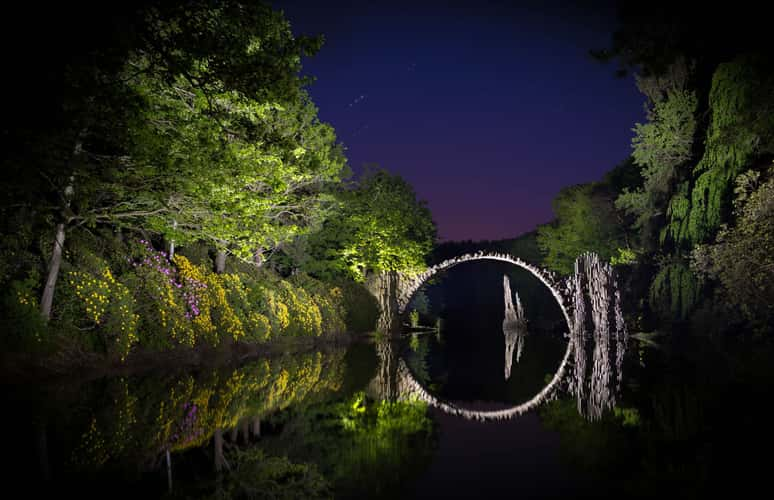
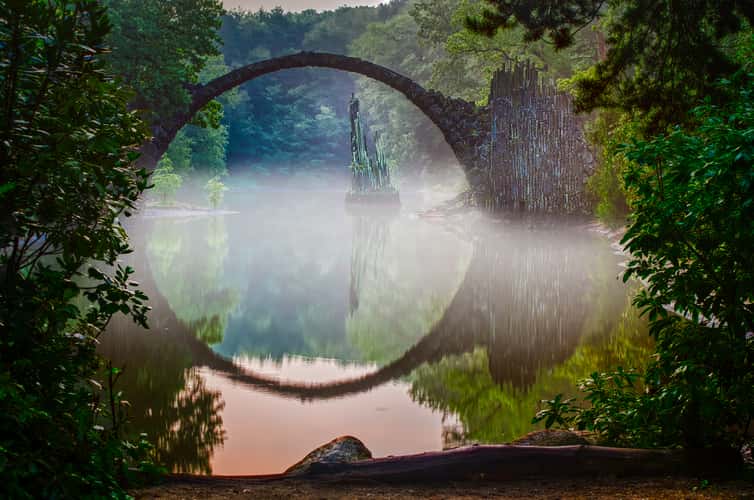
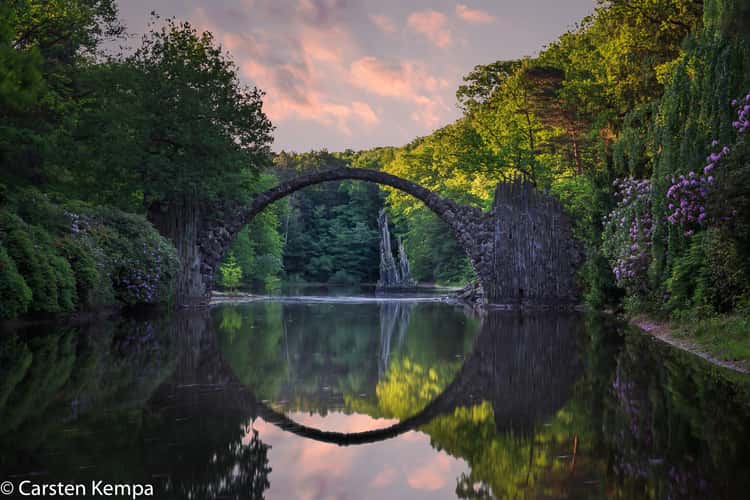
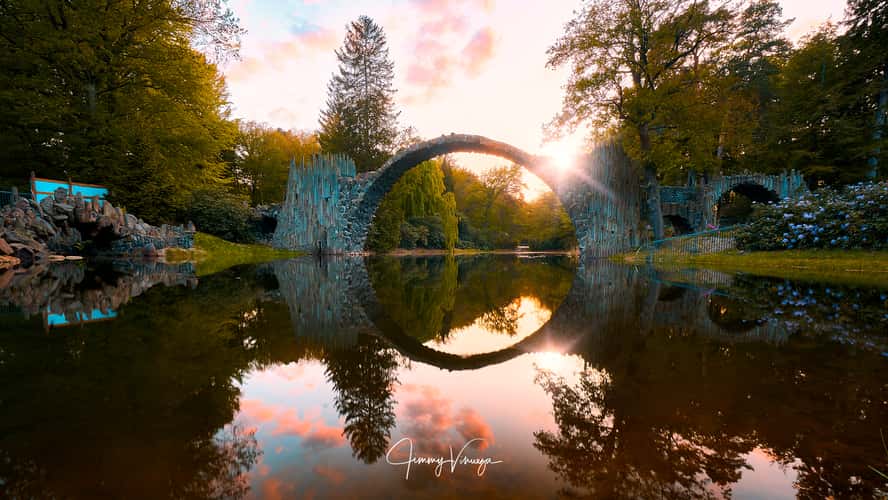
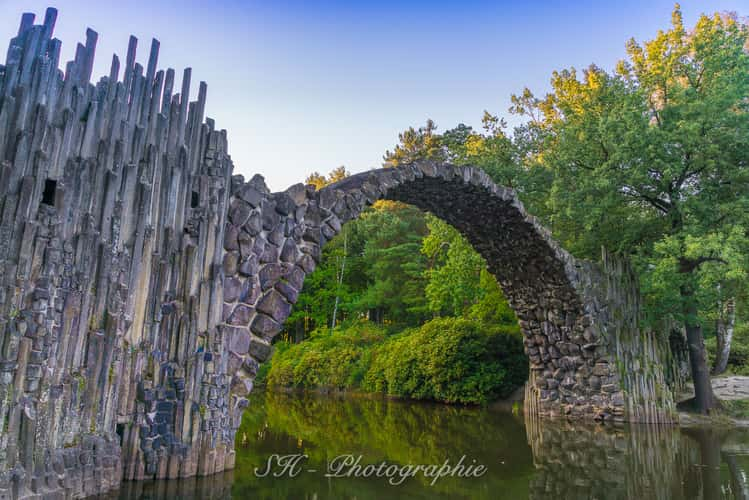
The Rakotzbrücke, also known as the Devil's Bridge, is an architectural masterpiece designed to form a perfect stone circle when reflected in the water below. It is one of the most surreal and captivating photography locations in Europe, offering a fairytale aesthetic that is rare to find elsewhere.

latest contributors
Vesela Marinova Marco Piacentino Donovan Callaghan Steffen Haua Reemt Peters-Hein

Tips for your trip to Devil's Bridge

About the location

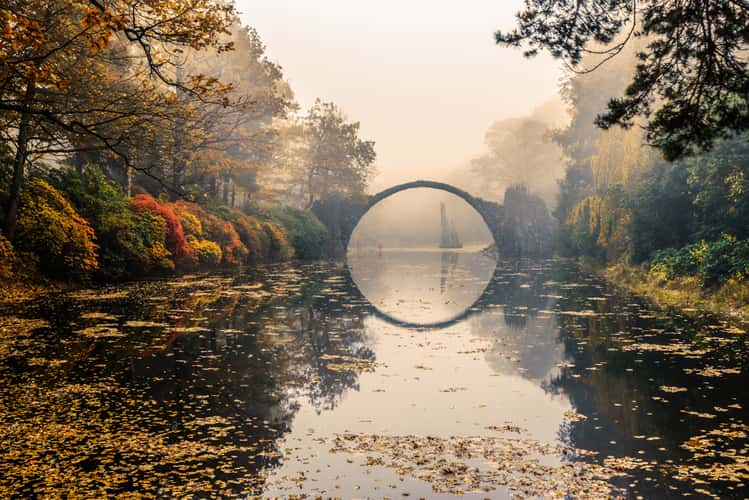
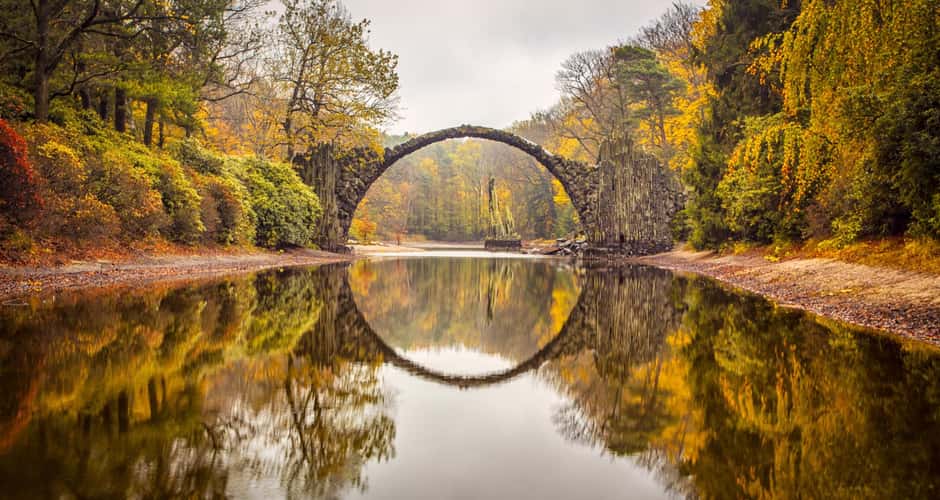
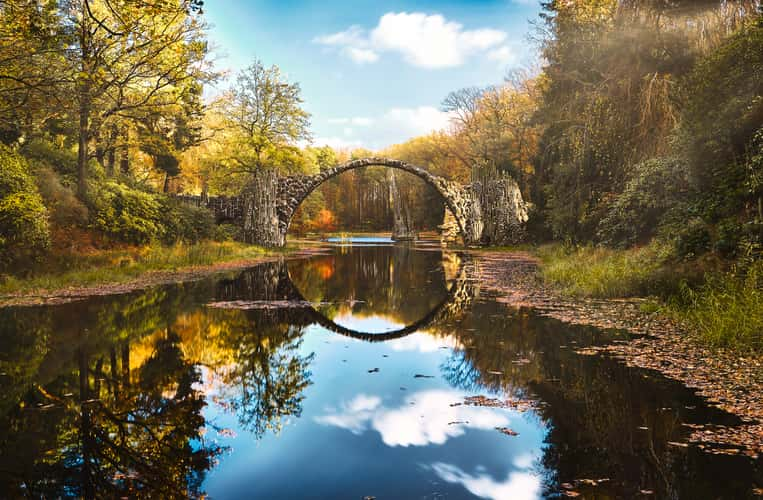
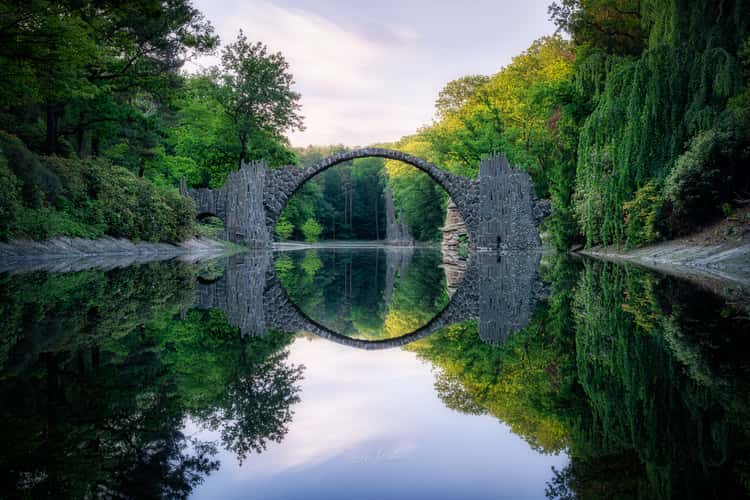
Constructed in the 1860s from jagged basalt columns, the bridge was built with a specific curve so that its reflection in the Rakotzsee creates the illusion of a full circle from various vantage points along the shore. The surrounding Azalea and Rhododendron Park Kromlau provides a lush, atmospheric backdrop that enhances the bridge's mystical appearance. Because walking on the bridge is strictly prohibited to preserve its fragile structure, the area remains pristine for photographers looking to capture its iconic symmetry without human interference. The site is particularly striking during the transition of seasons, where the interplay of light, water, and vegetation creates a wide array of compositional opportunities.
Best timing

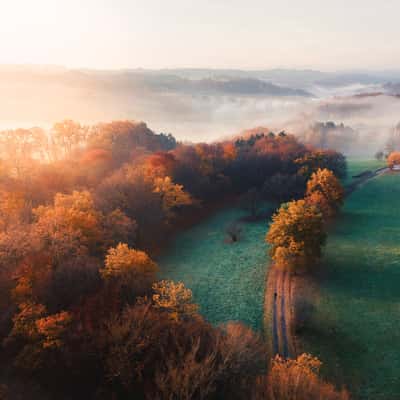
The most spectacular time for photography is during the autumn peak, usually in late October, when the surrounding foliage turns vibrant shades of gold and orange. Arriving at dawn is highly recommended to capture the stillest water for a perfect reflection and to take advantage of the soft morning mist that often blankets the park.

Spring is another excellent period when the park's namesake rhododendrons and azaleas are in full bloom, typically in May. This adds a layer of colorful floral detail to the foreground and background, though you should monitor local bloom reports as the timing varies each year.

Traveling

The bridge is located in Kromlau, near the town of Gablenz in eastern Germany, close to the Polish border. It is most accessible by car, roughly a two-hour drive from Berlin or Dresden, with a large paid parking lot situated just a short walk from the bridge. For those using public transport, take a train to Weisswasser and then use a local bus or the seasonal historic steam train, the Waldeisenbahn Muskau, to reach the park. The site is accessible year-round, and the path from the parking area to the bridge is well-maintained and flat, making it easy to transport heavy camera gear.

Photography tips for Devil's Bridge

To capture the iconic perfect circle, position yourself at the far end of the lake directly opposite the bridge’s arch. A wide-angle lens (16mm to 35mm) is essential to fit the entire structure and its reflection into the frame, while a tripod will allow for long exposures to flatten any ripples on the water. Use a circular polarizer to control the glare on the water, but be careful not to remove the reflection entirely as it is the key element of the shot. Since you cannot step onto the bridge, focus on using the surrounding basalt structures and shoreline foliage as leading lines or framing elements to add depth to your composition.

Other languages

Here is how Devil's Bridge is called in other languages:
CS Ďáblův most DE Rakotzbrücke EL Γέφυρα του Διαβόλου ES Puente del Diablo FI Paholaisen silta FR Pont du Diable HI डेविल्स ब्रिज HR Vražji most IS Djöfulsbrú IT Ponte del Diavolo JA 悪魔の橋 NL Duivelsbrug NO Djevelens bro PL Diabelski Most PT Ponte do Diabo RU Чёртов мост SV Djävulsbron TR Şeytan Köprüsü ZH 魔鬼桥

Imprint & Contact © Locationscout 2026 Privacy / Terms