1 Photo Spot in Ibex Dunes

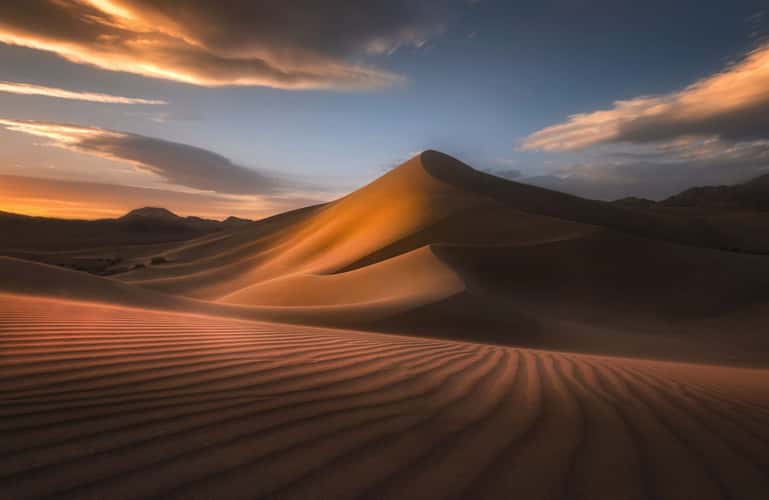
Ibex Dunes offer a rare sense of solitude and pristine desert beauty within the southern reaches of Death Valley National Park. These dunes are defined by their sharp ridges and the lack of tourist crowds, providing a perfect canvas for minimalist landscape photography.

Top photos from 1 spot in Ibex Dunes

Related states or regions for Ibex Dunes

Sights around or in Ibex Dunes

Tips for your trip to Ibex Dunes

About the location

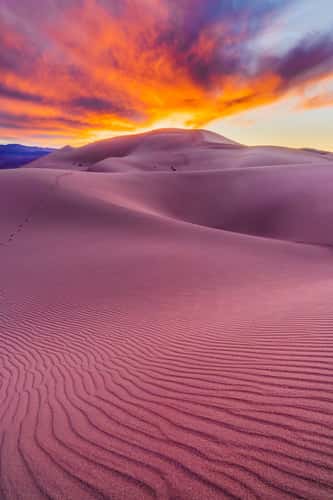
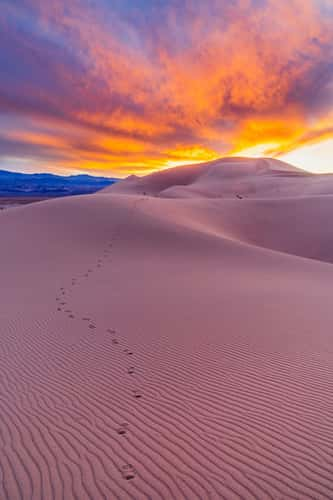
Because they are significantly less visited than Mesquite Flat, photographers can often find vast expanses of sand completely free of human footprints. The surrounding Ibex Hills and Saddle Peak Hills provide a dark, rugged contrast to the pale, flowing lines of the dunes, allowing for dramatic compositions that play with scale and texture. The trek required to reach them ensures that those who make the journey are rewarded with some of the most untouched sand structures in the American Southwest.


Best timing

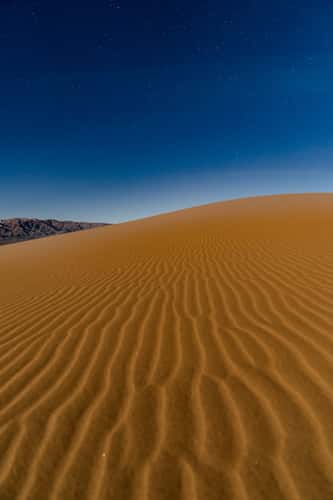
The best time to photograph Ibex Dunes is during the winter months from November to March when temperatures are manageable for the hike. Sunrise and sunset are the prime times, as the low sun angle reveals the intricate textures of the sand ripples and creates a striking interplay between light and shadow.

Winter also brings the possibility of more frequent storms which can reset the dunes, clearing away any previous tracks and creating fresh, sharp cornices. Midday light is generally too harsh and flattens the appearance of the dunes, so plan to arrive well before dawn or stay through the transition into blue hour.

Traveling

Accessing Ibex Dunes requires a high-clearance 4WD vehicle to navigate the rugged Saratoga Springs Road in the southern section of Death Valley. From the parking area near the end of the drivable track, photographers must embark on a cross-country hike of approximately 1 to 2 miles to reach the base of the dunes. There are no marked trails, so a GPS or map is essential for navigation. Be prepared for a lack of facilities and ensure you carry plenty of water and sun protection, as the area is extremely remote.

Photography tips for Ibex Dunes

A telephoto lens (70-200mm or 100-400mm) is indispensable here for compressing the layers of sand and capturing the abstract curves of the dune crests against the mountains. Use a wide-angle lens to emphasize the foreground ripples, but be careful not to include your own footprints in the frame. A circular polarizer can help manage glare on the sand and deepen the blue of the desert sky. To keep the dunes pristine, plan your path carefully and try to walk along the base of the dunes or on the leeward side to avoid disturbing the wind-sculpted ridges you intend to shoot.

Other languages

Here is how Ibex Dunes is called in other languages:
CS Duny Ibex DE Ibex Dunes EL Αμμόλοφοι Ibex ES Dunas de Ibex FI Ibex Dunes FR Dunes d'Ibex HI आइडेकुस डुूनुस HR Dine Ibex IS Ibex-sandh3lar IT Dune di Ibex JA 【げ】】さあさあああ NL Ibex Dunes NO Ibex Dunes PL Wydmy Ibex PT Dunas de Ibex RU Дфубф Айбееееес SV Ibex Dunes TR Ibex Kumulları ZH 艰舒舒舒舒舒舒

Imprint & Contact © Locationscout 2026 Privacy / Terms